Footwear Product Development
Custom Running Shoe Material Selection: A Buyer Record
A material name alone does not define a running-shoe build. This buyer record separates published references, design preferences, and questions for direct project discussion.
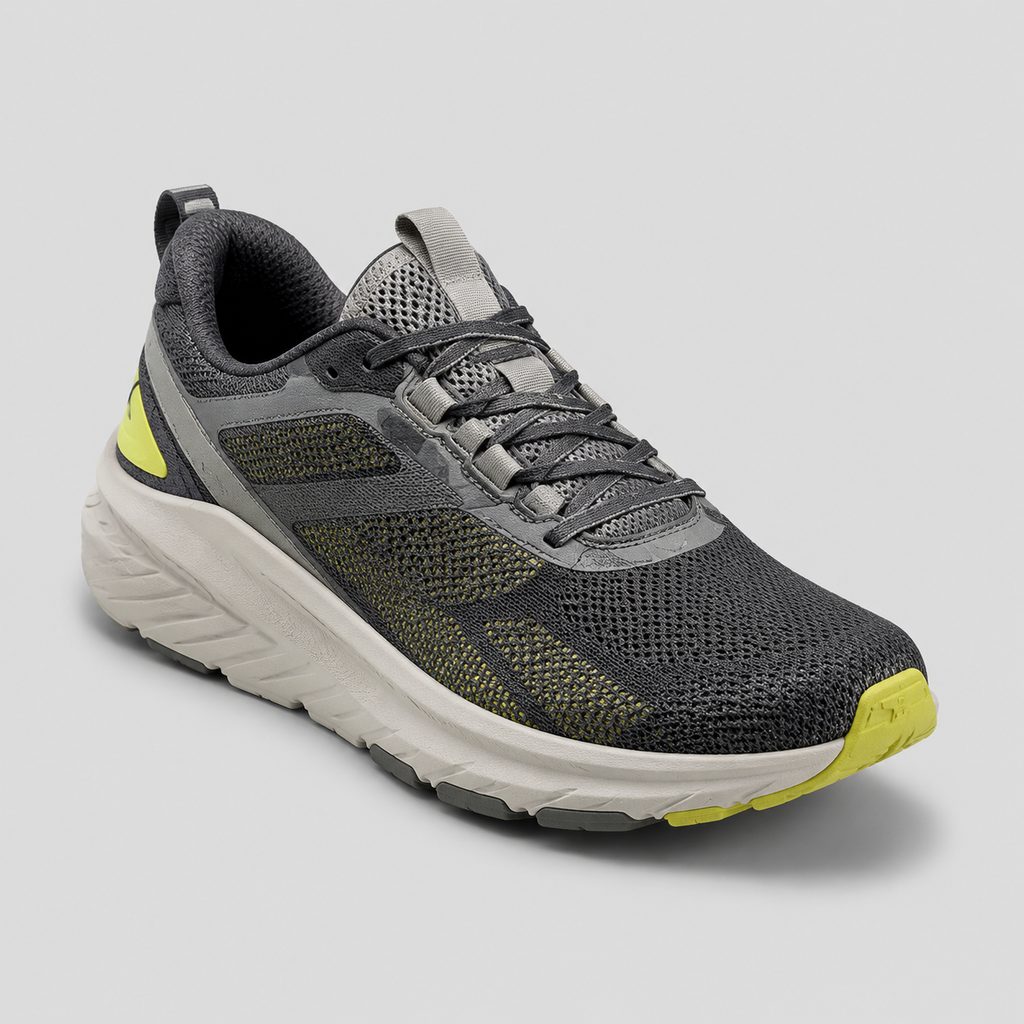
Custom running shoe material selection begins with a distinction that is easy to miss in an early brief: naming a material is not the same as defining its job in a particular shoe. Mesh, EVA, and rubber may all be useful terms for discussion, but the published references do not determine where they belong in a proposed build or whether a particular combination applies. A buyer needs a record that makes the current definition visible without making unresolved choices appear settled.
The record format in this article is an editorial recommendation for the buyer. It organizes the limited product, material, and case-study references published on this site. It is not a documented factory workflow, material approval, or manufacturability outcome for a new project.
When Does a Material List Become a Product Record?
A material list becomes more useful when every entry has a status. That status should reflect what the team actually knows, rather than the strength of a design preference. It gives merchandising, design, and sourcing teams a shared way to see whether a field is a reference, a choice, or a question.
- Published reference
- A term or description found on a published page. It can provide context for the brief, but it does not approve its use on the buyer's proposed style.
- Buyer preference
- A direction the buyer wants to explore, such as an open-looking forefoot, a restrained logo treatment, or a particular sole profile. It is a design input.
- Open factory inquiry
- A project question that needs direct discussion, including the material's placement, construction details, sampling questions, or quotation options.
This simple separation is particularly useful when a shoe is described in broad performance language. It lets a buyer preserve a useful reference while keeping open decisions in view. The result is not a final specification. It is a more honest starting point for development discussion.
Published Daily-Training Reference
The running-shoe product range describes performance-inspired daily-training builds with breathable uppers and cushioned midsoles. That is the published product context for this record. The same range names mesh, knit, and PU as upper materials.
Separately, the range names EVA and rubber outsoles. Keep that outsole wording apart from the cushioned-midsole description. Neither statement identifies a project-specific midsole material, outsole layout, material placement, or performance outcome.
For buyers reviewing private label running shoe materials, this is enough to establish a product-family reference and no more. In the record, label each published term as a reference, then add the buyer's own intended use and visual direction in separate fields. This avoids presenting the range description as a ready-made material stack.
For the Upper, Start With Zone Intent
The materials page provides a more detailed reference for engineered mesh. It describes air mesh and sandwich mesh as knitted or warp-knit synthetic materials with zoned density for ventilation, light stretch, and support. It also gives a typical 90-250 GSM range that varies by zone, with denser knit at the eyestay and toe.
| Record field | Published material reference | Editorial entry for the buyer |
|---|---|---|
| Upper direction | Engineered mesh is described as air mesh or sandwich mesh in knitted or warp-knit synthetic construction. | Mark engineered mesh as a reference, a preferred direction, or an open inquiry for the proposed upper. |
| Zone intent | The page connects zoned density with ventilation, light stretch, and support. | Identify the zones to discuss, such as the toe, eyestay, quarter, or tongue. Leave their final construction open unless the buyer has already selected it. |
| Weight description | The page gives a typical 90-250 GSM range by zone and identifies denser knit at the eyestay and toe. | Keep that range as a descriptive reference, not as a chosen value for the project. State only the direction the buyer wants to examine. |
| Branding treatment | The materials page names screen print, heat-transfer film, and welded TPU overlays for engineered mesh. | Record the intended logo position, coverage, and color direction, then ask whether a proposed treatment may apply to the proposed upper. |
The same material reference frames engineered mesh for running, training, and summer styles that need maximum airflow at a sensible cost. That is the source's stated scope for the material reference. It is not a forecast of airflow, fit, support, durability, or cost for a buyer's shoe.
Cushioning and Ground Contact
A running shoe upper and outsole specification needs two separate sole fields. The product range's cushioned-midsole language belongs in the cushioning field. Its EVA-and-rubber outsole wording belongs in the ground-contact field. Combining them would add construction detail that the published description does not provide.
For the cushioning field, the editorial recommendation is to record the role the buyer wants cushioning language to play in the product definition, then list the midsole details that remain undecided. For ground contact, retain EVA and rubber as the published outsole reference while documenting the desired sole appearance and any questions about the proposed outsole construction. This keeps an upper preference from implying a sole decision.
What a Reference Pair Shows
The case-studies page presents a running-shoe launch for a new brand as an example format for a first running-shoe order, from a reference pair to inspected first production. It is a single published example, rather than a process commitment for every project.
As an editorial recommendation, annotate a reference pair according to what the buyer wants it to communicate: overall profile, apparent upper density, logo location, sole proportion, or category direction. Add a short section for what the pair does not settle, such as material identity, zone-by-zone construction, color execution, or final fit. That makes the reference useful without treating it as a complete specification.
The Material Handoff
A compact handoff can make running shoe sample material questions easier to frame. It should distinguish the buyer's current definition from the points that require direct project discussion.
- Product definition: State the intended product family and use case in the buyer's own words.
- Upper-zone notes: List each zone to discuss and mark its material direction as a published reference, buyer preference, or open factory inquiry.
- Branding brief: Show the intended logo placement and color direction. Keep screen print, heat-transfer film, and welded TPU overlays as separate material-page references.
- Cushioning field: Record the product language the buyer wants to explore and identify the midsole details that remain unselected.
- Outsole field: Preserve EVA and rubber as the published range reference, then list the visual and construction questions for the proposed sole.
- Reference-pair annotations: Identify what the pair is intended to show and the decisions it cannot resolve.
- Question register: State the open points and ask which development, manufacturability, sampling, or quotation options may apply to the project.
This handoff is an editorial tool for a buyer, not evidence that a material direction has been accepted. Its value is in making each unresolved choice readable before it is mistaken for an approved part of the build.
Published References, Project Questions
The product range supplies the daily-training context, the breathable-upper and cushioned-midsole description, the upper-material list, and the separate EVA-and-rubber outsole reference. The materials page supplies the engineered-mesh description, zoned-density attributes, typical GSM range, suitability statement, and named branding treatments. The case-study example supplies the limited reference-pair-to-inspected-first-production framing.
Those pages leave project-specific material placement, full upper construction, midsole definition, outsole construction, branding applicability, fit, sample scope, and production outcomes open. Share the current record through the project inquiry page and ask which development, manufacturability, sampling, or quotation options may apply to the project. That request seeks applicability; it does not assume that a material, treatment, or reference-pair detail is already approved.
Sources and verification
- Athletic Shoe Manufacturer | Custom Product Range First-party site source
- Shoe Soles, Uppers & Insole Materials | Footwear Specs First-party site source
- Footwear Manufacturing Case Studies | Example Project Formats First-party site source
Share the current product definition and ask which development, manufacturability, sampling or quotation options may apply to the project.
Send your project brief