Footwear Sourcing
Custom Mesh Running Shoes With Logo: Define the Brief
A mesh upper and a logo are useful starting points, but they leave material zones, artwork compatibility, construction, and size references to be defined. Build a brief that distinguishes published information from the questions specific to the project.
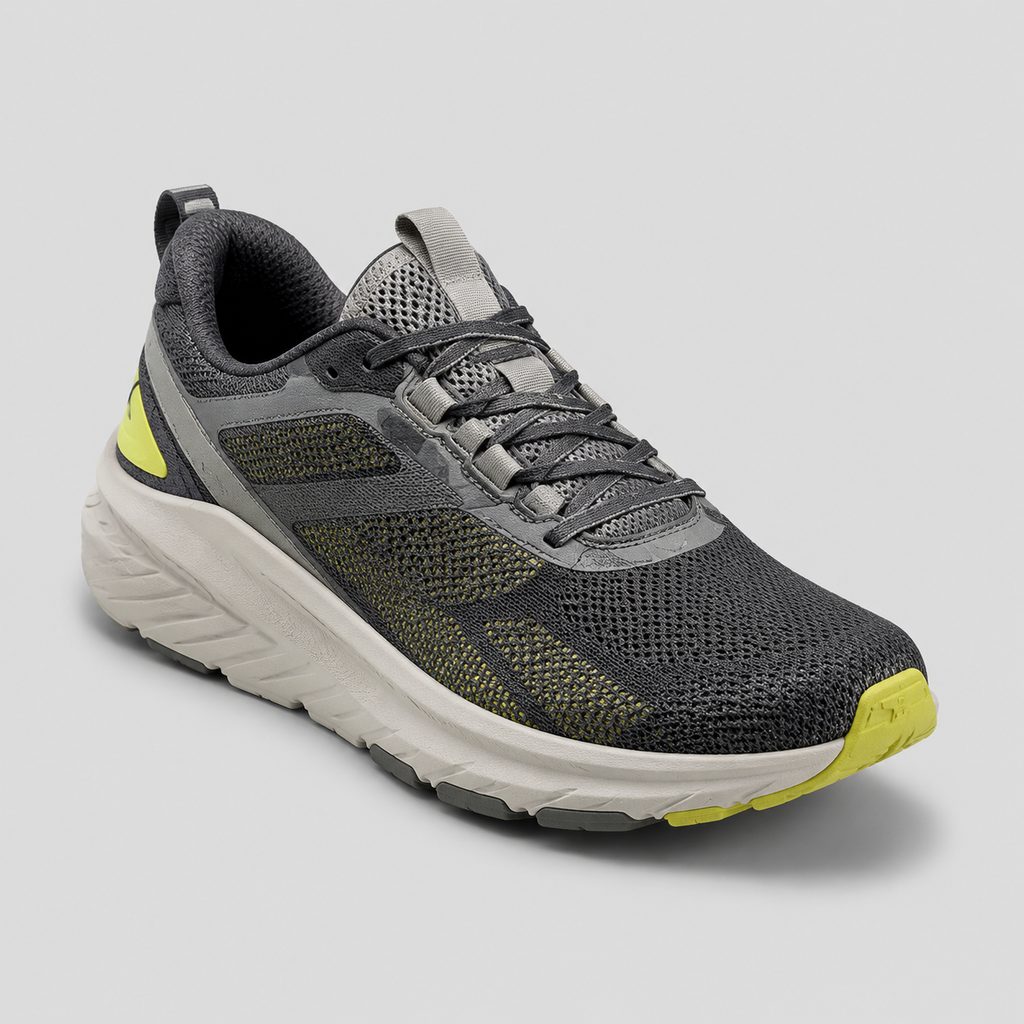
Custom mesh running shoes with logo is a useful search phrase, but it is not yet a complete product definition. It expresses a shoe direction, an upper direction, and a branding intention. It does not identify the activity the shoe is intended for, the role of each upper zone, the artwork to be assessed, or the construction choices that remain open.
The most useful early brief separates two kinds of information. First, record what the published product and materials pages actually say. Then mark the decisions that need a project-specific discussion. That distinction keeps a broad material description from being treated as a finished specification.
Begin with an evidence boundary
Custom Shoe Factory's published company description names running, training, walking, and casual sneakers as its product family. Separately, the running-shoe range describes performance-inspired daily-training builds with breathable uppers and cushioned midsoles.
The materials page describes engineered mesh as air mesh or sandwich mesh. It describes the material as knitted or warp-knit synthetic with zoned density for ventilation, light stretch, and support. These published descriptions give a buyer terms to use when setting out a concept. They do not determine whether an individual design, use case, upper construction, or logo treatment is appropriate.
Editorial recommendation: place the intended shoe family at the top of the brief before naming a mesh construction. Then list the parts of the brief that are fixed and the parts that are still questions. This gives the recipient a current definition without presenting unanswered items as settled requirements.
A working ledger for the first brief
| Published information | Project fields to name as open |
|---|---|
| The company description names running, training, walking, and casual sneakers as its product family. | Which shoe family and activity context does the concept belong to? |
| The running-shoe range describes performance-inspired daily-training builds with breathable uppers and cushioned midsoles. | Is that running-oriented description relevant to the current concept, or is the concept better described as training, walking, or casual? |
| Engineered mesh is described as air mesh or sandwich mesh. | Which upper appearance and material direction should be reviewed? |
| The materials page describes zoned density for ventilation, light stretch, and support. | Which zones need airflow, coverage, support, abrasion resistance, or visual structure? |
| The page lists screen print, heat-transfer film, and welded TPU overlays for engineered mesh. | What artwork, colours, scale, and intended location need assessment against the actual upper? |
The left column is evidence from the published pages. The right column is an inquiry agenda. Construction, development, manufacturability, sampling, packing, and quotation matters belong in the inquiry agenda unless a project response has addressed them. Naming those subjects is not a statement that a particular option applies.
Choose the product direction before the upper vocabulary
A buyer can use the term engineered mesh running shoe upper more precisely after defining the concept's shoe family. For a running-oriented concept, the published range offers a specific reference to breathable uppers and cushioned midsoles in performance-inspired daily-training builds. That description should remain limited to the running range.
Training, walking, and casual sneakers appear in the published product-family description, but that statement does not assign the running range's upper or midsole description to those categories. For those concepts, state the intended activity and wearing context directly. Do not rely on running terminology simply because the upper may use mesh.
- State the intended product family.
- Describe the material as an engineered-mesh direction rather than a completed upper specification.
- Identify the upper priorities that need review by zone.
- Keep unconfirmed construction choices separate from the material description.
This structure also avoids a common drafting error: using one broad word, such as breathable, as a substitute for the whole upper brief. A material term can describe a direction without resolving every design decision around it.
Use GSM to ask about zones, not to set the whole shoe
The engineered-mesh description gives a typical range of 90-250 GSM depending on the zone. The same description identifies denser knit at the eyestay and toe. This makes the range useful language for a mesh upper specification for footwear, because it directs attention to different areas of the upper rather than to a single number for the shoe.
The stated range is typical and zone-dependent. It is not a universal recommendation, an approved project value, or a commitment for a particular design. Editorially, write the GSM point as a question: ask how the proposed zones would be described and whether denser knit should be considered at the eyestay or toe for the current concept.
- Published reference
- Engineered mesh is described as typically running at 90-250 GSM depending on the zone, with denser knit at the eyestay and toe.
- Brief field
- Name the zones to be discussed and the priorities for each one. Leave the project-specific material selection open for review.
That wording preserves the actual scope of the materials information. It also gives a product-development team a clearer question than a request for a uniformly light or uniformly dense upper.
Put the artwork question beside the upper question
For engineered mesh, the materials page says the material takes screen print cleanly. It also says engineered mesh takes heat-transfer film cleanly. Separately, it says engineered mesh takes welded TPU overlays cleanly. The page adds that multi-colour branding is easy.
Those statements support asking about logo compatibility. They do not select one approach for a particular logo, upper construction, location, size, or colour combination. A branding treatment should therefore remain a confirmation point in the current definition.
- Provide the current artwork or a visual reference.
- Identify the intended logo location on the upper.
- Describe the relevant upper zone as open, dense, reinforced, or still to be defined where that distinction matters to the concept.
- Ask which, if any, of the published screen-print, heat-transfer-film, or welded-TPU-overlay approaches may apply to the artwork and upper under review.
For custom breathable running shoes, this keeps the airflow discussion and the branding discussion visible at the same time. It does not assume that one requirement settles the other.
Keep material definition separate from later size control
The early material brief concerns the shoe family, the upper direction, the zones to discuss, and the artwork questions. Size control is a different subject. On its importer and wholesaler page, Custom Shoe Factory states that size grading is locked to the golden sample and verified by measured length and width at final inspection.
That statement concerns grading and measurement. It does not state that mesh choice, logo treatment, or upper construction is determined by the golden sample. Nor should it be broadened into a claim about every project beyond the scope of the published importer and wholesaler page.
Editorial recommendation: record any later dimensional-reference question separately from the material section of the brief. A mesh selection is not a substitute for a dimensional reference, and the published grading statement is not evidence that all earlier product choices have been accepted.
Send a definition that leaves room for a project response
A buyer preparing to use the quote request page can send a concise definition that makes its remaining decisions clear:
- The intended product family and activity context.
- The engineered-mesh direction and the zones that need discussion.
- Any reference to the published 90-250 GSM range, stated explicitly as typical and zone-dependent.
- The artwork or visual reference and the intended branding location.
- A request to discuss whether a published branding approach may apply to the actual artwork and upper.
- Open questions about development, manufacturability, sampling, construction, packing, or quotation options that may apply to the project.
- A separate note for dimensional grading and golden-sample questions where those become relevant.
The result is a usable starting document: the published facts remain within their stated scope, and the project-specific choices are plainly identified for discussion. That is a stronger basis for a custom mesh running-shoe inquiry than treating a material name and a logo request as a completed specification.
Sources and verification
- About Custom Shoe Factory | OEM/ODM Athletic Shoes First-party site source
- Athletic Shoe Manufacturer | Custom Product Range First-party site source
- Shoe Soles, Uppers & Insole Materials | Footwear Specs First-party site source
- Wholesale Shoes & Bulk Footwear Supply | Importers First-party site source
Share the current product definition and ask which development, manufacturability, sampling or quotation options may apply to the project.
Send your project brief