Supplier Qualification
Walking Shoe OEM Supplier Qualification Checklist
A source-controlled qualification method that separates documented supplier fit from walking-specific requirements that still need a direct response.
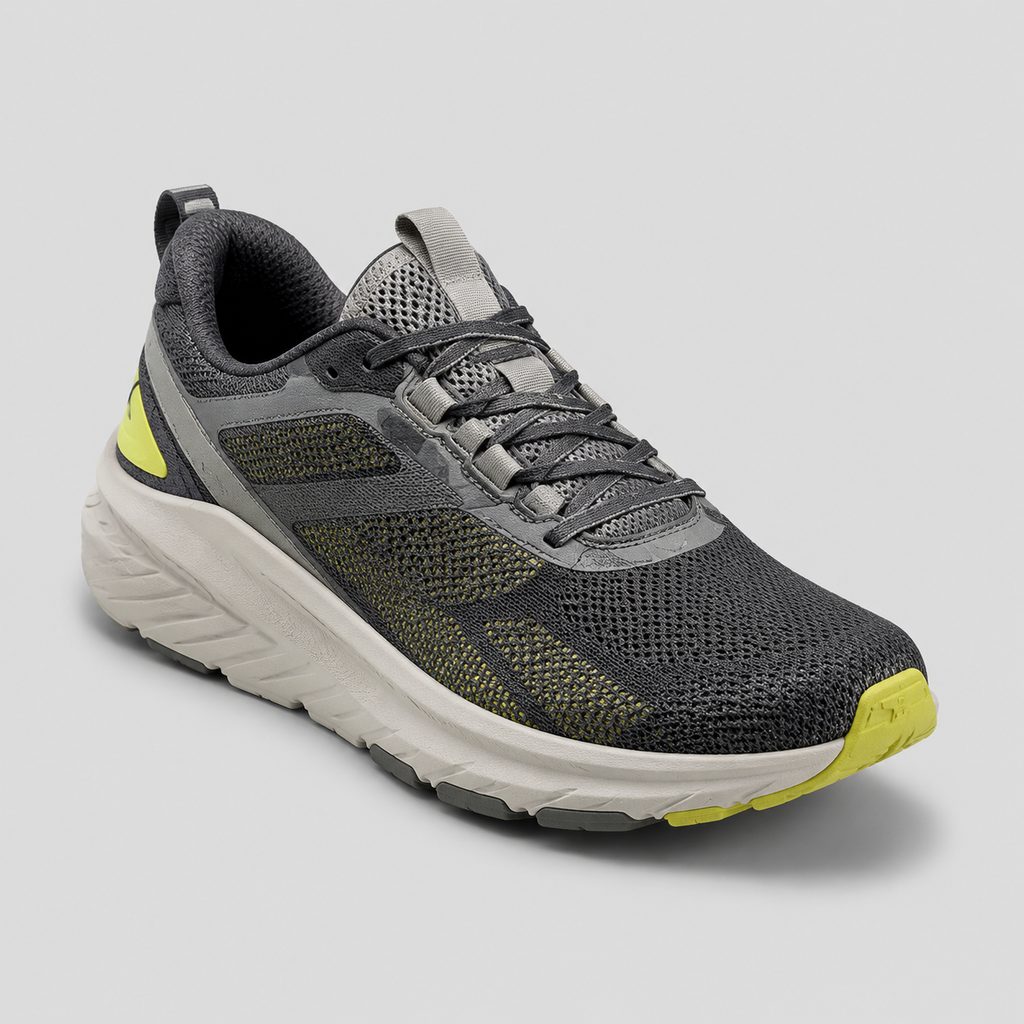
When a sourcing team reviews a prospective walking-shoe manufacturer, its notes should distinguish evidence that supports further contact from requirements that remain unanswered. A category statement, a neighboring product description and an OEM statement do not provide the same kind of proof. This walking shoe OEM supplier qualification checklist classifies each source by scope before the team decides whether to open a project-specific inquiry.
The published material establishes three limited points. The company includes walking in a product family that also covers running, training and casual sneakers. A separate product excerpt describes running shoes. The OEM excerpt says the manufacturer manufactures to the buyer's tech pack and design. The qualification method below is an editorial recommendation for buyers, not a company-published approval process.
The shortlist decision and its limits
At this stage, the recommended decision is whether the available evidence supports a bounded inquiry. That is narrower than approving the supplier for an order or confirming that it can meet the project's complete specification.
The company overview identifies running, training, walking and casual sneakers as one specialist product family. A buyer may therefore record walking as a documented category match. Requirements involving a particular last, construction, material, size range, test, certification or commercial condition remain unconfirmed unless another source or a direct response addresses them.
A practical qualification record can use the following fields:
- Candidate decision
Advance to inquiry, hold for clarification or remove from the shortlist.
- Buyer requirement
The product or commercial condition under review, including whether it is mandatory or preferred.
- Published evidence
The source statement, recorded without extending its category, product or process scope.
- Evidence gap
The point that cannot be confirmed from the supplied sources.
- Next action
The question, document or internal decision needed to address the gap.
This structure treats public silence as an unanswered point. It does not convert missing information into either a confirmed capability or proof that the supplier lacks one.
Evidence classes for the supplier record
The ledger separates the published statements into category, running-product and OEM evidence. The buyer actions in the final column are editorial recommendations for managing the review.
Scope-controlled supplier evidence ledger
| Evidence class | Published statement | Supported conclusion | Outside the documented scope | Recommended buyer action |
|---|---|---|---|---|
| Category | The company identifies running, training, walking and casual sneakers as one specialist product family. | Walking is named within the company's stated product family. | Walking-specific construction, engineering, testing and commercial capabilities. | Keep the supplier under consideration when category relevance is sufficient to justify an inquiry. |
| Running product | The published product range describes performance-inspired daily-training running shoes with breathable uppers and cushioned midsoles. It separately lists mesh, knit or PU uppers. It also lists EVA and rubber outsoles. | Those statements describe the published running-shoe range. | Application of the same positioning, components or materials to a walking shoe. | Use the excerpt to formulate questions while leaving the walking specification unchanged. |
| OEM | The OEM page says the manufacturer manufactures to the buyer's tech pack and design. It separately says manufacturability issues are flagged during DFM. It also says the buyer's bill of materials and tooling are held across reorders. | Each statement is documented within the published OEM build-to-spec excerpt. | Who creates the initial specification or design, approval before DFM, and retention or tooling terms beyond reorders. | Confirm which project inputs are available, then ask how the published OEM statements relate to the proposed project. |
Why running evidence stays with the running range
The heading and wording of the running excerpt control how its details can be used. The performance-inspired daily-training description belongs to the running-shoe range. The same excerpt describes breathable uppers and cushioned midsoles.
The listed upper options are mesh, knit or PU. The listed outsole materials are EVA and rubber. None of these statements documents the construction of a walking-shoe program.
Editorial treatment of adjacent-category evidence
| Published running evidence | Permitted qualification record | Walking-specific question |
|---|---|---|
| Breathable uppers and cushioned midsoles | Published positioning for the running-shoe range. | Can the buyer's intended walking-shoe upper and cushioning requirements be considered for the project? |
| Mesh, knit or PU uppers | Upper options listed in the running section. | Does any buyer-selected upper construction apply to the proposed walking shoe? |
| EVA and rubber outsoles | Outsole materials listed in the running section. | Can the buyer's proposed sole structure and material requirements be reviewed for this project? |
For an OEM walking shoe supplier evaluation, the editorial recommendation is to choose requirements from the intended use, fit direction and performance objectives of the walking program. The running excerpt may help the buyer formulate questions, but it should not be copied into the walking specification as evidence of an available construction.
OEM wording by actor and stage
The OEM excerpt says the manufacturer manufactures to the buyer's tech pack and design. It describes the tech pack and design as the buyer's; it does not state who creates the initial specification or design. The wording should therefore be recorded without assigning authorship or describing an undocumented first step in the process.
The excerpt separately says the manufacturer flags manufacturability issues during DFM. This supports recording issue flagging at that stage. It does not establish that every requirement is manufacturable before review. As an editorial preparation step, the buyer can distinguish mandatory requirements from negotiable preferences before discussing the project. The guide to walking-shoe manufacturability review before sampling covers that later procurement task.
The final OEM statement concerns holding the buyer's bill of materials and tooling across reorders. The supplied excerpt does not address redesigns, substitutions, ownership terms, unrestricted access or an indefinite retention period. Buyers for whom those matters are mandatory should place them in the clarification record rather than infer broader terms from the published sentence.
Questions created by missing evidence
Within the supplied source set, no excerpt establishes walking-specific lasts, sizing, constructions, materials, testing, certifications, capacity, timing, prices or order requirements. These subjects can still be raised in an inquiry, but they remain questions until a direct response provides project-specific information.
Editorial question log for walking-shoe supplier qualification
| Open topic | Recommended buyer question | Result to record |
|---|---|---|
| Walking-shoe definition | Provide the intended use, fit direction, last requirements, size range and proposed construction. Ask whether the current definition fits any development option available for the project. | The direct response and any additional inputs requested. |
| Materials and components | Identify the proposed upper, lining, reinforcement, fastening, midsole and outsole requirements. Ask which requirements, if any, can be considered for the project. | Confirmed project relevance, requested changes and unresolved items. |
| Manufacturability | Ask what files and decisions would be needed for the current design to receive the DFM issue review described in the OEM excerpt. | Required inputs and the point at which issues would be reviewed. |
| Fit, testing and compliance | State the intended market and any proposed product claims. Ask which fit, testing, tolerance, certification or documentation topics need further discussion. | Project-specific answers without assuming that a capability is already documented. |
| Commercial planning | Ask which sampling, quotation, order, capacity and timing options, if any, may apply to the defined project. | Directly supplied terms or a list of information still required. |
For walking shoe sourcing due diligence, the editorial recommendation is to assign each mandatory question an acceptance condition and an internal decision owner. Preferences can be recorded separately so that an answer about a secondary feature does not obscure a requirement that controls the shortlist decision.
Three possible qualification statuses
The following statuses are an editorial method for recording the decision without implying that the supplier has already received full approval.
- Advance to inquiry
Use this status when the documented walking-category inclusion and published OEM statements are relevant enough to justify project-specific contact. Keep every unconfirmed requirement visible in the record.
- Hold pending clarification
Use this status when a mandatory requirement remains unanswered. Record the question, the evidence needed and the person responsible for assessing the response.
- Remove from the shortlist
Use this status when a mandatory buyer requirement conflicts with an explicit statement in the documented scope or when a direct supplier response rules out that requirement. Record the statement or response that supports the decision.
Category inclusion can justify further contact without serving as walking-specific approval. Missing public evidence remains a gap unless an explicit conflict or a direct response supports a different conclusion.
The inquiry handoff
When the decision is to advance, the recommended handoff contains:
- The current walking-shoe product definition and any available tech pack, design or reference inputs.
- Mandatory buyer requirements separated from preferences.
- Published observations labeled as category, running-product or OEM evidence.
- A note that running-range positioning, components and materials have not been transferred into the walking specification.
- Unresolved product, validation and commercial questions with internal decision owners.
- The next decision the buyer needs from the response.
Share that record through the request-a-quote page and ask which development, manufacturability, sampling or quotation options may apply to the current product definition. This wording keeps undocumented options open for confirmation instead of presenting them as established services or promises.
Sources and verification
- About Custom Shoe Factory | OEM/ODM Athletic Shoes First-party site source
- Athletic Shoe Manufacturer | Custom Product Range First-party site source
- OEM / ODM Shoe Development | Custom Footwear Manufacturing First-party site source
Share the current product definition and ask which development, manufacturability, sampling or quotation options may apply to the project.
Send your project brief