Footwear Product Development
OEM sneaker material substitution approval: DFM Guide
A buyer-side method for recording candidate material changes, reviewing connected specification fields and issuing a clear post-DFM product definition.
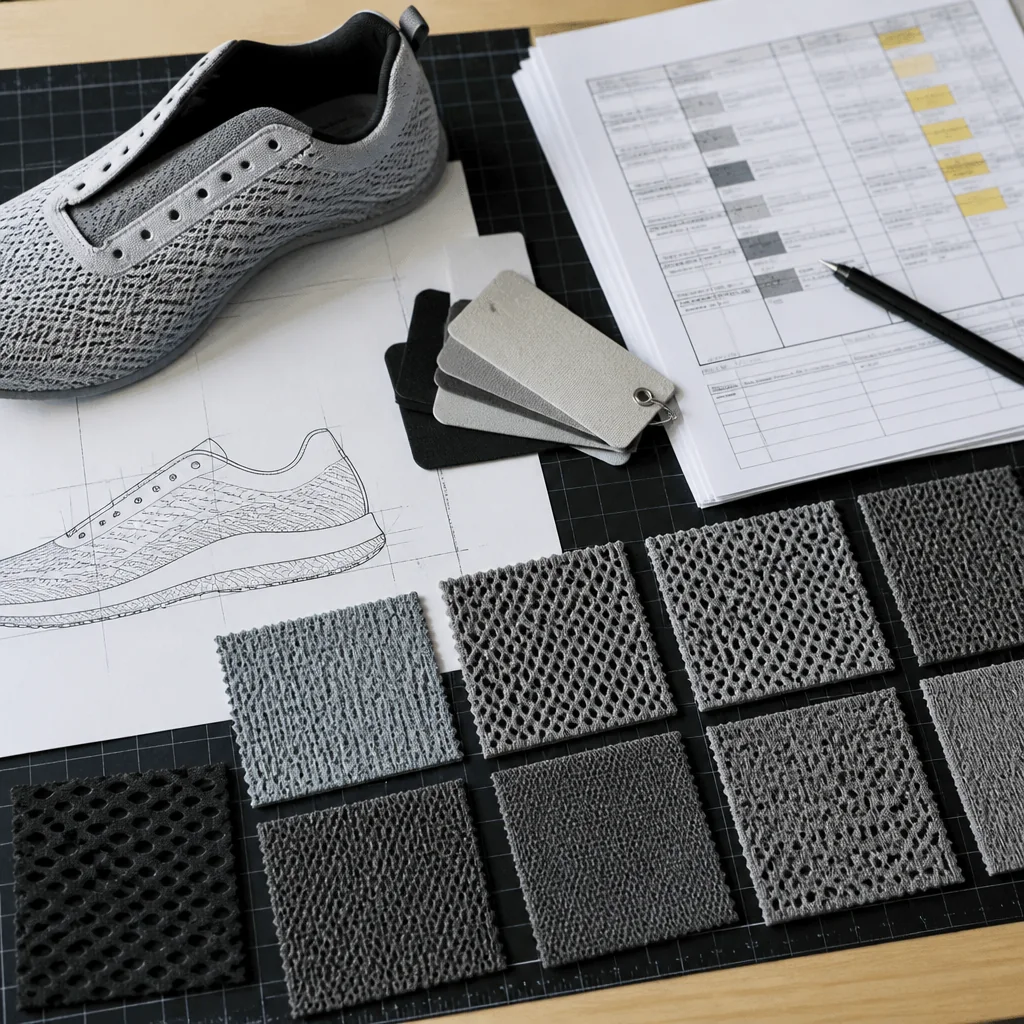
OEM sneaker material substitution approval belongs to the buyer's product-definition work. A DFM issue may identify a field that needs attention, while the working files still contain three different things: the active instruction, candidate wording and an unanswered question. This article recommends giving each item its own place before revising a tech pack callout. The proposed disposition record is a buyer-created editorial tool; it is not presented as a Custom Shoe Factory form or change-control service.
The published company scope is narrower. On its OEM/ODM service page, Custom Shoe Factory calls OEM a build-to-spec arrangement and says it manufactures to the buyer's tech pack and design. The company also says it flags manufacturability issues during DFM. That excerpt confirms issue flagging only. It does not state that a flag contains a proposed substitution, approves a change, guarantees feasibility or identifies every connected issue.
Anchor the review to the active documents
For buyer-side control, this article recommends starting with the product definition that is currently in force. Under this method, an issue raised during review does not alter the specification by itself. The buyer keeps the existing wording active until a buyer-authorized disposition replaces it.
A practical review header can identify the following items:
- The active tech pack or design file and its version or date.
- The intended product family and use case stated in the current definition.
- The existing material instruction and its exact component, panel or zone.
- The manufacturability issue in the wording received during review.
- Any candidate wording, clearly labelled as under review rather than approved.
If no substitute has been proposed, the recommended record should say so. A question about the current material can remain a question without being converted into an assumed replacement.
Compare wording at field level
The recommended OEM sneaker material change checklist places the current instruction beside the candidate entry. Its purpose is to show what would change, what would stay in force and what still needs clarification.
Recommended buyer-created substitution disposition record
| Field | Active definition | Candidate or review entry |
|---|---|---|
| Document control | Name the active tech pack, design or material schedule. | Identify the document that would require revision if the change is accepted. |
| Material and location | Quote the current material wording and identify the component, panel or zone. | Write the candidate material wording and its proposed location. |
| Specified properties | Copy the applicable construction, weight, density, finish and colour fields. | Enter only the proposed differences. Mark missing values as questions. |
| Branding application | Record the current artwork method and placement where applicable. | State whether the method or placement is also under review. |
| Connected construction | List the relevant lining, reinforcement, seam, edge or overlay instructions already defined. | Identify which of those fields may need clarification for this candidate. |
| Decision control | Identify the buyer-side owner of the current definition. | Assign a status and, after acceptance, write the exact authorized replacement text. |
This side-by-side format is an editorial recommendation for avoiding ambiguous notes such as “change mesh.” It also keeps the original wording available for comparison without leaving both versions as active instructions.
Keep the product family in view
Custom Shoe Factory's about page describes its product family as running, training, walking and casual sneakers. The recommended buyer record should identify which family applies to the project so the material discussion remains tied to the intended product.
The site's running-shoe listing separately describes performance-inspired daily-training builds. It names mesh, knit and PU uppers for running shoes. It also names EVA and rubber outsoles for that listing. Those running-specific descriptions do not document specifications for the company's training, walking or casual categories.
As an editorial boundary check, buyers should assess a candidate against the category and construction already stated in their own product definition. A description taken from another product family should not enter the revision unless the buyer deliberately authorizes it for the current project.
Use engineered mesh as a field map
The company's materials reference offers a bounded example for an upper-material review. It describes engineered mesh as a knitted or warp-knit synthetic with zoned density for ventilation, light stretch and support. These are material-description terms, not evidence of a particular finished-shoe result.
The same entry gives 90-250 GSM as a typical range that depends on the shoe zone. It describes denser knit at the eyestay and toe. The range is therefore a published reference for engineered mesh, not a mandatory target for the buyer's project.
The engineered-mesh entry also says the material takes screen print, heat-transfer film and welded TPU overlays cleanly. That statement applies to the engineered-mesh description in the cited entry. Suitability for a particular mesh, artwork or upper construction remains a project question.
Recommended fields for reviewing an engineered-mesh candidate
| Review field | Buyer-side question |
|---|---|
| Construction wording | Do the active and candidate entries identify the material in the same terms? |
| Zone | Which panel or shoe zone would change, and is its boundary identified in the design? |
| Density and GSM | Are the applicable values defined by zone, or do they remain open? |
| Design intent | Which ventilation, stretch or support requirement should remain visible in the product definition? |
| Branding method | Which application method is specified for the approved artwork and placement? |
| Construction interfaces | Do panel geometry, lining, reinforcement, seams, edge treatment or overlay placement need clarification? |
Where the active definition lacks enough material detail, the buyer can consult the mesh material specification guide for fields to consider. The project record should include only the fields that apply to the current design.
Give each identified field a status
For a footwear DFM substitution review, this article recommends assigning a disposition to each identified affected field. Here, the statuses belong to the buyer's record and do not describe a factory approval process.
- Unchanged
- The buyer reviewed the field and kept the active instruction. The record should identify the wording that remains in force.
- Accepted
- The buyer authorized exact replacement wording. The affected callouts and specification references should be updated before the next handoff.
- Rejected
- The candidate was not authorized. The record should preserve the active instruction and identify the rejected candidate.
- Needs clarification
- No replacement has been authorized. The record should name the missing answer, the affected field and the source document.
An accepted decision should lead to one clearly identified athletic shoe tech pack revision. The recommended method retains the comparison record as decision context while keeping the active tech pack, design callouts and inquiry consistent. If an attachment has not yet been revised, the buyer should label the conflict and identify which current document controls the inquiry.
Separate revisions from open questions
The outgoing package should distinguish buyer-authorized instructions from topics submitted for a response. The following two-part structure is an editorial recommendation for that handoff.
Recommended handoff structure
| Authorized revision package | Open inquiry |
|---|---|
| The accepted replacement wording and its exact location. | The manufacturability issue and the construction or zone it concerns. |
| The active tech pack or design version containing the change. | Any material, branding or interface field that still needs clarification. |
| Identified connected fields confirmed as unchanged. | Whether the current wording is sufficiently defined for review. |
| The buyer-side decision reference. | Which development, manufacturability, sampling or quotation options may apply to the submitted project. |
The inquiry column records questions, not confirmed company services, timing, pricing or project outcomes. Answers received later can be evaluated and incorporated through a new buyer disposition where necessary.
Send the definition that is current now
Before the handoff, this article recommends checking that the active version is named, accepted wording appears in the relevant documents, rejected candidates are not presented as selectable alternatives and unanswered questions remain separate from instructions.
Share the current tech pack or design, the buyer's material decisions, the intended product family and the unresolved questions through the request-a-quote page. Ask which development, manufacturability, sampling or quotation options may apply to that submitted definition. This keeps the request scoped to the project information available now without assuming a particular commercial term, schedule or service path.
Sources and verification
- OEM / ODM Shoe Development | Custom Footwear Manufacturing First-party site source
- Shoe Soles, Uppers & Insole Materials | Footwear Specs First-party site source
- About Custom Shoe Factory | OEM/ODM Athletic Shoes First-party site source
- Athletic Shoe Manufacturer | Custom Product Range First-party site source
Share the current product definition and ask which development, manufacturability, sampling or quotation options may apply to the project.
Send your project brief