Footwear Sourcing
Daily Training Running Shoes Wholesale: A Category-Fit Gate
A buyer-side screen for separating documented daily-trainer range overlap from the construction, performance and project questions that remain open.
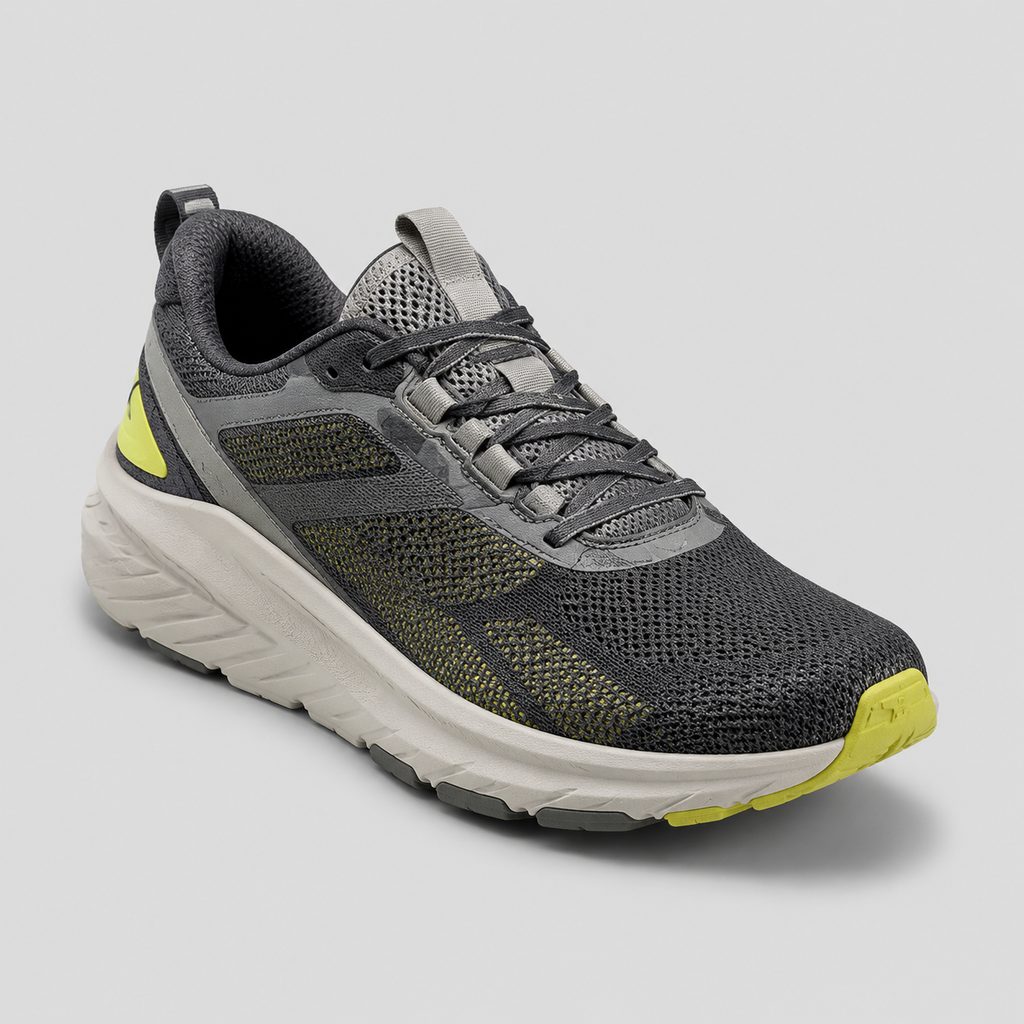
A daily-trainer label can establish preliminary category-language overlap while leaving decisive project questions open. In a daily training running shoes wholesale search, that distinction matters: published range language can show that a supplier discusses the intended footwear category, but it cannot by itself qualify a proposed upper, sole construction, performance claim or order.
The category-fit gate below is an editorial procurement tool for buyers. It reads the supplied product, About, materials and case-studies excerpts as first-party descriptions. A positive result means the current concept may be specific enough for a focused inquiry. It is not a finding about project manufacturability, supplier performance or the finished shoe.
The First Decision Is Category Fit
Before comparing a concept with the published product range, the buyer should prepare a short current-state definition. As an editorial recommendation, that definition should separate three kinds of information:
- Intended product: Describe what daily training means within the project and identify the target user, use setting and commercial context known to the buyer.
- Current design direction: Record the upper route under consideration, the intended sole concept and any wording the finished product may need to support.
- Open requirements: List unresolved construction, evidence, development and commercial questions without filling the gaps from general category language.
The initial decision is deliberately narrow. The buyer is checking whether the project belongs near the supplier's stated running-shoe direction. Detailed production fit and performance evidence remain separate decisions.
Published Range, Read Literally
The product page contains the running-shoe description. The About page separately presents the company's own category positioning. The latter is useful for understanding how the company describes its focus, but it is not independent validation of project suitability.
| Screening point | Published wording | Buyer-side reading |
|---|---|---|
| Footwear family | The About page describes the company as a sport-footwear specialist covering running, training, walking and casual sneakers. | Record this as first-party positioning around a defined footwear family. Do not treat it as proof that the proposed shoe can be produced as specified. |
| Daily-training direction | The running-shoe entry says "performance-inspired daily-training builds" with breathable uppers and cushioned midsoles. | Compare the concept with that broad direction while keeping measurable performance requirements outside the category decision. |
| Upper routes | The product entry lists mesh, knit and PU uppers. | Identify which listed route is closest to the concept. The entry does not provide project grades, reinforcement, lining or zonal construction. |
| Sole wording | The entry uses the phrase "EVA & rubber outsoles." | Treat EVA and rubber as named materials. Their placement, proportions, geometry and bonding are not defined by that phrase. |
| Named contexts | The entry names retail, ecommerce and private label. | Retail and ecommerce can be recorded as sales contexts. Private label should be recorded separately as a project or commercial format. |
Under this editorial screen, a defined daily-training concept can have initial category overlap with the product entry. That finding supports further questions; it does not settle upper feasibility, sole architecture or complete-shoe performance.
Engineered Mesh as a Bounded Option
The general upper list and the more detailed engineered-mesh description have different scopes. The product entry names mesh, knit and PU. The materials page describes engineered mesh specifically as a knitted or warp-knit synthetic with zoned density for ventilation, light stretch and support.
| Engineered-mesh statement | Editorial inquiry topic | Scope limit |
|---|---|---|
| Zoned density for ventilation, light stretch and support | Identify which zones and material characteristics matter to the current upper design. | This describes engineered mesh as a material route, not a confirmed construction for the proposed shoe. |
| Typically 90-250 GSM depending on the zone, with denser knit at the eyestay and toe | Request project-specific discussion of the relevant material and zonal weight, if engineered mesh is being considered. | The stated range is qualified by "typically" and "depending on the zone." It is not a required weight for a complete upper or every running-shoe project. |
| Takes screen print, heat-transfer film and welded TPU overlays | Present the selected material and artwork when asking which decoration route, if any, may suit the project. | The material description does not confirm that these methods are offered or appropriate for a particular order. |
Nothing in the supplied evidence makes every generic mesh option an engineered mesh. Its zonal construction, GSM range and decoration wording must not be transferred to knit, PU or unspecified mesh. Buyers developing this portion of the brief can use the separate guide to athletic-shoe mesh upper questions.
Product Language and Performance Evidence
The product entry supplies category descriptors rather than performance thresholds. No numerical target, test method, intended mileage, terrain rating, runner profile or substantiated performance outcome appears in the supplied excerpt.
- Performance-inspired daily-training builds
This identifies a product direction. For any stronger claim, the buyer should define the intended outcome, acceptance criteria and evidence requirement in the project brief.
- Breathable uppers
Breathable is the published descriptor, but the entry provides no measurement or evaluation method. It should not be converted into a quantified airflow or comfort claim.
- Cushioned midsoles
Cushioned is a broad description. The wording does not define construction, cushioning behavior or a comparison standard.
- EVA & rubber outsoles
This phrase names two materials without providing a complete sole specification. It does not state where the materials are used or what function either material performs.
A buyer comparing OEM daily training running shoes should therefore keep desired outcomes separate from the supplier's published descriptors. Durability, energy return, injury prevention and suitability for a particular athlete, terrain or mileage would require project-specific definitions and supporting evidence beyond the supplied product wording.
What the Example Project Can Show
The case-studies page presents a running-shoe launch for a new brand as an example project format. Its excerpt describes a first running-shoe order structured from a reference pair to inspected first production.
| What appears in the example | What remains open for another project |
|---|---|
| A reference pair is one endpoint named in the example. | The excerpt does not say that another project must begin with a reference pair. |
| Inspected first production is the other named endpoint. | No inspection method, responsible party, record set or acceptance standard is provided. |
| The page labels the content as an example project format. | The excerpt supplies no universal sequence, fixed timeline or outcome for every order. |
The buyer can use these endpoints to frame project questions without treating them as a promised workflow. Relevant topics include whether a reference pair would help define the concept, which approval stages may apply and what inspection wording would mean for the proposed order.
A Focused Inquiry Brief
The following checklist is an editorial recommendation for the buyer. Its items are inquiry topics, not documented company services, deliverables or commitments:
- Category definition: Share the intended daily-training use and request clarification on whether it aligns with the stated running-shoe direction.
- Commercial or project context: Identify retail, ecommerce or private label only where each term is relevant to the brief.
- Upper direction: State whether mesh, knit or PU is being considered. Keep engineered-mesh details attached to that specific option.
- Sole definition: Describe the intended sole architecture and seek project-specific discussion of how it may relate to the published EVA and rubber wording.
- Performance language: List every desired statement beyond performance-inspired, breathable or cushioned, along with the criteria and evidence the buyer would require.
- Development review: Identify unresolved design and manufacturability decisions and ask which of them may need evaluation before the project advances.
- Project options: Ask which sampling or quotation options, if any, may apply to the current definition.
- Example relevance: Raise the reference-pair and inspected-first-production wording only as questions about possible relevance to this project.
The Advance-or-Hold Verdict
As a buyer-side rule, advance to a project inquiry when the intended daily-training product, relevant commercial context and known material direction can be stated clearly. Keep unresolved construction, performance evidence, development and commercial requirements visible in the same brief.
Hold for internal clarification when terms such as daily trainer, breathable or cushioned are substituting for the product definition, or when the concept depends on an undefined upper construction, sole arrangement or performance claim. This is a decision about inquiry readiness, not a capability verdict.
For a daily training running shoes wholesale project, the published range can support an initial category-fit conversation and no broader conclusion. Share the current definition through the project inquiry page and ask which development, manufacturability, sampling or quotation options may apply.
Sources and verification
- Athletic Shoe Manufacturer | Custom Product Range First-party site source
- About Custom Shoe Factory | OEM/ODM Athletic Shoes First-party site source
- Shoe Soles, Uppers & Insole Materials | Footwear Specs First-party site source
- Footwear Manufacturing Case Studies | Example Project Formats First-party site source
Share the current product definition and ask which development, manufacturability, sampling or quotation options may apply to the project.
Send your project brief