Footwear Sourcing
Buyer audit: custom logo sneakers size grading for reorders
A buyer-side audit for comparing a proposed sneaker reorder with its named golden sample while keeping product changes and open sizing questions visible.
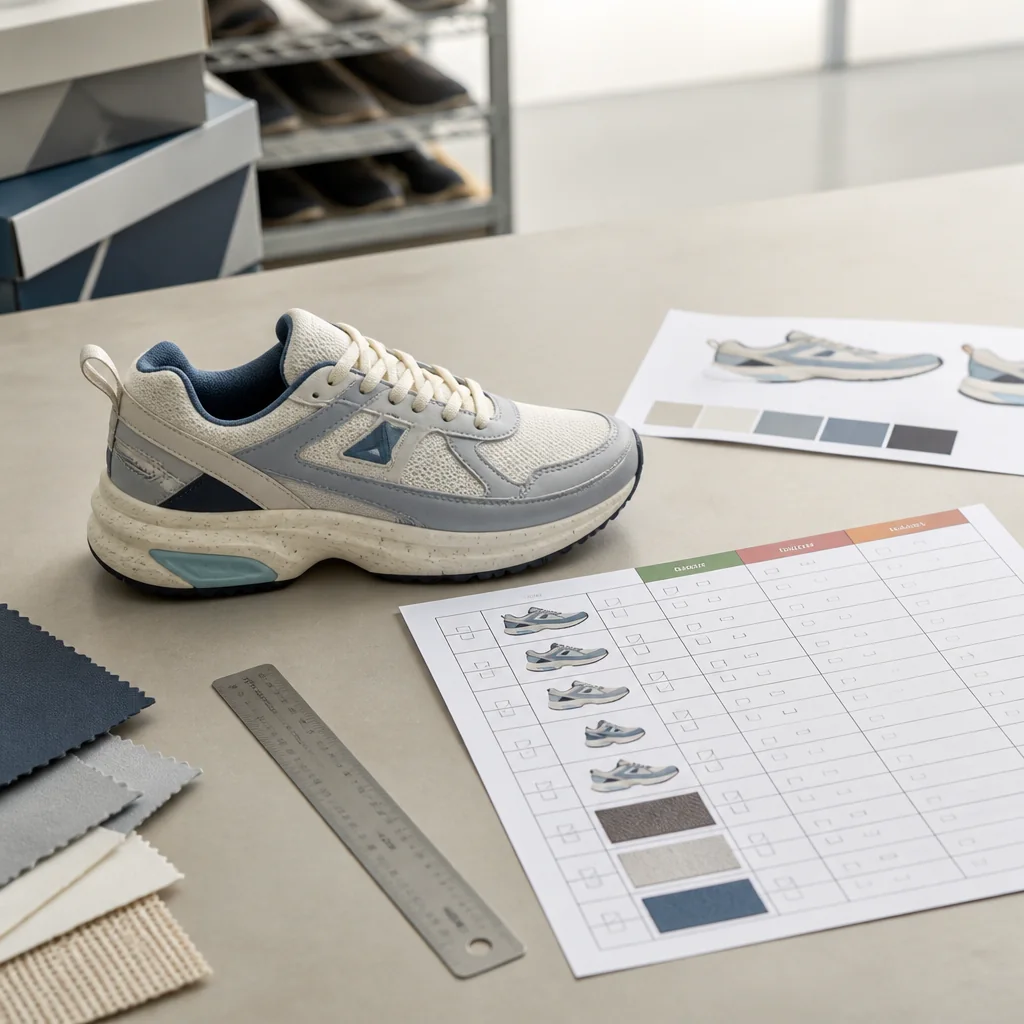
Keeping the logo artwork unchanged does not answer which sizing reference should govern the next shoe order. For buyers, custom logo sneakers size grading for reorders comes down to one comparison: can the proposed product still be evaluated against the same golden sample? Custom Shoe Factory's importer and wholesaler page states that size grading is locked to the golden sample and verified by measured length and width at final inspection. A useful reorder brief therefore needs to name the proposed sample, define the shoe and expose every revision that may require project-specific review.
Editorial scope: The company facts below are limited to the cited pages. The audit, classifications and inquiry questions are editorial recommendations for buyers. They are not published factory procedures or promises that a sample, sizing method, inspection plan or reorder will be accepted.
The size-reference decision
Frame the inquiry around a named shoe and a named reference. A logo file can identify the requested artwork revision, but the published sizing statement points to the golden sample as the grading reference. Those records belong in the same inquiry without being treated as interchangeable.
- Reference proposed by the buyer
- Record the identifier or description of the prior golden sample, if the buyer has that information.
- Product being compared
- Define the current shoe and place every proposed change beside the corresponding current field.
- Confirmation requested
- Ask whether the named sample applies to the proposed product definition and what additional project information may be needed to evaluate that question.
Leave the reference status unresolved when the sample cannot be identified or its applicability has not been confirmed. The purpose of the brief is to present the decision clearly, not to decide it on the manufacturer's behalf.
What the published sizing statement covers
The importer and wholesaler page contains two relevant statements. It says size grading is locked to the golden sample. It also says grading is verified by measured length and width at final inspection.
Published sizing facts and the questions they create
| Published fact | Recommended buyer entry | Open question |
|---|---|---|
| Size grading is locked to the golden sample. | Name the prior sample proposed for the reorder, if available. | Is that sample applicable to the product definition in this inquiry? |
| Grading is verified by measured length and width at final inspection. | Carry length and width into the inquiry as the two published dimensions. | Which measurement method, locations and tolerances would apply? |
The excerpt supplies no size system, available range, grading increments, conversion method, measurement points or dimensional tolerances. Inspection coverage is also unspecified. If sampling is used, its frequency is not given. The excerpt does not assign responsibility for identifying, retaining, approving, replacing or storing a golden sample, and it provides no broader fit or comfort guarantee.
Identify the shoe before comparing versions
The company profile describes the product family as running, training, walking and casual sneakers. Select the applicable family from that published boundary, then describe the current shoe from the buyer's own records.
The running-shoe description provides one example of product vocabulary. It names performance-inspired daily-training builds with breathable uppers and cushioned midsoles. It lists mesh, knit and PU uppers. In a separate product detail, it lists EVA and rubber outsoles. Use those descriptions only when they match the buyer's records for a running shoe; the excerpt does not assign the complete list to every published footwear category.
For the buyer's reorder ledger, record:
- Product identity: the buyer's style number, product name or other existing identifier.
- Athletic family: running, training, walking or casual.
- Upper definition: the current material and construction description.
- Sole definition: the current midsole and outsole descriptions, where known.
- Branding identity: the artwork revision and the upper detail it is intended to describe.
- Size intent: the requested size system, range and presentation, where known.
- Proposed reference: the identifier for the prior golden sample, if available.
Mark an unsupported or missing buyer-file entry as unresolved. That status shows exactly where the inquiry needs clarification.
Retained, changed or unresolved?
The comparison table is a buyer-owned working document. It separates continuity requests from revisions without predicting whether a revision will affect grading.
Crosswalk for the proposed reorder
| Field | Retained | Changed | Unresolved |
|---|---|---|---|
| Athletic family | The same family is requested. | A different published family is proposed. | The prior sample's family is unknown. |
| Upper | The same buyer-recorded material and construction are requested. | A different material or construction is proposed. | The current upper definition is incomplete. |
| Sole | The same buyer-recorded sole definition is requested. | A midsole, outsole or construction revision is proposed. | The current sole definition is incomplete. |
| Logo identity | The same artwork revision and identified upper detail are requested. | The artwork or identified upper detail changes. | The relevant artwork record is missing. |
| Golden sample | The same prior sample is proposed as the reference. | A different sample or reference basis is proposed. | The sample identifier or applicability is unknown. |
| Size definition | The same buyer-recorded size presentation is requested. | The requested size system, range or presentation changes. | Conversions, increments or measurement requirements remain open. |
For a hypothetical comparison, a proposed move from mesh to knit belongs on one change line, while a proposed move from an EVA outsole description to a rubber outsole description belongs on another. Neither example establishes how the change would affect the golden sample. Ask about each revision separately so the material and sole questions remain distinct.
For every changed field, show the current record, the proposed record and the question requiring confirmation. This gives the manufacturer a direct comparison without presenting sizing continuity as an established outcome.
Branding identity and the golden sample sizing reference
The materials page states that engineered mesh can take screen print, heat-transfer film and welded TPU overlays. That option list is specific to engineered mesh in the cited excerpt. It should not be extended to knit, PU or every other upper material.
- Branding record
- Use the buyer's artwork revision, requested decoration detail and identified upper area to describe the visual version of the shoe.
- Sizing record
- Use the named golden sample, intended size information and unresolved dimensional questions to describe the proposed grading reference.
- Final-inspection question
- Ask how the published length-and-width verification would apply to this product definition.
The cited sizing statement does not link screen print, heat-transfer film or welded TPU to grading. When the artwork also needs review, keep that work in a separate logo sample review. This preserves a clear distinction between identifying the branded version and confirming the physical sizing reference.
The open-question register
Carry the limits of the published sizing statement into the inquiry as direct questions:
- Which size system and requested range would apply to the proposed shoe?
- What grading increments, if any, would apply within that system?
- How should a requested conversion between size conventions be addressed?
- How would length and width be measured for this product?
- Which measurement locations and dimensional tolerances would apply?
- What inspection coverage would apply to length-and-width verification?
- If sampling is used, what sampling frequency would apply?
- How should the buyer identify the proposed golden sample?
- Is the named sample available and applicable to this product definition?
- What reference-identification or sample-retention details, if any, require confirmation?
- How would each declared upper, sole, construction or size-definition change be considered when evaluating the proposed reference?
These are inquiry topics, not documented company services or acceptance criteria. Keeping them in a separate register prevents unknown parameters from being written into the reorder file as facts.
Build the reorder inquiry package
A custom sneaker reorder sizing brief should let the current product, proposed revisions and open questions be reviewed side by side. Assemble the buyer's information in this order:
- Provide the buyer's product or style identifier.
- Select running, training, walking or casual as the applicable published family.
- Record the current upper, midsole and outsole information on separate lines.
- Identify the logo artwork revision as a product-identity field.
- Name the prior golden sample proposed as the grading reference, if available.
- State the intended size system, requested range and presentation where known.
- Classify every product field as retained, changed or unresolved.
- Add the open questions about grading, measurement, inspection coverage and reference handling.
Place the buyer's main question at the top of the package: can the named golden sample be evaluated as the grading reference for this defined reorder? Where the answer depends on further information, ask which details or project steps may be relevant.
Request the applicable next step
Share the current shoe definition, proposed changes, sizing intent, named reference and question register through the project inquiry page. Ask which development, manufacturability, sampling or quotation options may apply to the defined project. Framing the request around applicability helps prevent an unchanged logo from being mistaken for proof that the prior grading reference still governs the shoe.
Sources and verification
- About Custom Shoe Factory | OEM/ODM Athletic Shoes First-party site source
- Athletic Shoe Manufacturer | Custom Product Range First-party site source
- Shoe Soles, Uppers & Insole Materials | Footwear Specs First-party site source
- Wholesale Shoes & Bulk Footwear Supply | Importers First-party site source
Share the current product definition and ask which development, manufacturability, sampling or quotation options may apply to the project.
Send your project brief