Footwear Sourcing
Custom Running Shoe Logo Sample Review: Size Checks
A two-track buyer memo separates conditional upper and logo questions from the published golden-sample, length, and width reference.
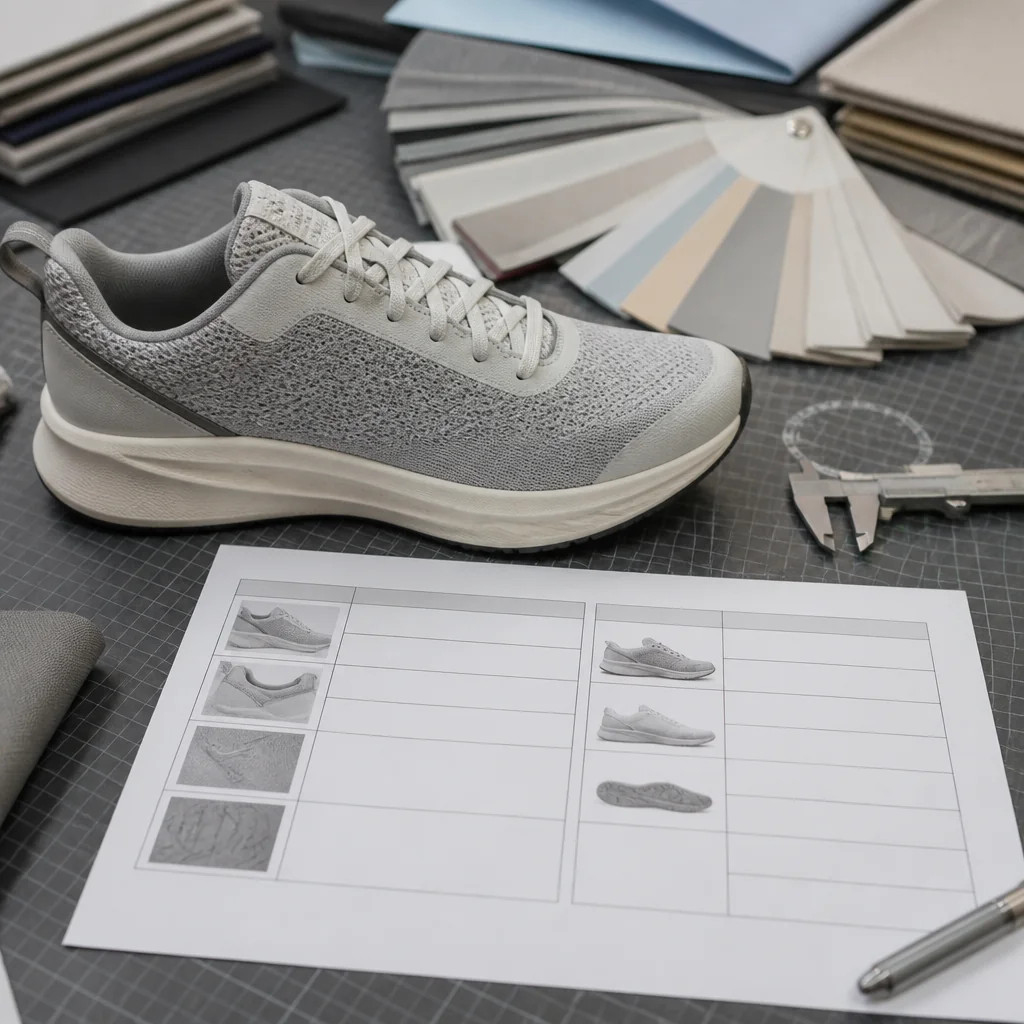
A custom running shoe logo sample review should produce two separate buyer decisions. The first is whether the proposed upper and logo direction have enough confirmed detail to move forward. The second is whether the size-control discussion identifies the correct reference sample and the measurements to raise. A visually acceptable sample is not, by itself, a record that the dimensional track has been addressed.
This guide treats the review sheet as an editorial recommendation for the buyer. The published sources identify a running-shoe direction, describe engineered mesh, and describe golden-sample grading with measured length and width at final inspection. They do not prescribe the construction, logo method, size range, or inspection terms for every project. Keep material-and-branding questions separate from the dimensional reference, then ask which points apply to the current product definition.
What Should the Sample Review Decide?
Give each track its own status. The material-and-branding track records what has been supplied, what is proposed, and what needs manufacturer confirmation. The size-control track records the golden-sample discussion and the separate length and width points. Neither track should inherit approval from the other.
- Material and branding: proposed upper, material description, artwork revision, logo location, and application question.
- Size control: sample proposed for golden-sample discussion, sizes to discuss, measured length, measured width, and applicability of the published description.
For example, an artwork comment belongs in the first track, while a question about measured width belongs in the second. As an editorial recordkeeping practice, assign a clear status to each item rather than marking the entire sample approved while either set of questions remains open.
The Published Running-Shoe Boundary
Confirm that the product under discussion belongs within the published running direction before importing material terminology into the memo. Custom Shoe Factory describes one product family covering running, training, walking, and casual sneakers. Its running-shoe range describes performance-inspired daily-training builds with breathable uppers and cushioned midsoles.
The same listing names mesh, knit, and PU as upper options. It also names EVA and rubber as outsole materials. Those category descriptions provide context for a buyer's inquiry; they do not assign a particular upper, midsole, outsole, or performance characteristic to the sample being reviewed.
- Record the intended running use in the buyer's current product language.
- Copy the proposed upper from the project materials without assuming it is mesh, knit, or PU.
- Leave sole construction as a confirmation item unless the project definition identifies it.
- Ask whether the proposed sample is being considered within the published running-shoe direction.
Track One: Upper Description and Logo Questions
Where the proposed upper is engineered mesh, the materials description supplies useful reference language. It describes engineered mesh as a knitted or warp-knit synthetic with zoned density for ventilation, light stretch, and support. It gives a typical 90-250 GSM range depending on the zone and notes denser knit at the eyestay and toe.
| Memo field | Published reference | Editorial recommendation |
|---|---|---|
| Upper identity | Engineered mesh is described as a knitted or warp-knit synthetic with zoned density. | Mark engineered mesh as proposed only when it appears in the current product definition, then request confirmation. |
| Zone description | Zoned density is associated with ventilation, light stretch, and support. | Record those terms as a material reference. Do not turn them into released performance claims for the project. |
| Weight reference | The description gives a typical 90-250 GSM range by zone, with denser knit at the eyestay and toe. | Ask which zone and GSM details, if any, apply to the proposed upper. Do not treat the range as a default specification. |
The engineered-mesh description should remain attached to engineered mesh. The running listing's mention of knit and PU does not extend the engineered-mesh attributes to those upper options. This distinction keeps the memo tied to the material actually proposed rather than to a category-level list.
Logo Method Remains a Project Question
The engineered-mesh material description identifies screen print as taking cleanly on the described material. It identifies heat-transfer film as taking cleanly on that material. It also identifies welded TPU overlays as taking cleanly on that material. These are engineered mesh logo application questions, not a default selection for every upper, artwork file, logo location, or project.
- Screen print
- Record the supplied artwork revision and proposed location. Ask whether screen print may apply to the stated upper and artwork.
- Heat-transfer film
- Keep heat-transfer film as a separate option in the memo. Ask whether it may apply where the project uses the described engineered mesh.
- Welded TPU overlays
- Record welded TPU overlays independently from the other methods. Ask whether an overlay may apply to the actual upper, artwork, and proposed location.
The published description does not select one method for a specific sample. An editorially useful status field is therefore limited to proposed, confirmation requested, or confirmed for the specified sample. A broad logo-approval label can conceal unresolved questions about the upper, artwork revision, application, or location.
Track Two: The Published Size-Control Reference
The importers and wholesalers information describes size grading as locked to the golden sample. It also says measured length and width are verified at final inspection. For the buyer, this is the documented starting point for an athletic footwear size control inquiry, provided the manufacturer confirms its relevance to the current product definition.
- Identify the sample proposed for golden-sample discussion, if that status is confirmed for the project.
- List the size or size set the buyer wants included in the conversation.
- Record measured length and measured width as separate items.
- Ask whether the published grading and final-inspection description applies to the sample under review.
The cited description does not provide a tolerance, size-system conversion, fit assessment, comfort assessment, logo-placement check, or artwork-registration check. Keep those topics as separate project questions rather than treating the golden-sample reference as proof of all sample attributes.
Two-Track Running Shoe Sample Approval Checklist
A running shoe sample approval checklist is more useful when it distinguishes buyer inputs from confirmation requests. The table below is an editorial template for organizing that handoff; it is not a claimed factory workflow.
| Material and branding record | Size-control record |
|---|---|
| Product reference and intended running use | Sample proposed for golden-sample discussion |
| Proposed upper stated exactly as supplied | Size or size set to discuss |
| Artwork file revision and colourway reference | Measured length discussion item |
| Proposed logo location | Measured width discussion item |
| Application method under consideration, if any | Question on applicability of grading and final-inspection description |
| Material and logo confirmation status | Dimensional-reference discussion status |
For internal use, add a date and owner to unresolved entries. That recommendation helps distinguish a material or artwork revision from a dimensional question without representing either one as settled before the relevant confirmation is received.
Project Inquiry Handoff
The completed memo can accompany a project inquiry. Share the current product definition, intended running use, proposed upper direction, artwork revision, and logo application questions. In a separate part of the inquiry, identify the proposed golden sample and ask to discuss measured length and width.
Ask which development, manufacturability, sampling, and quotation options may apply to the project. The two-track format gives the manufacturer a focused set of buyer inputs and questions while preserving the difference between a conditional material-and-logo discussion and the published size-control reference.
Sources and verification
- About Custom Shoe Factory | OEM/ODM Athletic Shoes First-party site source
- Athletic Shoe Manufacturer | Custom Product Range First-party site source
- Shoe Soles, Uppers & Insole Materials | Footwear Specs First-party site source
- Wholesale Shoes & Bulk Footwear Supply | Importers First-party site source
Share the current product definition and ask which development, manufacturability, sampling or quotation options may apply to the project.
Send your project brief