Sourcing Guides
Wholesale Sports Shoes Sampling Before Quote Paths
Path selection is the buying task. Freeze what is decided, check family fit, and ask which residual options apply without inventing service menus or commercial quantities.
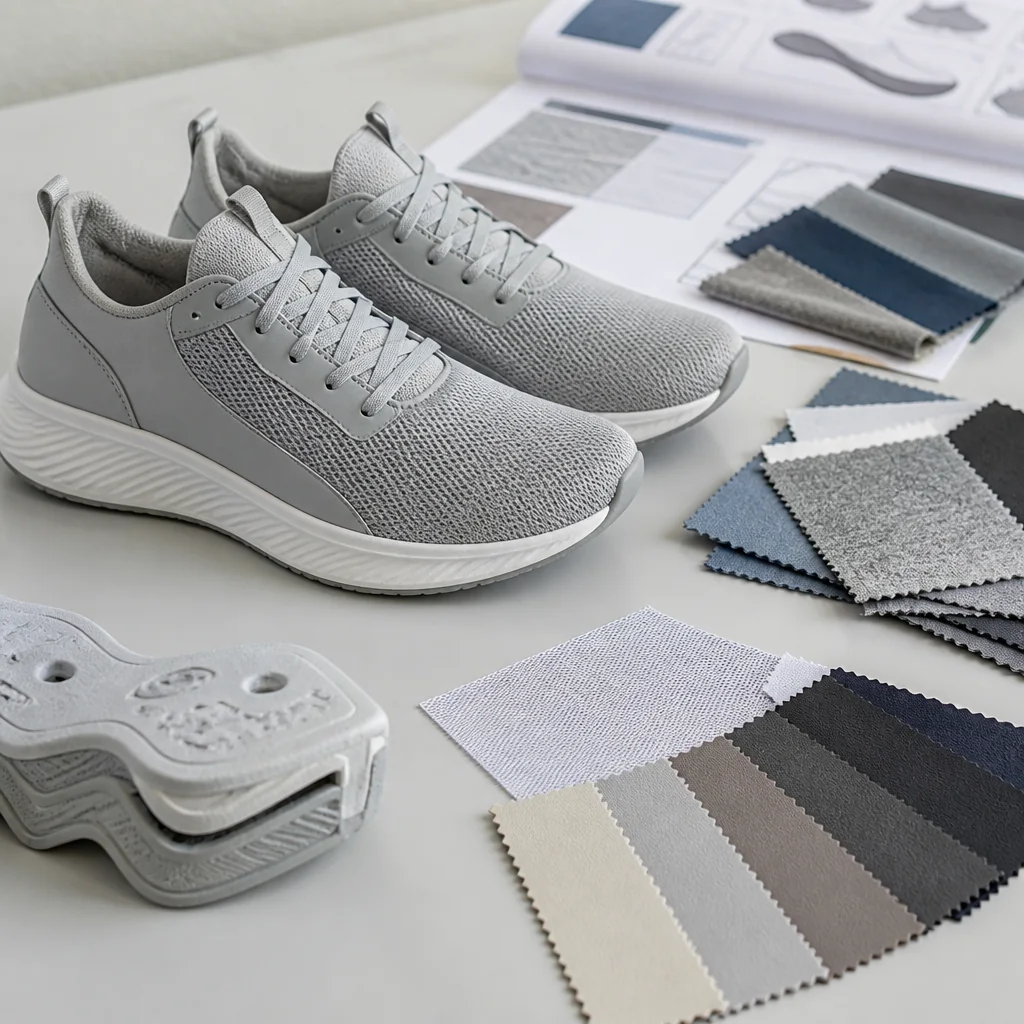
A mixed inquiry that stacks unfinished definition with sampling and pricing rarely yields a usable reply. Treat wholesale sports shoes sampling before quote as one possible route only after you freeze the current product definition and confirm residual uncertainty is physical, not conceptual. Development, manufacturability review, and quotation stay on separate tracks when those are the real bottlenecks. Brands, importers, wholesalers, and product-development teams get clearer answers from an options-focused handoff. First-party factory pages set scope boundaries; they do not publish fixed commercial menus, quantities, or lead times for every option type.
One request language is not one valid path
Procurement wording often collapses five jobs into a single sentence: finish the product definition, invent missing construction, confirm the style can be made, request a physical sample, and obtain a commercial quotation. When those jobs share one ask, replies stay over-general or unusable.
On the product range page, running styles are described as performance-inspired daily-training builds with breathable uppers and cushioned midsoles. The same range copy lists mesh, knit, or PU upper options. It also lists EVA and rubber outsoles. It frames those styles for retail, ecommerce, and private-label programs. That language describes category range. It is not a finished project brief, and it does not prove every sports-shoe inquiry is ready for sampling or pricing.
Separately, the company positions itself as sport-footwear specialists focused on running, training, walking, and casual sneakers, not a catch-all factory. That boundary is a fit filter before sample wording. If the program sits outside that family, the first problem is fit, not sampling sequence.
Freeze only the decided definition
Path selection works only after you freeze the wholesale sports shoes product definition and leave gaps visible. Do not invent missing fields so the message looks complete. Produce a frozen snapshot a supplier can route.
- Category family in plain words: running, training, walking, or casual sneaker intent, or an explicit note that the family is still open.
- Style intent you can defend: daily training, performance-inspired retail, ecommerce-focused private label, or another buyer-owned description.
- Upper language only if known: mesh, knit, PU, or still undecided.
- Outsole language only if known: EVA, rubber, or still undecided.
- Reference assets that already exist: physical pair, photos, sketches, or none yet.
- Open decisions listed as questions, not filled blanks.
If upper or outsole language is unknown, leave it unknown. Filling those cells with aspirational marketing terms creates a false sense that the program is quote-ready. As an editorial recommendation for the buyer, a short honest definition with labeled gaps is more useful than a long brief that pretends certainty.
Route residual work, not habit
After the definition is frozen, route only the remaining open work. The table below is buyer decision language, not a documented factory service menu. First-party pages on this site do not publish a fixed commercial catalog of development, manufacturability, sampling, and quotation packages. A buyer may still ask which of those option types apply to the project.
| Residual uncertainty | Better option language | Why sampling-first is often premature |
|---|---|---|
| Silhouette, last direction, or category still open | Development / concept alignment | A sample would freeze the wrong product too early |
| Construction may be hard to build or cost-sensitive in unknown ways | Manufacturability review against the frozen definition | A sample without buildability questions wastes revision cycles |
| Look, hand-feel, fit direction, or branding placement needs physical confirmation | Sampling options inquiry | Quotation-only replies cannot answer tactile or visual risk |
| Definition is stable and you need commercial terms for planning | Athletic footwear quotation path | Pricing without a locked definition produces non-comparable numbers |
| Several of the above remain open at once | Ask which options apply; do not force one path | A single mixed RFQ recreates the original failure mode |
Sports shoes OEM sampling options belong in the inquiry only when a physical unit would change a decision you cannot make from documents. If the open work is still conceptual or commercial, sampling language is optional, not automatic.
Product-family fit before sample wording
Before any sample request language, run a hard yes/no filter against the published specialist boundary: running, training, walking, and casual sneakers.
- State the intended family in one line using those four labels, or note an explicit mismatch.
- If the program is outside that family, stop sample-path language and ask about fit first.
- If the program is inside the family, keep the family label in the inquiry so sampling or quotation requests are not read as requests for unrelated categories.
- Do not transfer running-only construction notes into training, walking, or casual briefs unless your own package already supports that transfer.
This check is a scope filter, not a quality claim. Sampling language should not outrun the product family the supplier publishes.
Materials detail as an upper-scope check only
Materials pages can tempt buyers to substitute jargon for path selection. Use engineered-mesh facts only when an athletic upper is already in scope and the open question is upper construction, not category choice or commercial path.
Published materials language describes engineered mesh as air mesh or sandwich mesh constructions: knitted or warp-knit synthetics with zoned density for ventilation, light stretch, and support. The same note states that this upper takes screen print, heat-transfer film, and welded TPU overlays cleanly. It is typically run at 90–250 GSM depending on the zone, with denser knit at the eyestay and toe. That upper approach is positioned as best for running, training, and summer styles that need maximum airflow at a sensible cost.
Those details help you decide whether an upper conversation is relevant. They do not, by themselves, justify sampling before quote, and they do not authorize transferring running upper assumptions into every wholesale sports shoes program. If the upper is undecided, record that as an open field. If the category is walking or casual and you lack supporting evidence for a specific mesh map, do not invent one from the running-oriented materials excerpt.
Read the first-order example as sequence only
Case-study framing on this site presents a running-shoe launch example as how a first running-shoe order is structured: from reference pair to inspected first production. That is a sequence boundary for a first running-shoe order. It is not a multi-category sampling policy, not a pass/fail criteria sheet, and not a timeline promise.
Read it as process shape only. A reference pair can anchor development and sampling conversations when you already have one. An inspected first production marks the far end of that example arc. Sample-type menus, approval SLAs, defect AQLs, multi-round calendars, and transfer rules for training or walking remain evidence gaps unless your own project documents supply them.
If you lack a reference pair, say so and ask whether development or manufacturability discussion should come before sports shoes OEM sampling options. Do not treat the case-study headline as proof that every wholesale program starts with a free sample path.
Build an options-focused inquiry package
The handoff should make routing easy. Share the frozen definition, list unresolved decisions, and ask which development, manufacturability, sampling, or quotation options may apply. Avoid inventing commercial quantities or presenting a brand story as a customer case.
- Current product definition block: family, style intent, known upper/outsole language, reference assets.
- Explicit open list: what is undecided and why it matters to the next physical or commercial step.
- Path question in buyer language: which development, manufacturability, sampling, or quotation options may apply to this definition as written.
- Sampling trigger, if any: the single decision a sample would settle (for example, upper hand-feel or branding placement), stated without assuming a sample-type menu.
- Quotation trigger, if any: confirmation that definition stability is high enough for an athletic footwear quotation path discussion, without inventing MOQs or unit prices.
- Out-of-scope notes: anything you are not asking for yet, so mixed signals do not reappear.
One hypothetical illustration: a buyer holds a locked daily-training silhouette with mesh upper intent and an EVA/rubber outsole direction, but is unsure whether heat-transfer branding will sit cleanly on a zoned eyestay. That is a candidate for sampling language focused on decoration and upper density, not a reason to demand a full commercial quote in the same breath. The scenario is hypothetical; it is not a documented customer project.
Evidence map for sampling-versus-quote decisions
Retained company-specific claims map only to first-party pages used for this article:
- Product range language for breathable/cushioned running builds, mesh/knit/PU uppers, EVA and rubber outsoles, and retail/ecommerce/private-label framing.
- About positioning as sport-footwear specialists for running, training, walking, and casual sneakers, not a catch-all factory.
- Case studies example format for a first running-shoe order structured from reference pair to inspected first production.
- Materials engineered-mesh description, GSM range, decoration methods, and best-for running/training/summer styles.
Left out of promises here because they are unsupported for path selection: MOQs, unit prices, capacity, lead times, certifications, sample-type catalogs, approval SLAs, defect AQLs, export-document packages, multi-category transfer of running construction details, and any fixed commercial service menu labeled development, manufacturability, sampling, or quotation. Buyers may still ask which of those information types apply; asking is not the same as citing a published guarantee.
Submit without forcing sample-only or price-only
- Write the frozen definition and the open-decision list in the same document, using only claims you can support.
- Run the product-family fit check against running, training, walking, and casual sneakers before any sample wording.
- Choose option language from residual uncertainty, not from habit: development, manufacturability, sampling, quotation, or a combined question about which apply.
- If an upper is already in scope, use materials detail only to sharpen that upper question; do not let GSM or decoration jargon replace path selection.
- Submit the package and ask which development, manufacturability, sampling, or quotation options may apply to the project as written via the request a quote page, rather than forcing a sample-only or price-only message.
Sampling before quote is valid when physical confirmation is the bottleneck. It is the wrong ask when the definition is still moving, the family is unclear, or the only missing piece is commercial planning data you are not yet ready to lock.
Sources and verification
- Athletic Shoe Manufacturer | Custom Product Range First-party site source
- About Custom Shoe Factory | OEM/ODM Athletic Shoes First-party site source
- Footwear Manufacturing Case Studies | Example Project Formats First-party site source
- Shoe Soles, Uppers & Insole Materials | Footwear Specs First-party site source
Share the current product definition and ask which development, manufacturability, sampling or quotation options may apply to the project.
Send your project brief