Sourcing Guides
Wholesale Sneakers DFM Checklist Before Quote
Request a DFM discussion before price when the current sneaker definition still contains construction decisions. Confirm category fit, clarify the tech pack, and keep sampling and quotation as separate questions.
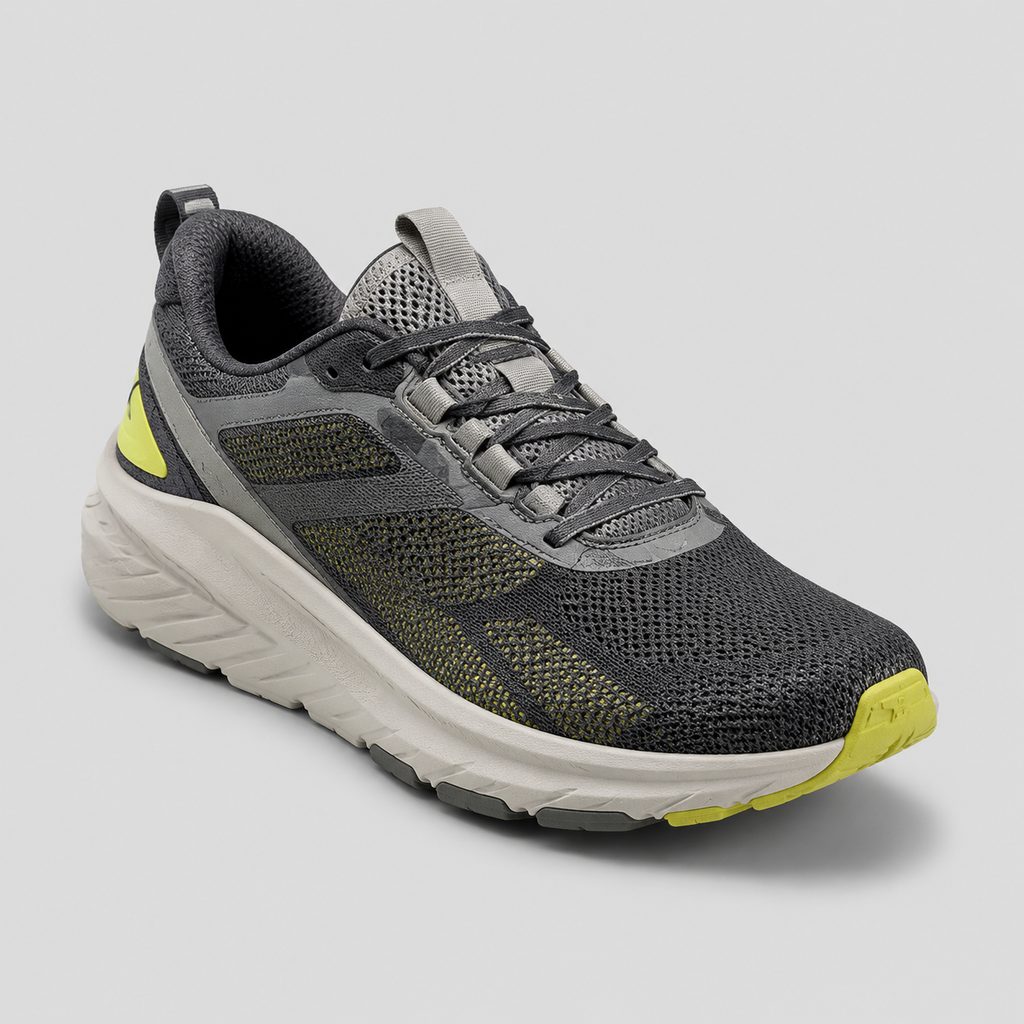
When unresolved product choices could change what is built, a buyer should request a DFM discussion before asking for a price. A wholesale sneakers DFM checklist is an editorial way to order that work: place the style inside the published footwear family, show what the tech pack fixes, and send separate questions about DFM, sampling, and quotation.
The available first-party material sets a narrow basis for that approach. The About page describes Custom Shoe Factory as focused on running, training, walking, and casual sneakers. Its OEM page says it manufactures to the buyer's tech pack and design, flags manufacturability issues during DFM, and holds bill of materials and tooling across reorders. The product and materials pages supply limited language for running shoes and engineered mesh. The buyer recommendations below organize an inquiry; they do not add a published workflow, sampling commitment, or quotation promise.
Is the style inside the published family?
The published family has four named uses: running, training, walking, and casual sneakers. A project title that merely says “sneakers” does not establish where the style belongs. Before discussing material or price, use a category check to describe the product in one of those terms.
- Name running, training, walking, or casual sneakers as the primary intended use.
- For a hybrid-looking style, identify the leading use and describe other visual influences as design context.
- Keep channel information, such as retail or private label, separate from the category decision.
- When the program cannot be described within the published family, ask about scope before presenting it as compatible.
This is an editorial screening step, not an approval of a particular last, construction, or performance outcome. Its purpose is to keep the first request aligned with the product boundary the company has published.
DFM is narrower than a price request
A price request and a manufacturability question call for different information. The published OEM wording gives DFM one stated role: manufacturability issues are flagged during DFM. In the same sentence, the company says OEM manufacture is to the buyer's tech pack and design, while the bill-of-materials and tooling language applies across reorders.
| OEM wording | Buyer use in the inquiry | Boundary to retain |
|---|---|---|
| Manufacture to your tech pack and design | Provide the details that define the product and identify gaps that remain open. | The OEM sentence does not name a required template or document set. |
| Flag manufacturability issues during DFM | Ask which manufacturability issues can be considered from the current definition. | The sentence does not state a review sequence, duration, or approval rule. |
| Hold your bill of materials and tooling across reorders | When the inquiry concerns a reorder, identify it as such and ask how the wording applies. | The clause is limited to reorders and should not be assigned to a new inquiry. |
The table is a writing aid, not a process map. It helps the buyer avoid treating DFM as a bundled result that already includes samples, commercial terms, or decisions that have not yet been documented.
An OEM athletic sneakers tech pack should expose decisions
The OEM excerpt does not prescribe a required field list. As an editorial recommendation, make the current product definition easy to read by marking each point as fixed, open, or reference-only. That gives a wholesale sneaker manufacturability review a defined subject instead of an unspecified design brief.
- Category and intended use
- State the primary running, training, walking, or casual-sneaker position. Describe intent without attaching an unverified performance result to the style.
- Upper and sole direction
- Record construction choices the team has actually made. For unresolved components, write the question to be reviewed rather than presenting a placeholder as a settled specification.
- Reference status
- Attach photos, drawings, or CAD views with labels such as “must match,” “direction only,” or “visual reference.” These labels are an editorial convention for clarifying buyer priorities.
- Branding and decoration intent
- Show planned placement and identify whether the decoration is fixed or still under discussion. Do not let a visual reference stand in for an undeclared construction choice.
- Open decisions
- List the points on which the buyer wants manufacturability feedback. A clear open-item list is more useful than implying that every shown detail is final.
The phrase wholesale sneaker manufacturability review describes the buyer's task, not a named company package. Ask which manufacturability issues the current information permits the factory to flag and which details need further definition before that discussion can be useful.
Mesh detail changes the question
Engineered mesh provides a useful test of whether an upper brief has enough direction. The materials page describes engineered mesh as air mesh or sandwich mesh made from knitted or warp-knit synthetic with zoned density for ventilation, light stretch, and support. It names screen print, heat-transfer film, and welded TPU overlays as decoration methods. The same material note gives a typical 90-250 GSM range depending on the zone, with denser knit at the eyestay and toe, and identifies running, training, and summer styles as best-fit uses.
Those details belong to the engineered-mesh source. Separately, the products page describes running shoes as performance-inspired daily-training builds with breathable uppers and cushioned midsoles, and lists mesh, knit, or PU uppers with EVA and rubber outsoles. Do not combine the two excerpts into a full upper-and-sole guarantee for an unreviewed design.
| What the buyer writes | Question to attach |
|---|---|
| “Mesh upper” | Which mesh-specific details need to be defined before manufacturability issues can be flagged? |
| Engineered-mesh intent with zone priorities and a proposed decoration method | Can the stated zones and decoration be considered in the manufacturability discussion? |
| Running-shoe product language | Which upper and outsole intent must the buyer state for this particular style? |
The published GSM range, zone guidance, and decoration methods are reference points, not universal requirements or proof of results for a proposed shoe. A buyer may use them to replace a vague “mesh sneaker” label with a more specific question, while leaving any unconfirmed construction choice open for review.
Three questions in a build-to-spec sneakers factory inquiry
A build-to-spec sneakers factory inquiry should separate requests that are often compressed into one RFQ. The OEM statement documents DFM flagging, but it does not say that sampling or quotation follows in a stated manner. Use distinct question blocks so each request can be addressed on its own terms.
- DFM: “Which manufacturability issues can be flagged from this definition, and which information remains open?”
- Sampling: “After the DFM discussion, which sampling options may apply to this product definition?”
- Quotation: “What additional product or commercial information is needed before a quotation can be considered?”
These are questions for the supplier, not statements of included services or agreed outcomes. Separating them also prevents a request for price from masking the fact that the product definition still needs a manufacturability discussion.
The handoff note
Use a short cover note to connect the files to the three questions. It does not need to reproduce the tech pack; it should tell the reader what is current, what remains open, and what response the buyer is requesting.
- Identify the current design revision and its primary category within the published family.
- Link or attach the tech pack, drawings, and visual references, with their status labels.
- Summarize known construction and material intent, including engineered-mesh details when mesh is central to the style.
- List unresolved decisions without presenting them as confirmed specifications.
- Place the DFM, sampling, and quotation questions under separate labels.
Send that package through the quote request page. The purpose is narrower than making a price-ready brief: it makes the current definition readable within the published OEM and product-family scope. Sampling and quotation remain separate questions until the supplier responds to them.
Sources and verification
- About Custom Shoe Factory | OEM/ODM Athletic Shoes First-party site source
- Athletic Shoe Manufacturer | Custom Product Range First-party site source
- OEM / ODM Shoe Development | Custom Footwear Manufacturing First-party site source
- Shoe Soles, Uppers & Insole Materials | Footwear Specs First-party site source
Share the current product definition and ask which development, manufacturability, sampling or quotation options may apply to the project.
Send your project brief