Sourcing Guides
Wholesale Running Shoes First Production Structure
A look-approved reference pair is not a production release. This guide shows how wholesale running shoe buyers convert category, upper, midsole, and mesh language into inspectable first-production structure.
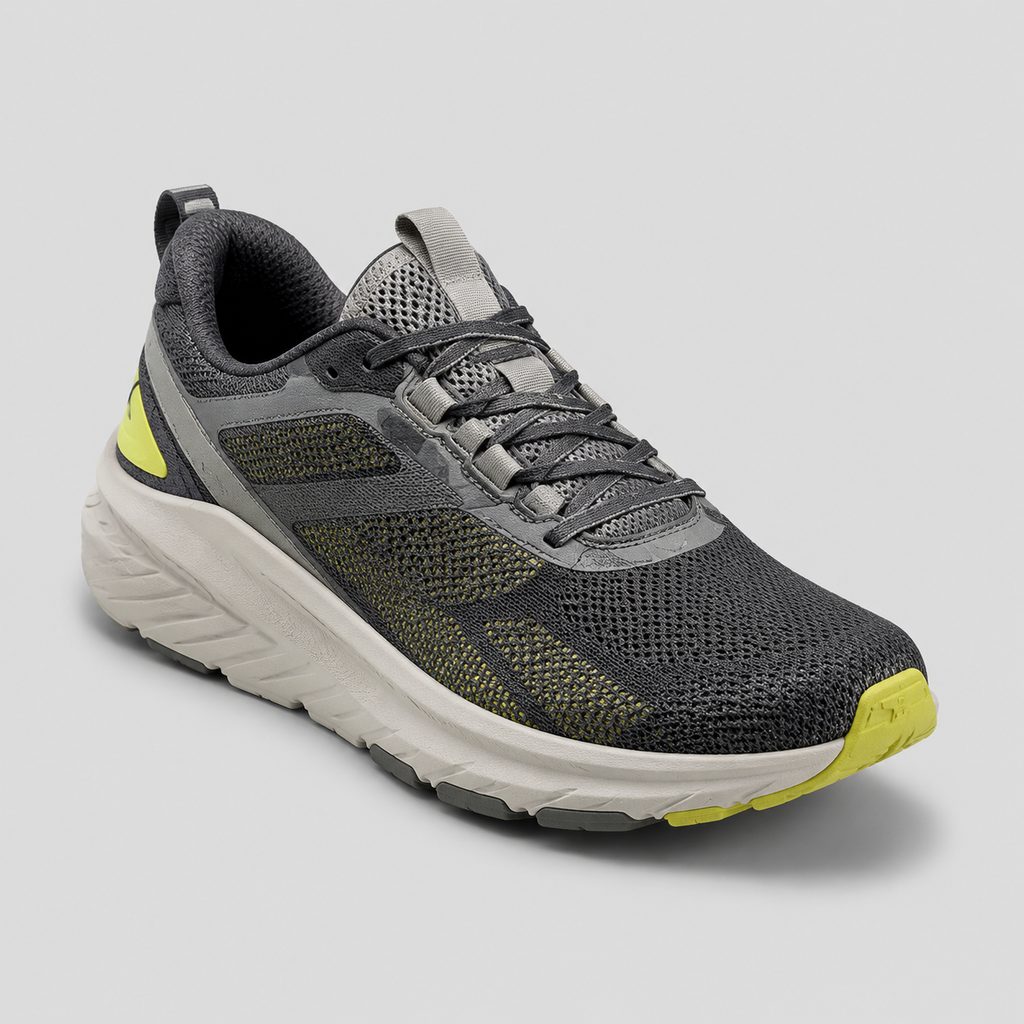
Wholesale running shoes first production often starts too early. Brands and importers approve a reference pair on look, then release the lot while upper construction, cushioned midsole intent, outsole materials, mesh zoning, and inspection expectations still live in conversation. The job at this stage is a structured handoff: what the pair settles, what the running category requires, and which build details must be written so a first production lot can be checked against something firmer than a photo and a sample box.
What the reference pair settles before first production
A published example project format on the case-studies page frames a first running-shoe order as a path from reference pair to inspected first production. That framing works as a stage map. It does not prove that any single pair already carries manufacturability clearance. The pair is a starting constraint: silhouette, color story, stack height impression, and overall look can be locked against it. Construction method, material grades, zone behavior on the upper, midsole cushioning intent, outsole compound family, packing, and acceptance criteria usually cannot.
Before bulk language enters the conversation, list the open items the pair does not settle. If those items remain oral, the factory and the buyer will fill gaps differently when the first production lot is built. Keep the pair as the visual and fit reference. Require every production decision that cannot be reverse-engineered from the pair to appear as a named field on the handoff document.
Running category boundary before first production
First production structure only makes sense inside a product family that can support the build. The about page positions the business as sport-footwear specialists focused on running, training, walking, and casual sneakers rather than a catch-all factory. The products page places breathable and cushioned running shoes in performance-inspired daily-training builds with mesh, knit, or PU uppers, EVA and rubber outsoles, and retail, ecommerce, or private-label contexts.
Use that boundary before inventing a hybrid sneaker brief. If the program is daily-training running footwear with airflow and cushioning expectations, keep the language inside that family. Mixing lifestyle construction cues, unsupported performance claims, or materials outside the stated upper and outsole options creates inspectable ambiguity later. Confirm channel context (retail, ecommerce, or private label) only as program framing; do not assume volume or assortment rules that the product page does not state.
Inspectable fields from upper and midsole language
Marketing phrases such as breathable upper and cushioned midsole are not inspection criteria. Convert the published running-shoe build language into specification fields that a first production lot can be checked against. Keep each option set inside the scope of the products page rather than expanding it into unstated chemistries or durability ratings.
- Upper family: state mesh, knit, or PU, and name which zones use which family if the design mixes them.
- Breathability intent: describe where airflow is required (vamp, medial, tongue) instead of repeating “breathable” alone.
- Cushioned midsole: record the cushioning role you want inspectors to respect (daily-training comfort stack) without inventing foam chemistry beyond what you can later specify with samples.
- Outsole materials: call EVA and rubber only as the published option set, then mark which components are EVA, which are rubber, and how the contact pattern should read against the reference pair.
- Channel context: note retail, ecommerce, or private label so packing and presentation questions can be asked later without rewriting the product definition.
These rows do not complete a tech pack by themselves. They stop first production from relying on adjectives that two teams will interpret differently on the line.
Zone-level mesh specification before upper release
Generic “mesh upper” wording is a common failure mode when buyers move a running shoe reference pair into a running shoe first production order. The materials page describes engineered mesh (air mesh, sandwich mesh) as knitted or warp-knit synthetic with zoned density for ventilation, light stretch, and support, typically run at 90–250 GSM depending on the zone, with denser knit at the eyestay and toe. It also notes that the material takes screen print, heat-transfer film, and welded TPU overlays cleanly, and positions it for running, training, and summer styles that need airflow at a sensible cost.
Before calling the upper ready for production, map those facts into zone decisions rather than a single mesh label:
- Name the mesh type per major panel (air mesh, sandwich mesh, or other engineered knit you are actually sampling).
- Assign density intent by zone. Materials guidance supports denser knit at the eyestay and toe; any lighter density on ventilation-focused panels is a buyer-assigned intent that still needs samples, not a materials-page fact.
- Record a GSM range per zone inside the published 90–250 window, or flag zones still open if samples have not settled the range.
- Specify branding method only where supported: screen print, heat-transfer film, or welded TPU overlays, with placement tied to panels that can take that method cleanly.
- Keep non-mesh upper parts (knit panels, PU overlays) separate so inspectors do not apply mesh rules to the whole shoe.
If a zone still lacks a GSM band or branding method, leave it marked open rather than claiming the upper is ready for inspected first production.
Scope of the published first-order example
The case-studies page describes “Running Shoe Launch for a New Brand” as an example of how a first running-shoe order is structured, from reference pair to inspected first production. Read that contribution narrowly. It confirms that the path itself is a recognized procurement stage and that inspection sits at the end of the first-order structure. It does not document volumes, lead times, pricing, certifications, named customers, test results, or outcomes.
Use the example as a sequencing check: reference pair first, a definition written for inspection next, inspection criteria before release language. Do not read the page as a completed customer case or as evidence that your program already has a factory-approved plan. When you share your brief, you may ask which development, manufacturability, sampling, or quotation options apply; that invitation is a buyer question, not a service list pulled from the example.
Handoff that still shows open first-production decisions
A useful OEM running shoes production handoff shares the current product definition and leaves unresolved items visible. Overstating readiness for bulk is how first production becomes a dispute rather than an inspection event. Build a short package that a product-development or procurement lead can send without pretending every field is closed.
- Category lock: running, daily-training orientation, not a catch-all sneaker brief.
- Reference pair role: what the pair decides (look, silhouette, fit reference) and what it does not.
- Upper and midsole rows: mesh, knit, or PU; cushioned midsole intent; EVA and rubber outsole assignment; channel context if known.
- Engineered mesh map: zone types, density intent, GSM ranges where known, branding methods where known.
- Open decisions: any zone, branding, packing, sampling, or quotation item still unmarked.
- What inspectors check against: write that first production should be checked against the written fields, not only against the physical pair.
From there, share the definition through a quote request and ask which development, manufacturability, sampling, or quotation options may apply to the project. Cross-check the product family on the running shoes product range, the specialist boundary on the about page, material language on the materials specs, and the stage framing on the example project formats before you treat the file as ready for first production. The goal is a first production order path that still tells the truth about what remains open.
Sources and verification
- Footwear Manufacturing Case Studies | Example Project Formats First-party site source
- Athletic Shoe Manufacturer | Custom Product Range First-party site source
- About Custom Shoe Factory | OEM/ODM Athletic Shoes First-party site source
- Shoe Soles, Uppers & Insole Materials | Footwear Specs First-party site source
Share the current product definition and ask which development, manufacturability, sampling or quotation options may apply to the project.
Send your project brief