Footwear Product Development
Wholesale Running Shoe Reference Pair Inquiry Intake
A reference running shoe can anchor a useful sourcing conversation, but it cannot replace a current product definition. Use this intake method to preserve visible evidence, buyer decisions, and unresolved questions.
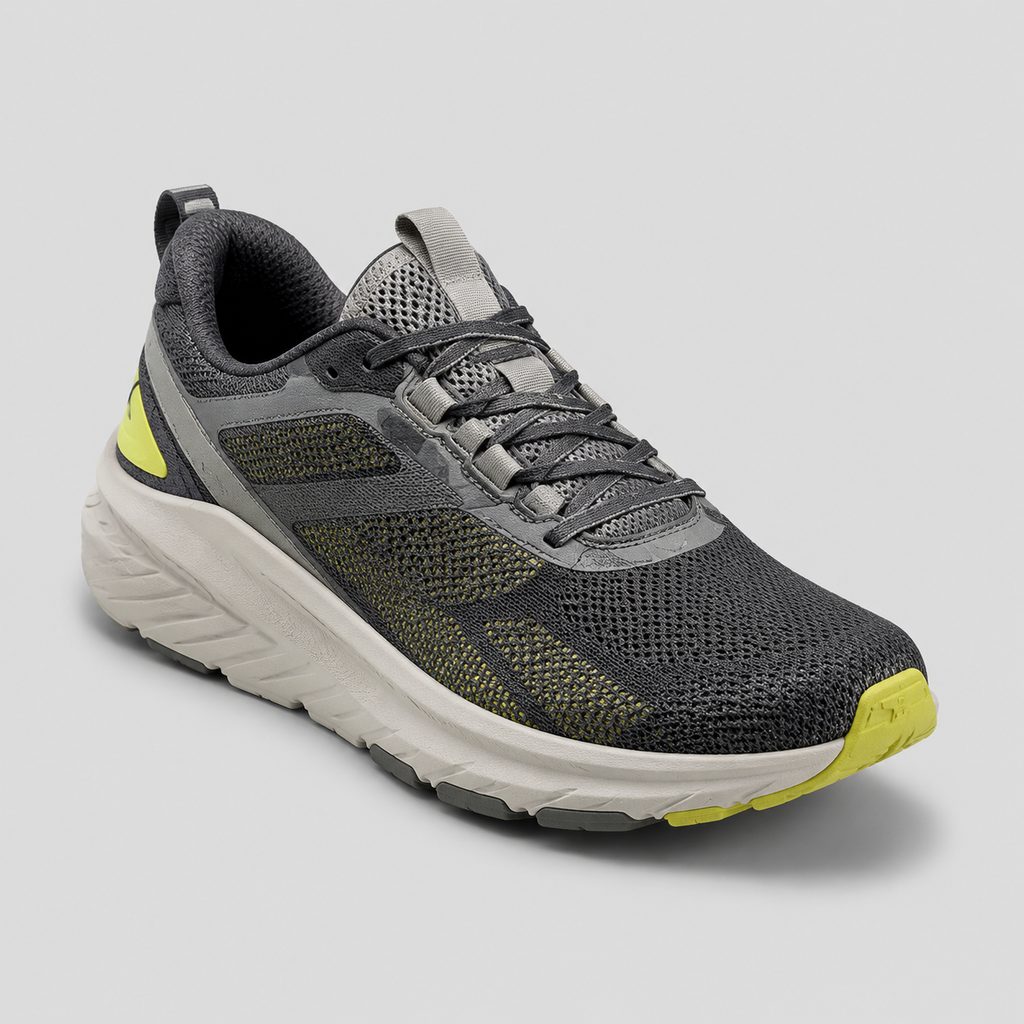
A physical running shoe can help a sourcing team start a conversation, but it is not a complete product definition. Panel lines, apparent mesh openness, logo locations, collar height, and outsole geometry are useful visual cues. They still leave material construction, compounds, sizing basis, brand approvals, commercial terms, and process questions unresolved. A wholesale running shoe reference pair inquiry works best when the pair is treated as bounded intake evidence rather than a ready-made specification.
As an editorial recommendation for the buyer, keep a short three-part record: observed or supplied information, decisions the buyer still owns, and questions for the factory conversation. That structure stops resemblance from being mistaken for a production definition and shows a product-development team what is known today.
A Reference Pair Is Intake Evidence, Not a Spec
Photograph the pair from consistent views, label the source and date, and note whether each observation comes from direct examination or from a supplier document, sketch, or brand artwork. Describe appearance in neutral language—for example, "open-looking textile in the forefoot" or "raised lateral graphic"—instead of assigning an unverified material, process, or performance claim.
Then mark what the shoe cannot show. The last, material weight, foam formulation, outsole compound, internal reinforcement, fit target, and tolerances stay off the "known" column until the buyer supplies them or raises them as inquiry topics. That boundary is especially useful in a custom running shoe reference pair review: early assumptions do not get written into the request as if they were already settled.
Decide the Product Family Before the Details
Custom Shoe Factory describes its sport-footwear focus as running, training, walking, and casual sneakers. Use that published focus as a buyer screening point only. It does not confirm that a particular reference pair, construction, or requested feature is suitable for production.
State whether the intended product is running, training, walking, or casual footwear.
Describe intended use in buyer terms—daily training, general exercise, commute walking, or casual wear—without inferring use from appearance alone.
Separate visual-only references from features that must appear in the product definition.
Keep an open-items list for construction, material, branding, sizing, and commercial decisions.
This category screen narrows the conversation without implying that the product has already been engineered.
Three Columns That Separate Facts From Gaps
Use one row per feature or zone. Completeness on the first pass is optional. Visibility of missing information is the point: gaps should not become accidental requirements.
| Visible or supplied reference information | Buyer decision needing confirmation | Question for the inquiry |
|---|---|---|
Upper appears more open in the forefoot than at the eyestay. | Whether airflow, support, stretch, or a particular visual texture is the priority in each zone. | What upper constructions may be considered for the intended category and stated priorities? |
Midsole has a thick, sculpted profile. | Desired underfoot feel, visual profile, and any non-negotiable dimensions or performance requirements. | Which details need a fuller definition before manufacturability or quotation can be discussed? |
A logo is visible on the tongue and lateral quarter. | Final artwork, colors, locations, scale, and the approval standard for each placement. | For the proposed substrate, which decoration approaches may be relevant, and what files or details are needed to evaluate them? |
Outsole has a particular lug pattern and contrast-color areas. | Whether appearance, traction intent, wear expectations, or color blocking is the requirement. | Which outsole information remains necessary before the request can be assessed? |
Running-Shoe Cues: Stay Inside the Published List
On the product-range page, running shoes are characterized as performance-inspired daily-training builds with breathable uppers and cushioned midsoles. The same page lists mesh, knit, or PU uppers, and EVA and rubber outsoles. Treat those lines as range-level descriptions and option lists. They do not identify the materials or construction of a buyer's reference pair, and they do not decide what a proposed shoe will use.
As an editorial recommendation, park range language in a comparison note rather than a locked specification field. A practical wording is: "The product is intended as a daily-training running shoe; upper material direction and outsole material direction remain open." That keeps project intent clear while material selection, construction, and cushioning setup stay available for separate discussion.
Running shoe upper material questions work better when they are tied to a zone and a decision. Ask what is intended at the toe, vamp, eyestay, quarter, tongue, and collar. For each area, state whether the priority is appearance, ventilation, stretch, support, abrasion resistance, structure, or another buyer-defined outcome. Do not convert a visible texture into an unsupported material callout.
When Engineered Mesh Enters the Conversation
If engineered mesh is under consideration, the materials page supplies useful vocabulary. Its engineered-mesh description refers to air mesh and sandwich mesh. It characterizes the material as knitted or warp-knit synthetic with zoned density for ventilation, light stretch, and support. It also states a typical range of 90–250 GSM depending on the zone, with denser knit identified at the eyestay and toe.
Those points are material-level reference information only. They do not prove that the reference pair is engineered mesh, that a buyer's product will use air mesh or sandwich mesh, or that any stated GSM will apply. Put the unknown into the inquiry: "If engineered mesh is considered, which zones need a denser construction, and what material information would be needed to review that direction?"
A photograph can support a note about visible openness or density contrast. It cannot establish knit method, composition, zonal weight, or material performance of the shoe in hand.
Separate Logo Notes From Branding Approvals
Document every visible mark on its own row: tongue label, quarter logo, heel mark, pull tab, outsole mark, and any decorative overlay. Capture approximate placement and the relationship to seams or panels. Final artwork, color reference, dimensions, placement tolerance, and approval requirements remain buyer decisions unless the current product definition already supplies them.
For engineered mesh, the materials page names screen print, heat-transfer film, and welded TPU overlays as compatible decoration approaches. That statement stays inside the material description. It does not confirm that any method, multi-color treatment, substrate, artwork, or placement is appropriate or available for a particular program.
| Record from the pair | Keep open for the inquiry |
|---|---|
Visible mark location, approximate size, color impression, and whether the feature appears flat or raised. | Artwork file readiness, exact color target, decoration method, substrate suitability, placement tolerance, and approval process. |
Whether a graphic appears to cross a panel, seam, or material transition. | Whether the intended construction permits that placement and what construction details must be defined first. |
One Case Example Does Not Set Your Workflow
The case-studies page includes an example titled "Running Shoe Launch for a New Brand." That example frames a first running-shoe order from a reference pair to inspected first production. The narrow supportable point is that a reference pair can appear as an input in one example project format.
The excerpt does not document a standard workflow for all inquiries. It does not set universal sampling stages, timing, inspection criteria, acceptance responsibilities, or outcomes for another buyer's project. Keep those items as questions rather than reading the example wording as a project commitment.
Carry These Questions Into the Inquiry
Use this athletic footwear inquiry checklist with the reference-pair intake. Each item is a prompt about the buyer's current definition, not a claim that a given option will apply.
Which product family is intended, and which visual details are only directional references?
Which upper and outsole directions are decided, and which remain open for development or manufacturability discussion?
For each upper zone, what outcome matters most: appearance, airflow, stretch, support, structure, or another specified requirement?
If engineered mesh is being considered, what needs clarification about construction, zonal density, or material direction?
What branding is visible on the pair, and which artwork, colors, placements, and approvals are still pending?
What role should the reference pair play: visual direction, proportion reference, material comparison, or another stated purpose?
Which development, manufacturability, sampling, or quotation options may apply to the project?
Submit the Current Definition With Gaps Intact
Share the reference-pair record with the current product definition: photos, product-family intent, visible observations, buyer decisions, and open questions. A concise list of unknowns is more useful than a request that silently assumes details not yet defined.
Use the inquiry form to ask which development, manufacturability, sampling, or quotation options may apply to the project. At this stage the goal is to clarify the current definition and its unresolved points—not to present the reference pair as a complete production specification.
Published Pages Behind This Intake Method
Athletic Shoe Manufacturer | Custom Product Range — published running-shoe positioning and listed upper and outsole options.
About Custom Shoe Factory | OEM/ODM Athletic Shoes — stated focus on running, training, walking, and casual sneakers.
Shoe Soles, Uppers & Insole Materials | Footwear Specs — engineered-mesh material description, decoration compatibility statement, and typical GSM range.
Footwear Manufacturing Case Studies | Example Project Formats — limited reference-pair-to-inspected-first-production framing of one example project format.
Each page supplies only the scope quoted above. Published material details are not project-specific confirmation, and the case-study framing is not a universal process map.
Sources and verification
- Athletic Shoe Manufacturer | Custom Product Range First-party site source
- About Custom Shoe Factory | OEM/ODM Athletic Shoes First-party site source
- Footwear Manufacturing Case Studies | Example Project Formats First-party site source
- Shoe Soles, Uppers & Insole Materials | Footwear Specs First-party site source
Share the current product definition and ask which development, manufacturability, sampling or quotation options may apply to the project.
Send your project brief