Footwear Sourcing
Wholesale Running Shoe Quality Control Questions
Treat quality language as a scope-and-timing problem. Keep the new-brand case-study wording at its stated range, then ask about the reference, review point, attributes, and decision information for your shoe.
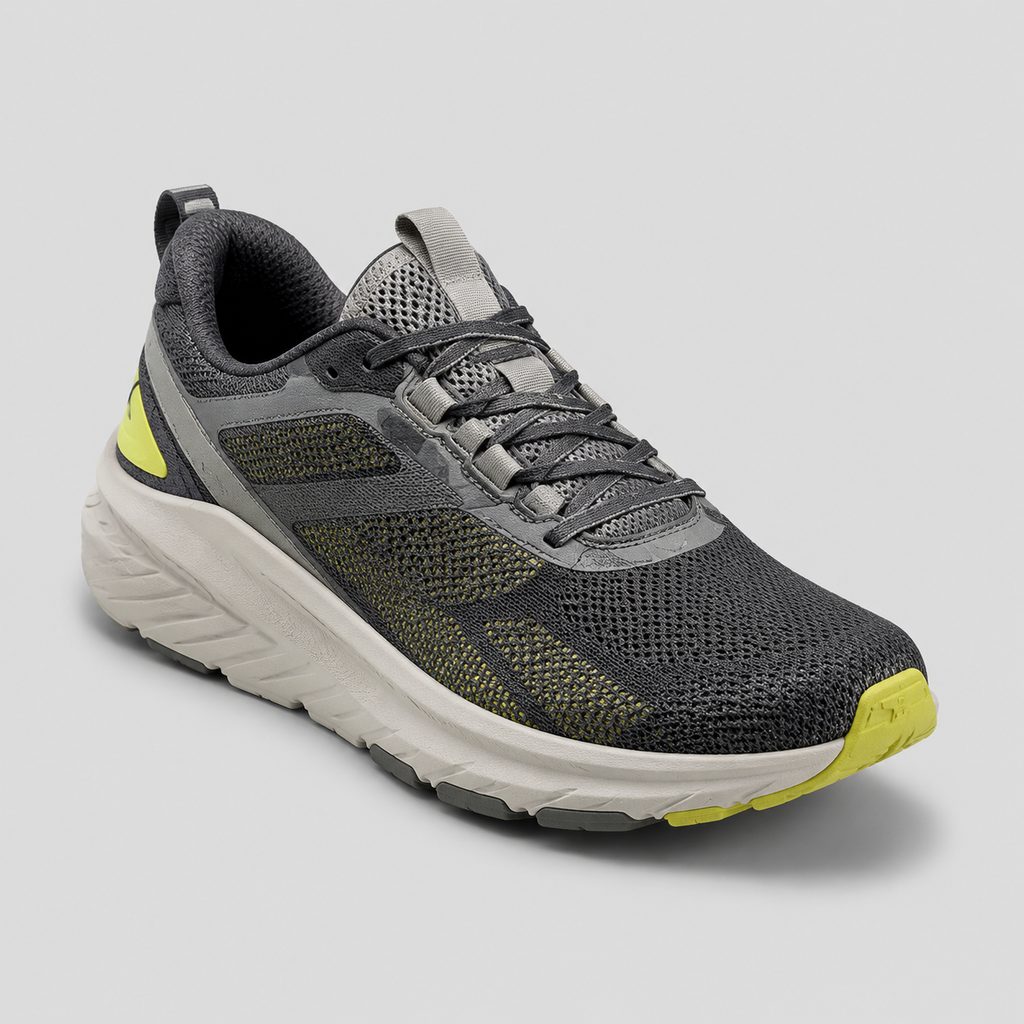
Wholesale running shoe quality control questions usually start after a buyer sees broad language about quality and still cannot tell what, if anything, is inspected for a specific shoe. A public statement can name a capability theme or an example-project milestone. It does not, by itself, define stages, acceptance rules, tests, reports, or who owns each step on a new program.
Editorially, treat every quality phrase as a prompt for confirmation. The useful work is to separate what the site pages actually say from what still needs a project-specific answer before a quality claim changes sourcing confidence.
When a Quality Claim Stops Short of a Plan
Buyers often read a quality-related line and assume an inspection plan already exists for the next order. The published pages do not supply that plan. They do not list stage gates, sampling rates, defect thresholds, laboratory methods, report formats, or corrective-action routes.
Editorial recommendation for the buyer: record which phrase triggered the inquiry, then list the decisions still open for the current build. That list—not the marketing wording—should drive the email or form. An athletic footwear quality assurance inquiry is stronger when it asks for applicability to a defined shoe than when it asks the factory to restated general quality language.
What the Public Pages Support, at Their Stated Scope
Two first-party signals matter for this topic, and they answer different questions.
| Published page | What the excerpt supports | What remains for confirmation |
|---|---|---|
| Case studies: Running Shoe Launch for a New Brand | The page presents this example as how a first running-shoe order is structured for a new-brand launch, from a reference pair to inspected first production. | Whether that reference-to-first-production path applies to another brand, revision, or timeline; what “inspected” covers on that project; and what evidence the buyer will receive. |
| Products: running shoes | Running shoes are described as performance-inspired daily-training builds with breathable uppers and cushioned midsoles. The same range listing names mesh, knit, and PU for uppers, and EVA and rubber for outsoles. | Which of those materials or construction cues apply to the proposed shoe, and which visible details need project-specific review discussion. |
Read the case-study line only as an example-project format for a new-brand running-shoe launch. It names a production point—inspected first production—after a reference pair. It does not document a universal inspection workflow for every wholesale order or every buyer type.
The product page supplies range vocabulary. It does not assign those materials or performance cues to every requested design, and it does not describe how any component will be checked.
Name the Shoe Before Asking What Will Be Checked
Quality questions stay vague when the factory cannot tell which build is under discussion. The running-shoe range language helps only after the buyer maps it to a current definition.
Editorial recommendation for the buyer: send a short product definition before the inspection-related questions. Include only what is already decided, and label the rest as open.
- Controlling reference: physical pair, specification pack, artwork, annotated images, or another item meant to guide the conversation.
- Current revision: so older files are not treated as active direction.
- Build direction already selected: for example, a breathable upper intent and a cushioned midsole direction if those are real project choices, not assumed from range copy.
- Material families already selected: mesh, knit, or PU on the upper; EVA or rubber on the outsole—only where chosen.
- Open points: color, branding placement, packaging, sizing reference, or construction details still undecided.
That preparation does not create an inspection protocol. It makes later running shoe inspection questions attach to a known shoe instead of a category label.
How Material Copy Becomes Verification Topics
The materials page describes engineered mesh as air mesh or sandwich mesh. It describes knitted or warp-knit synthetic construction with zoned density for ventilation, light stretch, and support. Separately, it states that engineered mesh takes screen print, heat-transfer film, and welded TPU overlays.
Those lines characterize a material family. They can make an inquiry more concrete when the buyer has already selected mesh zones or branding treatments. They do not state that a selected mesh, print, film, or overlay will be inspected in a particular way on any order.
| Published material wording | Buyer question to attach to the project |
|---|---|
| Engineered mesh has zoned density for ventilation, light stretch, and support. | For the upper under discussion, which zones should match the controlling reference in placement or appearance? |
| Engineered mesh takes screen print, heat-transfer film, and welded TPU overlays. | If one treatment is proposed, where should it sit, and which reference defines the intended result? |
Keep material characteristics and branding compatibility separate from any claim about factory review methods. The first set can be cited from the materials page; the second set belongs in project-specific questions.
Four Decision Points for Project-Specific Answers
The groups below are editorial prompts for the buyer. They seek answers that may apply after the factory reviews the current definition. They do not summarize a published service package, test program, or guaranteed deliverable.
- Agreed reference. Which submitted item controls the conversation, and which revision is current?
- Production point to discuss. Is the inspected first-production milestone named in the new-brand running-shoe launch example relevant to this shoe, or is another point more appropriate for this program?
- Visible or construction-sensitive attributes. Which details need clarification—upper zones, branding placement, color relationships, midsole profile, outsole appearance, sizing reference, packaging direction, or other build cues already present in the product definition?
- Decision information. What information can be discussed for the relevant point, and what further product definition does the factory need before the buyer can decide next steps?
Used together, these prompts test whether a reply is tied to the defined shoe or remains general. They also leave tests, tolerances, reports, and approval routes as open topics unless the factory confirms them for the project.
Category Fit Is a Different Judgment
The about page describes the manufacturer as focused on running, training, walking, and casual sneakers. That statement supports category relevance for a running-shoe conversation. It does not show a quality system, certification, test program, or outcome for the buyer’s design.
Keep the two judgments apart. Product-family fit answers whether the inquiry sits inside the stated specialty. Quality-control confidence still depends on the reference, the points under discussion, and the confirmations returned for that project. Phrases such as running shoe factory quality control remain useful search language; on the page, they still need the same evidence boundary.
A Bounded Inquiry That Leaves Decisions Open
Share the current product definition with unresolved items visible. The following is a single hypothetical inquiry a buyer might send after naming a controlling reference:
We are evaluating a running-shoe project and have shared the current product definition and controlling references. Please indicate which development, manufacturability, sampling, inspection-related, and quotation options may apply to this project, what further information is needed, and whether the inspected first-production point described in your Running Shoe Launch for a New Brand example is relevant.
The request asks what may apply after review. It does not present a review plan, sampling route, quotation basis, or production milestone as already agreed. Submit the definition and the open questions through the project inquiry form.
Sources and What They Leave Open
Company-specific statements in this article are limited to these first-party pages:
- Case studies — Running Shoe Launch for a New Brand: how a first running-shoe order is structured from reference pair to inspected first production.
- Products — running-shoe range language (performance-inspired daily-training builds; breathable uppers; cushioned midsoles) and the separately listed upper materials (mesh, knit, PU) and outsole materials (EVA, rubber).
- Materials — engineered mesh described as air mesh or sandwich mesh; knitted or warp-knit synthetic construction with zoned density; screen print, heat-transfer film, and welded TPU overlays.
- About — stated focus on running, training, walking, and casual sneakers.
No supplied excerpt sets inspection steps beyond the first-production milestone in that new-brand example. The excerpts also provide no test methods, tolerance thresholds, acceptance levels, certifications, report formats, corrective-action procedures, or universal coverage of any production point. Those remain questions for the buyer to raise against the current shoe rather than details to infer from the public pages.
Sources and verification
- Footwear Manufacturing Case Studies | Example Project Formats First-party site source
- Athletic Shoe Manufacturer | Custom Product Range First-party site source
- Shoe Soles, Uppers & Insole Materials | Footwear Specs First-party site source
- About Custom Shoe Factory | OEM/ODM Athletic Shoes First-party site source
Share the current product definition and ask which development, manufacturability, sampling or quotation options may apply to the project.
Send your project brief