Product Development
Wholesale Daily Training Running Shoes: What Range Copy Leaves Open
Published running-shoe range language can guide a sourcing conversation, but it does not validate a proposed build or product claim. Keep the range description and unresolved project requirements in separate parts of the brief.
Catalog copy answers a narrow question: what does the published range call this product family? It cannot, by itself, answer whether a proposed shoe supports the commercial language a team wants to use. For wholesale daily training running shoes, that distinction belongs in the product-definition stage, before an inquiry starts to read like a finished specification.
Use the public descriptions as an evidence boundary. The sources available here cover the running-shoe range, a material entry, and a case-study listing. They provide useful vocabulary for an inquiry. They do not document a selected construction, performance result, validation method, approval, or market claim for a new project. The editorial recommendation in this article is to keep those two records separate: capture the published wording, then place every project-specific expectation in an open-requirements record.
Start With the Published Range
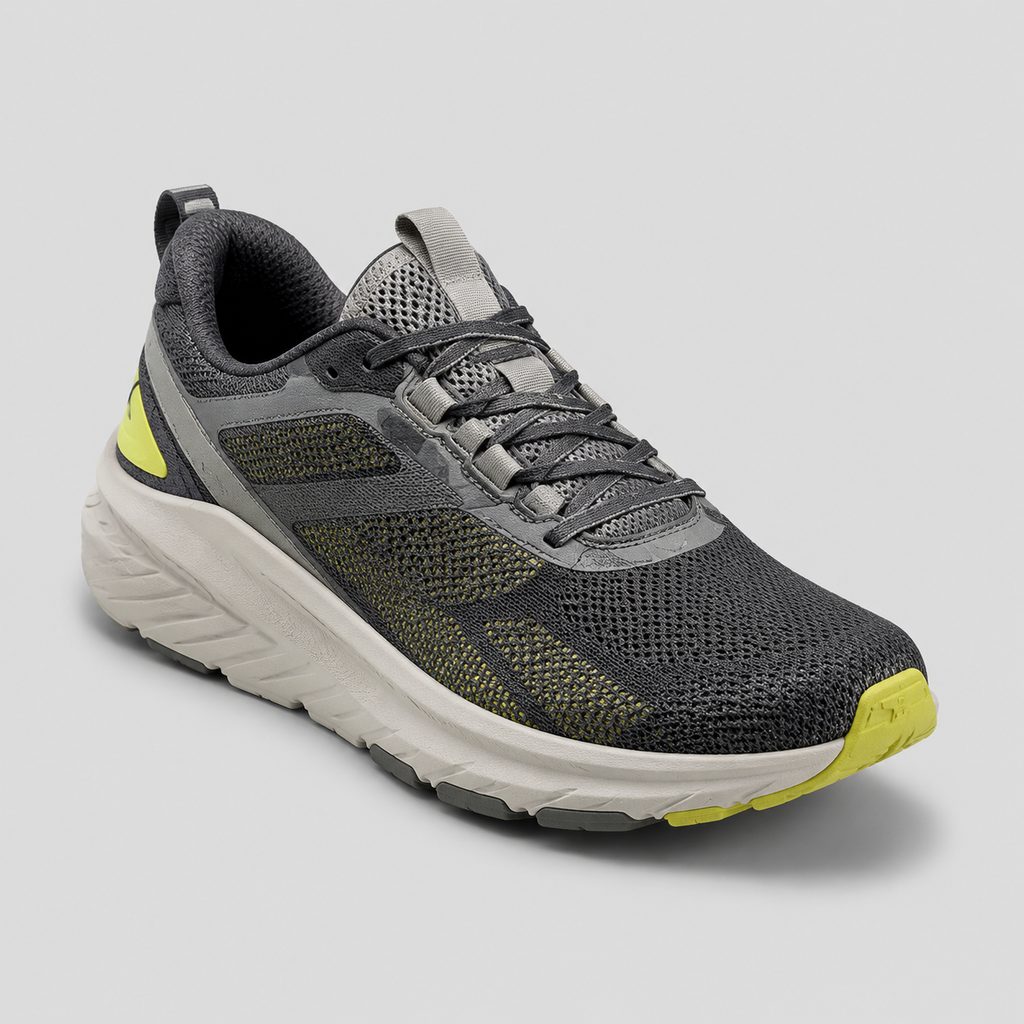
The running-shoe product entry describes its running shoes as performance-inspired daily-training builds. It also uses the descriptors breathable uppers and cushioned midsoles. The entry names mesh, knit, and PU as upper options. Separately, it names EVA and rubber as outsole options.
That wording maps a category. It is not a configuration sheet for a proposed program. The project record should preserve the wording at its published scope while making the remaining decisions easy to find.
| Published range wording | Editorial treatment in the project record | Keep open for the project |
|---|---|---|
| Performance-inspired daily-training builds | Record it as the range direction. | Whether the language belongs in the proposed product position or commercial copy. |
| Breathable uppers | Record it as a range descriptor. | The selected upper arrangement and any project-specific language the team wants to support. |
| Cushioned midsoles | Record it as a range descriptor. | The intended cushioning direction and the evidence needed for any finished-product statement. |
| Mesh, knit, and PU uppers | Record them as listed upper options. | Which upper material, if any, belongs in the current concept. |
| EVA and rubber outsoles | Record them as listed outsole options. | The actual outsole material and the questions attached to its proposed use. |
Do not collapse the upper and outsole rows into an assumed pairing. Their appearance on the same range page does not create a documented construction combination. The same discipline helps when a request includes a reference image: identify which details are direction only and which are required for the proposed shoe.
Put the Open Work in the Brief
After the range wording is captured, the buyer team needs a visible place for the decisions it cannot carry. This is not a request to add technical detail for its own sake. It is an editorial recommendation to mark each item as confirmed, open, or needing claim support, so a working assumption does not travel through development, sourcing, and sales as a settled feature.
- Use and sales context
- State the intended use context, target market, sales channel, and product position the team is considering.
- Comfort and cushioning language
- Write down any proposed product wording and the questions that would need answers before that wording is used.
- Outsole expectations
- Identify traction or durability questions relevant to the concept without assigning a result, compound, or outcome that has not been defined.
- Fit direction
- Record the intended fit and any review questions for the target market. Do not treat the range description as a fit finding.
- Testing, regulatory, and marketing requirements
- List applicable requirements and the support needed for proposed claims rather than inferring them from category language.
At this stage, avoid filling blank fields with a cushioning system, material grade, test result, standard, schedule, order quantity, or price that has not been supplied. A compact list of real unknowns gives the next conversation more value than a detailed brief built from assumptions.
Engineered Mesh: Keep the Source Qualifier Attached
The materials page describes engineered mesh as air mesh and sandwich mesh. It describes the material as a knitted or warp-knit synthetic with zoned density for ventilation, light stretch, and support. Its best-for line is specific: running, training, and summer styles that need maximum airflow at a sensible cost.
The qualifier belongs to the material entry. It should remain there in the project record. For an athletic footwear sampling inquiry, mention engineered mesh only when it is relevant to the concept, then separate material selection, upper construction, and expectations for the finished shoe into distinct questions. Nothing in the material entry selects engineered mesh for a new program or supplies project-specific evidence for a complete shoe's airflow, fit, strength, comfort, or performance.
Artwork can be included when it is part of the current concept, but it should be labeled as final, provisional, or under review. That simple status note keeps design direction from being mistaken for an approved specification.
One Case Listing, One Limited Reference
The case-studies listing includes a running-shoe launch entry for a new brand. The listing describes how a first running-shoe order is structured from a reference pair to inspected first production. It is useful as a narrow reference for a buyer who has a reference pair and wants to discuss that starting point.
Leave timelines, quantities, validation needs, approval requirements, and actual project steps in the inquiry because the listing does not provide them. The example should prompt a focused question about the current reference pair, not set expectations for every running-shoe project.
Send a Decision-State Inquiry
An inquiry does not need assumed answers to be useful. It needs an honest statement of what is known and what still needs a response. The following are editorial inputs for the buyer's inquiry; they are not a description of a promised workflow or documented company service.
- The current intended use and sales-channel context.
- A reference pair, sketch, image, or design direction, with mandatory details separated from reference-only details.
- Construction choices that are confirmed and choices that remain open.
- Any product or marketing statement that needs support before it is used.
- Artwork, color, logo-placement, or packaging information where applicable, with its current approval status.
- The requested next step, such as a development discussion, manufacturability input, sampling information, or quotation context.
This structure gives an athletic footwear sampling inquiry enough context to identify running shoe product development requirements that remain unresolved. Commercial details such as MOQ, packing, sampling, or quotation information are questions to submit for the current project, not terms to infer from a category page.
Leave the Boundary Intact at Handoff
Before submitting the brief, check that each statement is in the right column: published range language, confirmed project input, or open requirement. That review keeps broad category terms from becoming unsupported launch language.
Share the current product definition through the project inquiry form and ask which development, manufacturability, sampling, or quotation options may apply to the project. Where use, fit, comfort, durability, testing, regulatory, or marketing requirements remain undecided, retain them as questions for the response.
Sources and verification
- Athletic Shoe Manufacturer | Custom Product Range First-party site source
- Shoe Soles, Uppers & Insole Materials | Footwear Specs First-party site source
- Footwear Manufacturing Case Studies | Example Project Formats First-party site source
Share the current product definition and ask which development, manufacturability, sampling or quotation options may apply to the project.
Send your project brief