Procurement
Define the Build for Wholesale Athletic Shoes Sample Readiness
Close the product-family and construction-vocabulary gap before sampling wholesale athletic footwear: match intended use to the published running range, keep engineered-mesh notes at materials scope, and leave size-container checks for later.
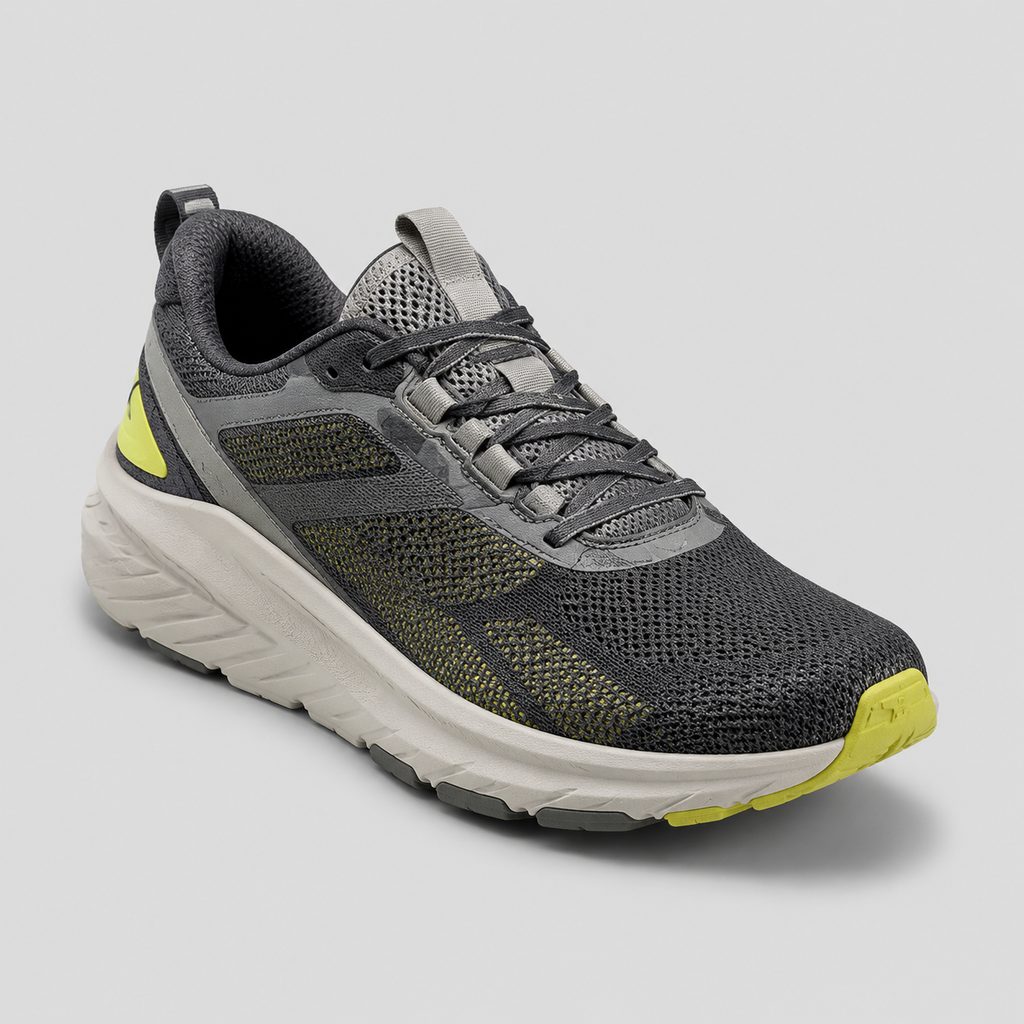
Wholesale athletic shoes sample readiness is a product-definition problem, not a calendar problem. Importers, wholesalers, and product-development teams often request samples or rush quotation paths while sport use, upper family language, and sole vocabulary remain open. The physical sample then answers the wrong manufacturability questions, and teams rework definitions that should have been filtered against a published product family first.
Use the published running-shoe range and engineered-mesh material notes as a pre-sample filter. Borrow the new-brand running-launch example only as a process shape—from reference pair to inspected first production—not as size grading, fit control, logo artwork, or commercial terms. Development, manufacturability, sampling, and quotation stay open for a project response.
When a sample request is still a category guess
A sample request is still a category guess when the brief says “athletic shoes” without locking intended use, upper family language, or sole stack vocabulary. Sampling cannot resolve manufacturability in that state. It can only produce a physical object that later proves misaligned with the program the buyer meant to sell.
Practical failure modes include mixing running and casual posture in one brief, naming breathable uppers without choosing among mesh, knit, or PU language, and asking for a cushioned feel without midsole or outsole terms a factory can map to a published family. The cost is not only a wasted sample cycle. It is a delayed decision on whether the intended build sits inside the range published for performance-inspired daily-training running shoes.
Editorial recommendation for the buyer: treat sample readiness as a definition gate. If the intended program cannot be stated in the vocabulary of a published family, pause the sample request and close that gap first.
Match intended use to the published running range only
On the product range page, the running family is described as performance-inspired daily-training builds with breathable uppers and cushioned midsoles. Upper language named there is mesh, knit, and PU. Outsole language named there is EVA and rubber. Channel labels listed for that family are retail, ecommerce, and private label. Those statements set the ceiling for a pre-sample match from that source.
Use that ceiling as a binary filter. If the program is a running or daily-training athletic shoe that can be described with breathable upper language and cushioned midsoles, and if mesh, knit, or PU plus EVA and rubber outsoles are acceptable starting terms, the published family is a plausible match. If the program needs trail-specific outsoles, court lateral systems, or other builds not named on that record, do not force the sample into the running family. Keep the mismatch visible and ask whether another family or a development path applies.
| Buyer intent to check | Published range language that can support a match | What a match does not prove |
|---|---|---|
| Sport posture | Performance-inspired daily-training running builds | Race, trail, or court performance claims |
| Upper direction | Breathable uppers; mesh, knit, or PU | A full upper construction drawing or zone map |
| Sole stack direction | Cushioned midsoles; EVA and rubber outsoles | Compound grades, hardness, or geometry |
| Channel context | Retail, ecommerce, private label labels on the family | Packing, compliance, or logistics services |
Channel labels help state where the shoe will be sold. They do not document packaging kits, compliance dossiers, or logistics offerings. Keep those as separate open questions if they matter. For adjacent families after the running filter, review the product range without treating every listed category as interchangeable for one sample brief.
Construction vocabulary for a running shoe sample brief
Pre-sample construction language should stay inside the constructions named on the running product record. Anything beyond those names is an open manufacturability question, not an assumed factory capability. A running shoe sample brief is more useful when each field is either named or marked undecided.
| Brief field | Named language a buyer may use | Leave open unless separately defined |
|---|---|---|
| Upper family | Mesh, knit, or PU | Exact mesh subtype, knit gauge, PU film stack, lining, and reinforcement plan |
| Upper character | Breathable uppers (as family language) | Ventilation targets, stretch maps, and panel seams |
| Midsole character | Cushioned midsoles (as family language) | Foam chemistry, density, hardness, and geometry |
| Outsole family | EVA and rubber outsoles | Rubber compound, EVA grade, tread pattern, and wear zones |
Write each named term only if it reflects the intended build. Do not list mesh, knit, and PU as simultaneous features of one sample unless the program truly combines them. Unioning partial option lists into a broader “we can do all of this at once” claim is a buyer error, not a reading of the product record.
If a field is still undecided, mark it as open. A brief that says “mesh or knit undecided; need wholesale running shoes manufacturability guidance on cost and airflow tradeoffs” is more useful than a vague “breathable athletic upper.”
What engineered-mesh notes settle—and what they leave open
When the upper direction is engineered mesh, the materials record supplies a separate, narrower vocabulary. Engineered mesh is described there as air mesh or sandwich mesh: a knitted or warp-knit synthetic with zoned density for ventilation, light stretch, and support, framed as the workhorse athletic upper. Branding methods named for that material are screen print, heat-transfer film, and welded TPU overlays, noted as taking multi-colour branding cleanly. Typical mass is stated as 90–250 GSM depending on the zone, with denser knit at the eyestay and toe. Best-for context on that record is running, training, and summer styles that need maximum airflow at a sensible cost.
Those notes settle only the material family language, the zoned-density concept, the stated GSM band by zone, the three branding methods, and the best-for context. They do not settle a full shoe specification, sample approval criteria, midsole chemistry, outsole compound, last, size run, or logo artwork package.
If the program needs engineered mesh, put the materials vocabulary on the brief as a boundary, then list every unspecified detail as open. You can ask whether a particular GSM zone plan, branding method, or airflow target is manufacturable for the intended running or training style. That question is not the same as treating the materials page as a finished upper BOM. Review the materials notes when mesh language is in play, without merging those notes into unstated sole or last capabilities.
Keep container size verification out of sample readiness
Importer-facing guidance on the wholesalers page describes sizing that does not drift as size grading locked to the golden sample and verified by measured length and width at final inspection, container after container. That statement belongs to later bulk control after a golden sample exists. It is not a pre-sample product definition method.
Conflating the two stages is a common procurement error: teams spend energy on future length and width checks while the sample brief still leaves sport use, upper family, and sole language open. Container-after-container verification cannot rescue a sample built to the wrong family vocabulary.
- First, establish product-family fit and construction vocabulary.
- Next, decide which development, manufacturability, sampling, or quotation options to ask about for the project.
- Only after a golden sample exists does locking size grading and verifying measured length and width at final inspection become the relevant control language for bulk consistency.
For importer-specific context after the pre-sample gate, see the importers and wholesalers page. Use it to separate later size-lock controls from the definition work described here.
Process shape from the new-brand running launch example
The case-studies page presents a “Running Shoe Launch for a New Brand” as an example of how a first running-shoe order is structured—from reference pair to inspected first production. That is an example project format, not a measured customer case with outcomes, timelines, or guaranteed results. The published process shape names those two endpoints only.
Use the endpoints as framing, not as a multi-stage factory checklist invented from the example:
- Reference pair (published endpoint). State whether a physical reference exists, what it is meant to communicate (silhouette, stack height impression, upper openness), and what it is not meant to freeze (uncopyable brands, unstated compounds, unmeasured lasts).
- Inspected first production (published endpoint). Treat first production inspection as a later stage after definition and sampling decisions, not as a substitute for pre-sample readiness.
Editorial recommendation for the buyer: between those endpoints, complete athletic footwear pre-sample definition work on your side—align the intended build to the published running family and named constructions, and record open fields on development, manufacturability, sampling, or quotation before treating a sample as ready. Those middle steps are buyer preparation. They are not intermediate stage names published on the case-study page.
The example does not publish size grading rules, fit-control methods, logo approval workflows, lead times, MOQs, or commercial results. If those topics matter, leave them as explicit open questions for the factory response rather than filling gaps with assumptions. Buyers who want the published framing can read the case-study formats while keeping the “example project format” label intact.
Sampling readiness checklist with open manufacturability fields
Use the checklist below as a buyer-side record, not as a factory service promise. Tick only what is already true. Leave blanks visible.
- Intended use stated. Running or daily-training athletic program described in plain language, without adjacent sport claims that the published family does not name.
- Product-family fit. Match or mismatch recorded against performance-inspired daily-training running builds with breathable uppers and cushioned midsoles.
- Upper vocabulary named or marked open. Mesh, knit, or PU selected, or explicitly undecided with a manufacturability question.
- Sole vocabulary named or marked open. EVA and rubber outsoles accepted as starting language, or replaced with an open question if the program needs something else.
- Engineered-mesh boundary (if used). Zoned-density workhorse athletic upper language, 90–250 GSM by zone concept, and branding methods (screen print, heat-transfer film, welded TPU) recorded only as materials-scope notes, not as a full shoe approval package.
- Reference pair role (if any). What the pair is meant to communicate and what it must not freeze, aligned with the published process shape from reference pair to inspected first production.
- Channel context labeled, not over-claimed. Retail, ecommerce, or private label stated as sales context if relevant, without inventing packing or compliance services.
- Open inquiry fields listed. Development path, manufacturability review, sampling path, packing questions, MOQ questions, and quotation inputs marked as questions the buyer may ask for this project, not as documented guarantees.
- Size-container controls deferred. Golden-sample length and width verification kept out of the pre-sample checklist.
Hypothetical illustration only: a wholesaler preparing a spring running drop might record “daily-training running; mesh upper direction; EVA and rubber outsoles acceptable; engineered mesh branding via heat-transfer film under discussion; midsole geometry open; need manufacturability and sampling guidance.” That sentence is a definition snapshot, not a customer case and not a quote.
Handoff that preserves gaps for a project response
When the checklist is as complete as it can be, send the current definition through the quotation path and keep unresolved items visible. A useful handoff states intended sport use; family match or mismatch; named constructions; materials-scope notes if mesh is in play; reference-pair role if any; and a short list of open questions on development, manufacturability, sampling, packing, MOQ, or quotation that the buyer wants answered for this project.
Do not collapse those open topics into a single assumed service package. The factory response should be able to address which options apply, which definitions still block sampling, and which details must wait for later stages such as inspected first production or container-level size verification. A clean gap list is more actionable than a polished brief that hides undecided fields. Share the current product definition and ask which development, manufacturability, sampling, or quotation options may apply via request a quote.
Sources and verification
- Athletic Shoe Manufacturer | Custom Product Range First-party site source
- Shoe Soles, Uppers & Insole Materials | Footwear Specs First-party site source
- Footwear Manufacturing Case Studies | Example Project Formats First-party site source
- Wholesale Shoes & Bulk Footwear Supply | Importers First-party site source
Share the current product definition and ask which development, manufacturability, sampling or quotation options may apply to the project.
Send your project brief