Footwear Sourcing
Wholesale Athletic Shoe Size Grading Questions
A supplier's published grading statement can frame a focused discussion, but buyers still need to identify the reference, product scope, measurements, and open decisions for their own athletic-shoe program.
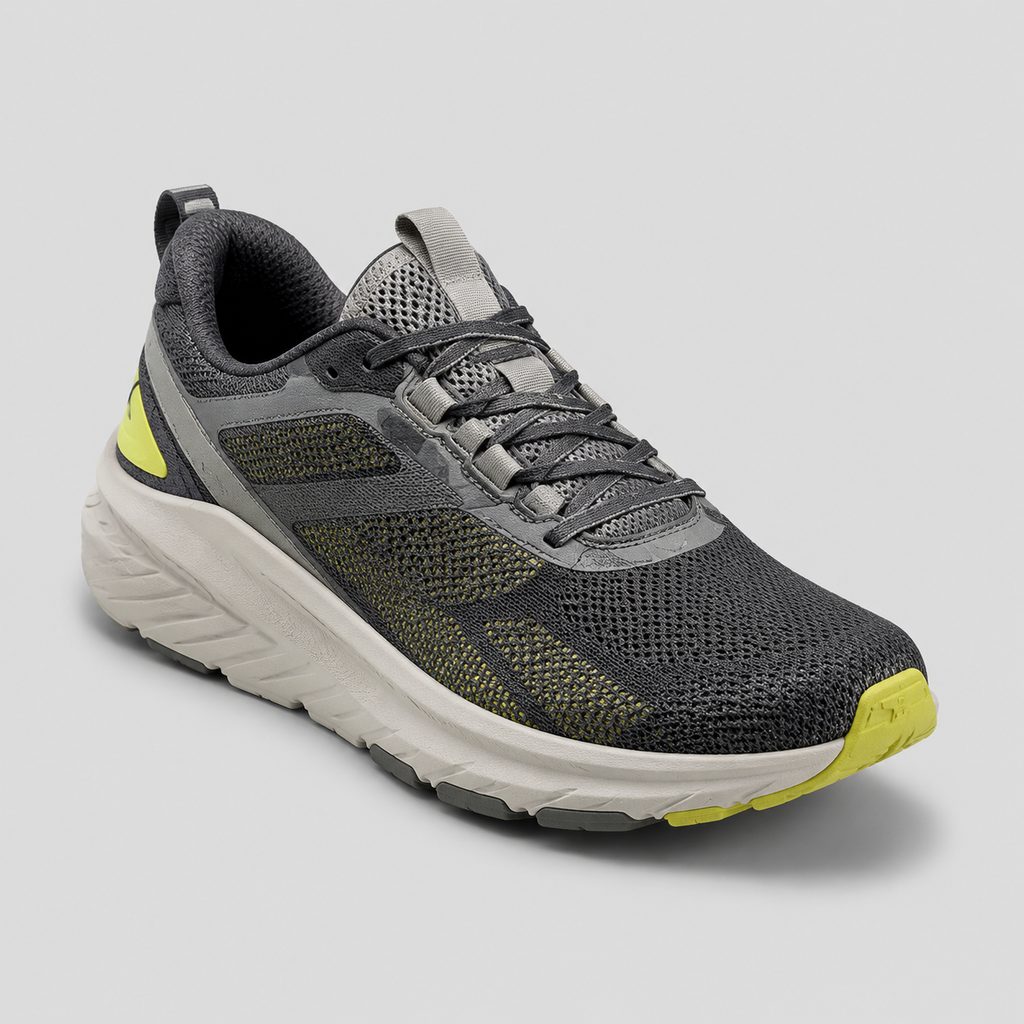
Wholesale athletic shoe size grading questions are about the scope of a supplier statement before they are about a finished size chart. As an editorial recommendation, a buyer should first identify the proposed shoe and the reference item that will be discussed. Without that context, a phrase such as size grading can be mistaken for a completed product specification.
Custom Shoe Factory's importer and wholesaler guidance supplies a narrow starting point. It states that size grading is locked to the golden sample and verified by measured length and width at final inspection. That wording identifies a reference, two measurements, and an inspection point. It does not, by itself, identify the style, size range, measurement method, tolerance, or acceptance terms for a buyer's proposed shoe.
Read the Grading Statement at Its Stated Scope
When assessing an athletic shoe size grading supplier, keep the published wording and the project questions in separate columns. The first is a documented statement. The second is the information that remains open for the current product definition.
| Published wording | Editorial question for the buyer |
|---|---|
Size grading is described as locked to a golden sample. | Which identified item, if any, is being discussed as the potential golden-sample reference for this shoe? |
Measured length and width are named in connection with final inspection. | What available length and width information should accompany the product discussion, and which measurement details remain open? |
The wording says this happens "container after container." | Is the statement relevant to the current product definition, without assuming that it already defines an arrangement for this project? |
This distinction is practical rather than semantic. The statement gives a buyer a concrete subject to raise. It should not be used as evidence of a defined fit result, a prescribed inspection standard, or a settled shipment decision. Those conclusions reach beyond the wording supplied on the importer page.
Name the Reference Before Discussing Grading
Custom Shoe Factory's case-study page presents a running-shoe launch for a new brand as an example structured from a reference pair to inspected first production. That is a useful example of how one published project format begins with a reference. It does not say that every program follows the same sequence or that every reference pair becomes a golden sample.
For a golden sample footwear inspection discussion, a buyer should avoid merging an early product idea, a comparison pair, and a possible approval reference into one label. The following distinctions are editorial guidance for preparing a precise inquiry.
- Product idea
Name the athletic-shoe family and describe which parts of the concept are still open. Do not present an early idea as an approved dimensional reference.
- Reference available now
Identify the item being shared, such as a comparison pair or prototype, and state what it represents in the discussion.
- Golden-sample question
Ask whether the identified reference can be discussed in relation to a golden sample for the proposed program, rather than assuming that status already exists.
A clear label for the reference prevents the grading conversation from starting with an unstated assumption. It also gives the supplier a defined item against which to consider the published statement.
Keep Product Family Separate From Size Control
The company's running-shoe product range describes performance-inspired daily-training builds with breathable uppers and cushioned midsoles. The same entry lists mesh, knit, and PU as upper options. It separately lists EVA and rubber outsoles.
Those details describe the running-shoe range on that product page. They do not turn a category label or a material option into a grading specification. As an editorial recommendation, state the intended shoe family before asking about sizing so that product-range discussion and reference-based control are not treated as the same decision.
A buyer considering a running shoe can identify that category in the inquiry. A buyer considering another athletic-shoe type can state that instead. In either case, the relevant question is whether the current concept and reference support a grading conversation, not whether a listed upper or outsole material proves dimensional requirements.
Use Questions That Do Not Overstate the Evidence
The following wholesale shoe quality control questions are editorial prompts for the buyer. They are not descriptions of documented services, commitments, or inspection terms beyond the published golden-sample and final-inspection wording.
What product name, model reference, or other identifier should accompany the grading discussion?
Does the current reference item have a defined role in the conversation, or is it still only a comparison item or early concept?
Can the proposed reference be discussed in relation to a potential golden sample for this product?
What length and width information is already available, and what questions about those measurements remain unresolved?
How should the buyer understand the published final-inspection wording in relation to this specific product definition?
Which development, manufacturability, sampling, or quotation options may apply to the current definition?
These questions keep the inquiry narrow enough to answer without implying that the details have already been agreed. They also distinguish a request for project-specific clarification from a claim about every shoe, size run, or production arrangement.
Do Not Treat an Upper Material as a Sizing Specification
Material detail can help define a concept, but it answers a different question. On its materials page, Custom Shoe Factory describes engineered mesh as a knitted or warp-knit synthetic with zoned density for ventilation, light stretch, and support. The page says engineered mesh typically runs at 90 to 250 GSM depending on the zone, with denser knit at the eyestay and toe.
Those are material descriptions. They do not establish a size grade, a measurement location, a tolerance, a fit outcome, or final-inspection acceptance criteria for a proposed shoe. A buyer may include relevant upper information in a product definition, but should keep it separate from the length-and-width discussion prompted by the importer-page statement.
This separation is useful when several design inputs remain open. A material can be identified with some specificity while the reference, grading discussion, and product-specific inspection questions still require confirmation.
Prepare a Focused Grading Inquiry
A concise request should give the manufacturer enough context to identify which options may apply, while showing which decisions have not yet been made. The following checklist is editorial guidance for the buyer.
The intended product family, such as the relevant athletic-shoe category.
The current status of any reference pair, prototype, or other item being supplied for discussion.
The intended size-range or size-label discussion.
Any available length and width references.
The open questions about a potential golden sample and the relevance of the published final-inspection statement.
Share the current product definition through the quote request page and ask which development, manufacturability, sampling, or quotation options may apply. The appropriate outcome is a project-specific response about the current shoe definition, rather than an assumption that public wording has already settled the grading arrangement.
Sources and Verification
The grading, golden-sample, measured-length-and-width, and final-inspection wording is from Custom Shoe Factory's Wholesale Shoes & Bulk Footwear Supply | Importers page. The reference-pair-to-inspected-first-production example is from its Footwear Manufacturing Case Studies | Example Project Formats page.
The running-shoe range description is from the Athletic Shoe Manufacturer | Custom Product Range page. The engineered-mesh description is from the Shoe Soles, Uppers & Insole Materials | Footwear Specs page. The buyer questions in this article are editorial recommendations and require project-level confirmation.
Sources and verification
- Wholesale Shoes & Bulk Footwear Supply | Importers First-party site source
- Footwear Manufacturing Case Studies | Example Project Formats First-party site source
- Athletic Shoe Manufacturer | Custom Product Range First-party site source
- Shoe Soles, Uppers & Insole Materials | Footwear Specs First-party site source
Share the current product definition and ask which development, manufacturability, sampling or quotation options may apply to the project.
Send your project brief