Footwear Sourcing
Same Build? White Label Running Shoes Wholesale Reorder Checklist
Use the current tech pack or design, BOM and tooling references to control a running-shoe reorder, expose proposed changes and keep commercial terms open for confirmation.
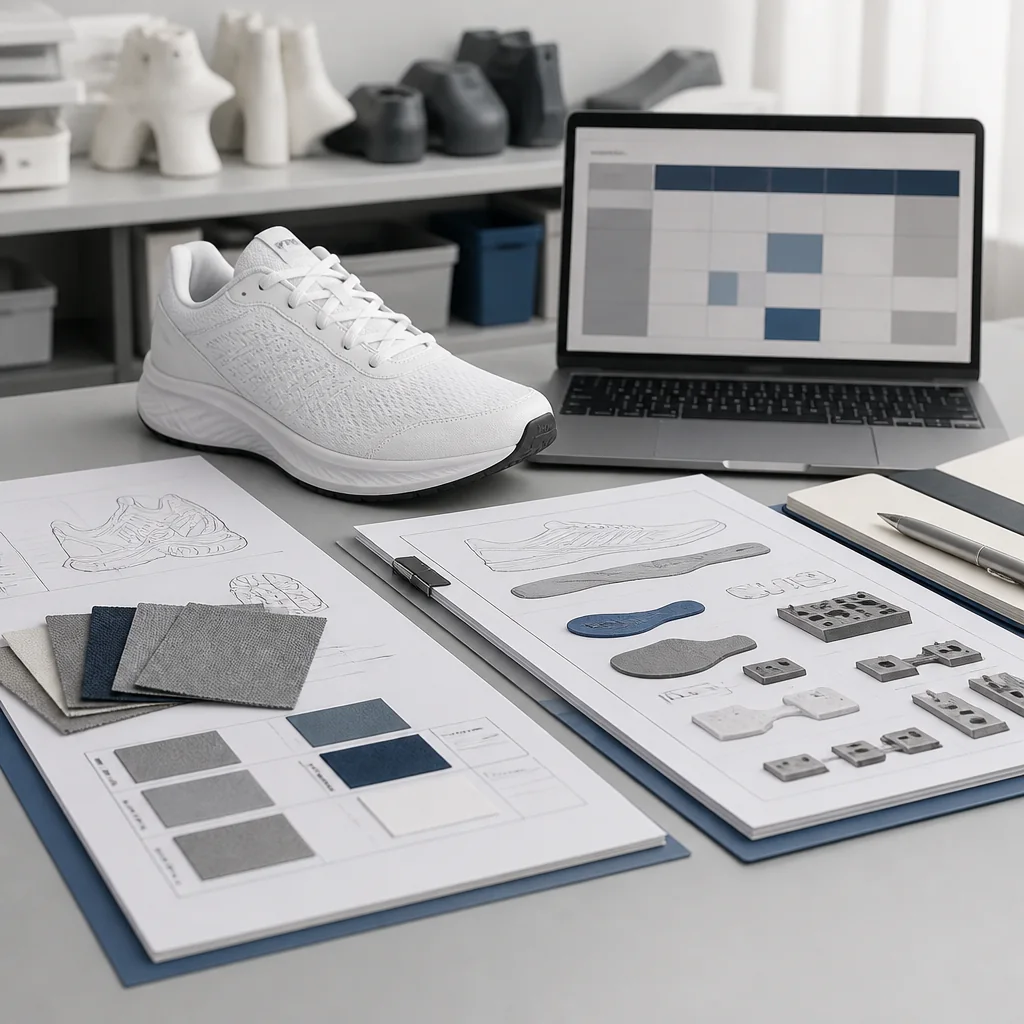
For buyers using a white label running shoes wholesale reorder checklist, our editorial recommendation is to establish what still matches the existing build before asking for repeat-order pricing or timing. Custom Shoe Factory says that, within its OEM build-to-spec scope, it manufactures to the buyer’s tech pack and design, flags manufacturability issues during DFM, and holds the buyer’s bill of materials and tooling across reorders. Use those published points as the anchor for a buyer-controlled comparison.
The company’s published product range includes running shoes for private-label applications. The supplied excerpt does not establish that these shoes are stocked, ready to ship or sold under automatic repeat-order terms. Treat “reorder” as a provisional description until the previous product definition, proposed edits and unanswered commercial points have been separated.
Use the Right Record for the Right Stage
The available statements address different stages of a footwear project. Keep their scopes separate when preparing the inquiry.
| Published statement | Documented scope | Recommended buyer action |
|---|---|---|
| Custom Shoe Factory says it manufactures to the buyer’s tech pack and design. | This describes the build basis within its OEM scope. | Identify the exact tech pack or design version the buyer believes applied to the previous build. |
| The company says it flags manufacturability issues during DFM. | This is a design-for-manufacturing statement. | Ask which proposed differences, if any, require DFM or another review. |
| The company says it holds the buyer’s bill of materials and tooling across reorders. | This is the published continuity statement specifically connected to reorders. | Ask which BOM and tooling references correspond to the product being reordered. |
| A running-shoe project example covers a first order from a reference pair to inspected first production. | The example is limited to a first order and ends at inspected first production. | Use it only as first-order context, not as a repeat-order procedure. |
Evidence boundary: “Held across reorders” does not establish tooling ownership, exclusivity, maintenance, replacement, storage duration, future availability, formal BOM access, identical output, price stability or automatic reorder approval. The first-order example does not document repeat-order sampling or inspection. Keep these matters open until they are answered for the specific project.
Build the Current Definition Before Listing Changes
As an editorial buyer-control step, create one current-definition sheet before writing the new request. Use buyer-held information where available and mark missing references as open.
- Buyer project reference: Enter the product name, style code or prior order reference used internally to identify the shoe.
- Tech pack or design identifier: Record the file name, revision, date or other identifier for the version believed to have governed the previous build.
- BOM reference: Enter the bill-of-materials reference if known. If it is unknown, ask which BOM the manufacturer associates with the product.
- Tooling reference: Record the relevant reference if the buyer has it. Otherwise, ask which tooling is being held for the build.
- Earlier DFM information: Attach any buyer-held notes on previous DFM questions and resolved points. Do not assume such notes exist or that the manufacturer keeps a particular resolution log.
- Fields believed unchanged: List the upper, midsole, outsole, construction, component and branding definitions the buyer intends to preserve.
- Unresolved fields: Mark missing or uncertain information as open rather than filling gaps from memory or a general product description.
This sheet is a buyer-created control record. Its purpose is to make the intended baseline visible when the manufacturer reviews the inquiry.
Compare the Proposed Shoe Field by Field
The running-shoe listing describes breathable uppers and cushioned midsoles. It separately names mesh, knit and PU uppers. It also names EVA and rubber outsoles. For this checklist, use those range-level descriptions only as prompts; the prior shoe’s project records should provide the actual product definition.
If engineered mesh is relevant, the materials page describes knitted or warp-knit synthetic construction with zoned density. It lists screen print, heat-transfer film and welded TPU overlays. It also gives a typical range of 90–250 GSM depending on the zone. That range belongs only to the published engineered-mesh description and should not be treated as the specification for every running-shoe upper.
| Comparison field | Current-definition entry | Proposed-order question |
|---|---|---|
| Upper family | Record the specific material and construction used in the existing definition. | Is the upper unchanged, proposed for replacement or still undecided? |
| Engineered-mesh construction | If applicable, identify the current knitted or warp-knit construction and any defined density zones. | Are any zones, support areas or reinforcement details being revised? |
| GSM by zone | Use the project-specific values or ranges if known. Do not substitute the general 90–250 GSM description. | Which values remain fixed, and which require review? |
| Branding method | Record the current method, artwork and placement. If engineered mesh is used, note whether the existing definition includes screen print, heat-transfer film or welded TPU overlays. | Does the request change the method, artwork, placement or supporting material? |
| Midsole definition | Enter the actual construction, materials and component references from the current project record. | What, if anything, is being changed, and which review may apply? |
| Outsole definition | Record the actual outsole material and component reference. Do not infer the prior specification from the range-level reference to EVA and rubber outsoles. | Is the existing outsole definition unchanged, or is a different component being proposed? |
| Tooling relationship | Enter the tooling reference associated with the existing build, if known. | Could a proposed shape or component change affect the existing tooling, and what assessment is needed? |
The comparison exposes differences; it does not determine their consequences. Ask which changes, if any, require DFM, development, sampling, inspection, tooling assessment or a revised quotation.
Classify the Request After the Comparison
Use the following editorial procurement categories only after completing the current-versus-proposed comparison.
- Same-build candidate
- Use this status when the buyer can identify the existing definition and has marked every reviewed field as unchanged. Ask the manufacturer to confirm which records apply.
- Reorder with proposed changes
- Use this status when the existing build remains the reference but one or more product-definition fields have been changed or left open for review.
- Renewed development question
- Use this status when the buyer cannot identify a usable baseline or cannot match the proposed product definition to the previous build. Ask which development steps may be relevant.
Questions That Determine the Next Path
- Which tech pack or design and BOM references currently apply to the product?
- Which listed differences, if any, require DFM or another technical review?
- Are development, sampling or inspection steps relevant to this request?
- Is a revised quotation needed, and which commercial terms apply to the project?
The supplied evidence gives no automatic threshold at which a modification becomes a new project. Present the differences and ask what review each one requires.
Keep BOM and Tooling Questions Open
Place unanswered process, custody and commercial topics in a separate column. This prevents assumptions from being mixed with the current product definition.
| Open category | Questions to ask |
|---|---|
| BOM record and access |
|
| Tooling custody |
|
| Technical and project process |
|
| Commercial terms |
|
The supplied excerpts do not answer these questions. As a buyer-control practice, record each response with the project reference and the date on which it was provided.
Send a Two-Part Reorder Inquiry
Package the request so the current product definition and the proposed edits cannot be confused.
Part A: Current Definition
- Buyer product and previous order reference
- Current tech pack or design identifier
- BOM and tooling references, if known
- Any buyer-held notes from earlier DFM discussions
- Product fields believed to remain unchanged
Part B: Proposed Changes and Open Questions
- Each changed field, showing the current and proposed definitions separately
- Drawings, artwork or buyer-held reference files that explain a proposed change
- Fields that remain open rather than confirmed
- Questions about DFM, development, sampling, inspection or quotation
- Unresolved minimum order, packing, timing, commercial and tooling-custody questions
We are preparing a repeat order for the product identified in Part A. We believe Part A describes the current build, while Part B lists all proposed changes and open questions. Please confirm which tech pack or design, BOM and tooling references apply. Please also advise which development, manufacturability, sampling, inspection or quotation options may be relevant to this request and confirm the project-specific commercial terms.
Share this two-part definition through the project inquiry form. Label fields as unchanged, proposed or open so the manufacturer can respond to the current build and the requested changes separately.
Sources and verification
- Athletic Shoe Manufacturer | Custom Product Range First-party site source
- OEM / ODM Shoe Development | Custom Footwear Manufacturing First-party site source
- Footwear Manufacturing Case Studies | Example Project Formats First-party site source
- Shoe Soles, Uppers & Insole Materials | Footwear Specs First-party site source
Share the current product definition and ask which development, manufacturability, sampling or quotation options may apply to the project.
Send your project brief