Sourcing Guides
White Label Running Shoes Wholesale Development Brief
A practical sourcing brief for buyers preparing a white label running shoe inquiry, focused on product definition before pricing.
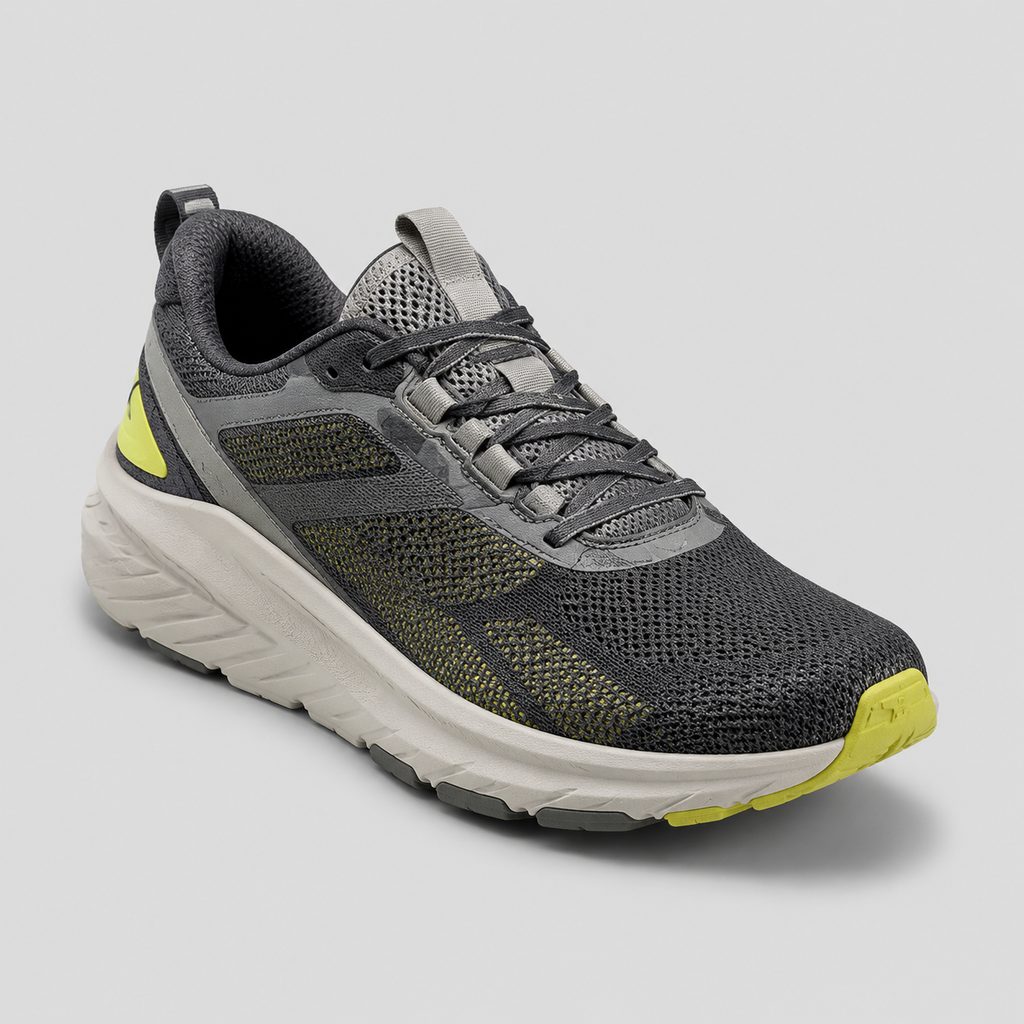
A factory cannot compare a logo-only catalog request with a tech-pack OEM request unless the first inquiry states the product family, starting point and unresolved decisions. A white label running shoes wholesale development brief should therefore begin with the running-shoe build, not with price alone. The buyer's job is to show what is already defined, what is still open, and which parts need factory review before sampling or quotation can be discussed.
For buyers researching white label shoes wholesale, this article treats the first inquiry as a development brief. The supported product evidence documents a running-shoe range with breathable uppers, cushioned midsoles, mesh, knit or PU upper references, and EVA and rubber outsole references. It also identifies retail, ecommerce and private label as suitable channels for that running-shoe range. The other supplied evidence covers OEM build-to-spec work, one example running-shoe launch format, and engineered mesh material details.
Start With The Buying Question
The first decision is not whether the shoe can carry a logo. The first decision is what kind of request the buyer is making. A private label running shoes manufacturer inquiry may be about an existing product direction, an OEM athletic shoe development brief based on a tech pack, a reference-pair discussion, or an open manufacturability question.
As an editorial recommendation for the buyer, separate commercial intent from technical readiness in the first message. Commercial intent includes channel, use case and branding need. Technical readiness includes the tech pack, material notes, outsole assumption, artwork files, size range and unresolved construction questions. Keeping those fields separate helps the supplier understand whether the conversation is ready for quotation or still needs product-definition review.
A useful opening can be short: state that the project is a private-label running-shoe program, identify the intended use, name the starting point, and list the decisions that are still open. That is more useful than asking a white label athletic shoes supplier for a generic wholesale price before the product has been classified.
Name The Running-Shoe Build
The supplied product excerpt documents running shoes as performance-inspired daily-training builds with breathable uppers and cushioned midsoles. It separately associates the running-shoe range with mesh, knit or PU uppers. It also associates the running-shoe range with EVA and rubber outsoles.
Use those facts as a prompt for a tighter buyer brief, not as a finished specification. The inquiry should identify the running-shoe direction and then ask what further information the factory needs to review the project.
Shoe family: State that the request is for running shoes. If walking, training or casual shoes are also under consideration, list them as separate options rather than folding them into the same request.
Use case: Describe the intended running-shoe role, such as daily training, lightweight casual running, retail private label or ecommerce assortment.
Upper assumption: Say whether mesh, knit or PU should be considered for this running-shoe inquiry.
Outsole assumption: Say whether EVA and rubber are the intended outsole reference points for review.
Open decision: Ask whether the current information is enough for quotation or whether the request first needs development, sampling or DFM discussion.
Tech Pack Or Reference Pair?
The cleanest way to prevent confusion is to state the starting point. Custom Shoe Factory's OEM excerpt says the company manufactures to the buyer's tech pack and design, flags manufacturability issues during DFM, and holds the buyer's bill of materials and tooling across reorders. That evidence supports an OEM build-to-spec path when the buyer has a defined design package.
The case-study excerpt has a different scope. It describes a running shoe launch for a new brand and says a first running-shoe order is structured from reference pair to inspected first production. That supports one example running-shoe project format. It does not establish pricing, order volume, timing or a universal process for every reference-pair inquiry.
| Buyer starting point | Include in the inquiry | Ask next |
|---|---|---|
Tech pack and design | Attach the tech pack, design files, material assumptions, outsole direction, size range and branding artwork. | Ask which DFM issues should be reviewed before sampling or quotation. |
Reference pair | Explain what the reference pair is meant to show: silhouette, upper construction, sole proportion, fit target, material direction or branding placement. | Ask what is needed to turn that reference into a running-shoe product definition. |
Open concept | State the market channel, intended shoe family and unresolved product questions. | Ask which development or sampling discussion may fit the current level of definition. |
Material Assumptions Are A Signal
Material language tells the supplier whether the buyer is describing an actual build or only a branded style idea. The supplied materials excerpt describes engineered mesh as air mesh or sandwich mesh. It describes it as knitted or warp-knit synthetic with zoned density for ventilation, light stretch and support.
Engineered mesh is a useful example for this brief because it forces the buyer to name the reason behind the upper choice. If airflow, support zones or light stretch matter, say so. If knit, PU or another upper direction is more relevant, say that instead.
| Brief field | Buyer wording | Evidence boundary |
|---|---|---|
Upper type | State whether engineered mesh, knit, PU or another upper direction should be considered. | The running-shoe excerpt supports mesh, knit or PU as upper references for that range. |
Mesh intent | If engineered mesh is under review, note whether ventilation, light stretch or support is the reason. | Those properties are stated for engineered mesh in the materials excerpt. |
Zone density | Ask whether the eyestay, toe or other zones need denser knit. | The materials excerpt says engineered mesh typically runs at 90 to 250 GSM depending on the zone, with denser knit at the eyestay and toe. |
Decoration method | If engineered mesh is selected, ask whether screen print, heat-transfer film or welded TPU overlays fit the selected zones. | Those decoration methods are supported for engineered mesh, not for every possible upper. |
Branding Zones Beat Logo Requests
A logo file is not a branding plan. It does not show whether the mark belongs on a flexible mesh field, an overlay, the tongue, the heel or a denser construction area. The engineered-mesh excerpt says that engineered mesh takes screen print, heat-transfer film and welded TPU overlays cleanly, so multi-colour branding is easy in that material context.
As buyer guidance, describe branding by zone and ask which method may fit the selected material area.
Lateral quarter: State whether the brand mark is expected on a mesh field, overlay or more stable panel.
Tongue and heel: Separate printed, heat-transfer and overlay ideas instead of sending one logo file with no placement instruction.
Eyestay and toe: If engineered mesh is being considered, ask whether denser knit areas affect decoration, reinforcement or overlay choices.
Color blocking: State whether the brand expects multi-colour decoration, tonal branding or material contrast.
That wording keeps the request reviewable without assuming that a specific logo size, color count or placement will be feasible.
Questions That Belong In The Inquiry
Several commercial and operational topics are not established by the supplied evidence: MOQ, unit price, sample cost, payment terms, lead time, production capacity, certification status, shipping method and inspection pass rate. The buyer can still ask about those topics, but the article should not present them as documented company promises.
Sampling route: Ask what sample type fits the current level of product definition, especially if the project starts from a reference pair.
Quotation inputs: Ask what files, material assumptions, branding placements and size information are needed before quotation can be discussed.
DFM review: If the request is OEM build-to-spec, ask which manufacturability issues should be flagged before the project moves further.
BOM and tooling records: If reorder planning matters, ask how the buyer's bill of materials and tooling would be handled for that project.
Inspection meaning: If the reference-pair route is relevant, ask what inspected first production would mean for the buyer's approval process.
Material alternatives: Ask what options may be available if the preferred upper, outsole or decoration direction creates cost, construction or performance tradeoffs.
Hypothetical example: a buyer preparing a private-label daily trainer might attach a reference pair for silhouette, request engineered mesh for airflow, identify lateral and tongue branding zones, and ask whether the project should be reviewed as a reference-pair discussion or converted into an OEM build-to-spec brief before quotation. That example is not a customer case.
Quote-Ready Handoff
The final brief should make the supplier's next question easier to answer: which development, manufacturability, sampling or quotation options may apply to the current product definition?
- Product family
Running shoe, with intended use and channel stated clearly.
- Current definition
State whether the project has a tech pack and design, a reference pair, or only a product concept. Attach available drawings, specifications, artwork and material notes.
- Build assumptions
List upper and outsole assumptions separately. For the documented running-shoe range, mesh, knit or PU uppers are supported upper reference points. EVA and rubber are supported outsole reference points.
- Branding zones
Name the logo locations and decoration ideas. If engineered mesh is being considered, ask whether screen print, heat-transfer film or welded TPU overlays fit the selected zones.
- Review request
Ask which development, manufacturability, sampling or quotation options may apply. Keep MOQ, price, lead time, packing and approval questions in the inquiry, but wait for project-specific answers.
Buyers ready to share the current product definition can send the brief through Custom Shoe Factory's quote request page. For background before sending, review the running-shoe product range, the OEM development page, the materials overview and the example running-shoe project format.
Sources and verification
- Athletic Shoe Manufacturer | Custom Product Range First-party site source
- Footwear Manufacturing Case Studies | Example Project Formats First-party site source
- OEM / ODM Shoe Development | Custom Footwear Manufacturing First-party site source
- Shoe Soles, Uppers & Insole Materials | Footwear Specs First-party site source
Share the current product definition and ask which development, manufacturability, sampling or quotation options may apply to the project.
Send your project brief