Sourcing Guides
Specialist Sports Shoes Manufacturer Product Family: Fit First
Treat athletic product-family specialization as a pre-brief filter. Map your line to running, training, walking, and casual sneakers, then test OEM build-to-spec and reorder custody language at published scope.
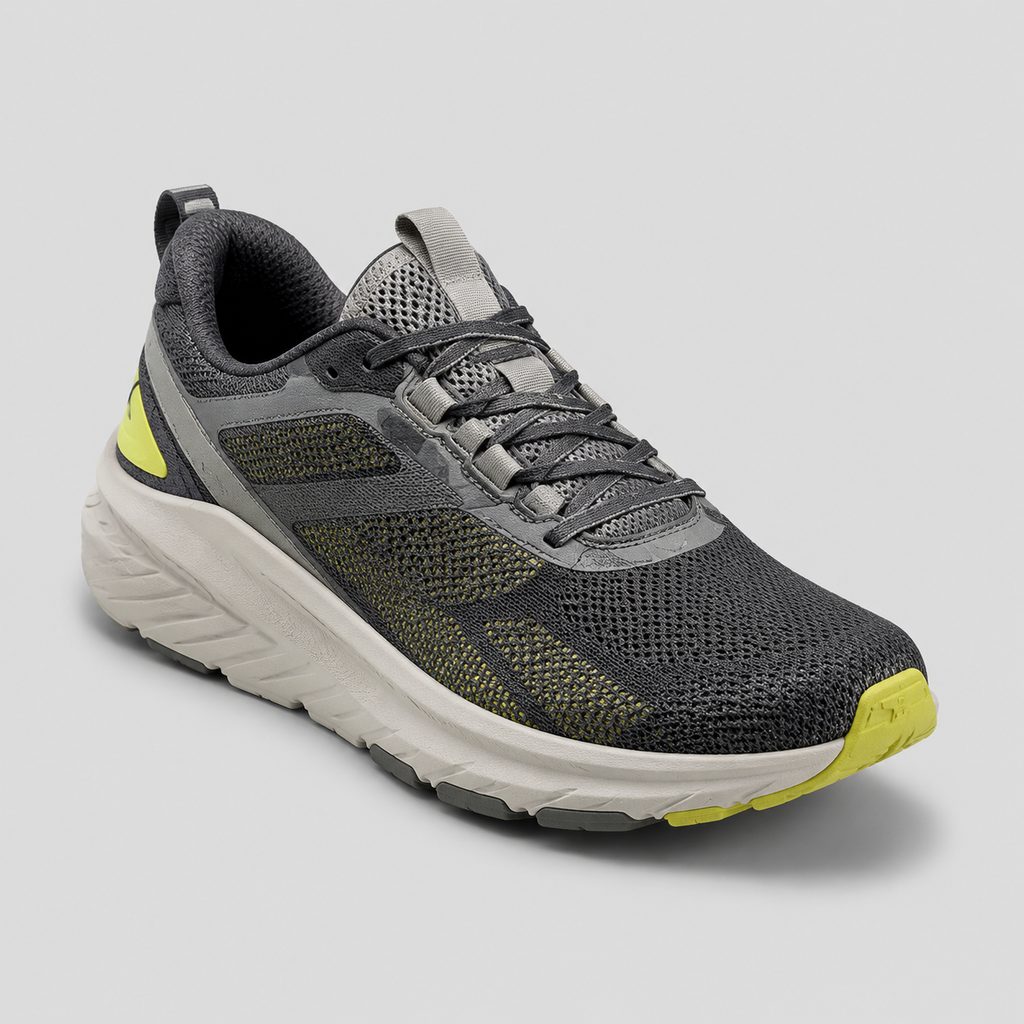
Procurement teams often shortlist factories on capacity language alone, then discover mid-brief that the line does not sit inside one coherent athletic family. Before any tech-pack dump or quote request, check specialist sports shoes manufacturer product family fit against the SKUs you plan to build. That pre-brief filter reduces mismatch risk when programs span running, training, walking, and casual silhouettes.
This guide is for brand operators, importers, and product-development teams who need a category-fit screen before they score factories on process theater. It stays inside published athletic-family language, OEM build-to-spec statements, running-shoe range descriptors, and one example project format. Anything beyond those excerpts is framed as buyer editorial choice, not documented factory practice.
The incomplete shortlist: “sports shoes manufacturer” without a product family
Commercial search language is broad by design. “Sports shoes manufacturer” can pull factories that also run fashion sneakers, kids footwear, safety shoes, or seasonal lifestyle programs under the same roof. That breadth can look efficient on a spreadsheet. For multi-season athletic programs it often creates a different problem: construction habits, last libraries, midsole tooling, and quality judgment drift when the factory treats every closed-toe product as interchangeable capacity.
Custom Shoe Factory’s about page positions the company as sport-footwear specialists with one product family done consistently: running, training, walking, and casual sneakers, and explicitly not a catch-all factory. That statement is a boundary, not a ranking against other China manufacturers. Use it as the first filter when you evaluate sports shoes manufacturer category fit. If your line needs dress, outdoor, safety, or fashion-adjacent constructions outside that family, the published specialist claim does not cover those categories.
The commercial risk of skipping this step is late discovery. You invest time in artwork, material boards, and cost targets, then learn the factory’s daily muscle memory sits elsewhere. Category fit is cheaper to test on a one-page SKU map than after sampling has already started.
Map your line to the published athletic family only
Build a line map before you send a full brief. Place each planned SKU against the four published family members only. Anything that cannot sit cleanly in running, training, walking, or casual sneakers is outside the published specialist scope and should be flagged before OEM discussions begin.
| Planned SKU intent | Published family slot | Buyer action if unclear |
|---|---|---|
| Road or treadmill running silhouettes | Running | Confirm construction language against running range descriptors later |
| Gym, court-adjacent, or multi-session training builds | Training | Separate from pure running last and midsole assumptions |
| Everyday comfort walking programs | Walking | Keep heel-to-toe and upper flex goals distinct from performance running |
| Lifestyle athletic sneakers for casual wear | Casual sneakers | Do not stretch “casual” into fashion or dress categories |
| Any item outside the four slots above | Not in published family | Treat as out of specialist scope for this factory screen |
If half the assortment fails the map, you are not shortlisting a specialist for that assortment. You are asking for catch-all capacity under specialist branding. Either split the program or shortlist factories whose published families match each sub-line.
Specialization is a consistency claim, not a catch-all capacity claim
Read “one product family, done consistently” as an evaluation boundary. It does not prove deeper process control, multi-category fashion capability, or unlimited capacity. It does give buyers a fair question to ask every candidate factory: will this line live inside a repeated construction vocabulary, or will it compete for attention with unrelated categories?
A practical comparison for shortlists:
- Specialist framing: published athletic family is finite; off-family requests are out of scope unless the factory separately publishes them.
- Catch-all framing: capacity is described as any footwear with a sole and upper; construction habits may reset by season or by which line is filling the line.
Neither framing automatically equals better quality. Specialization matters when your brand needs the same construction logic across running, training, walking, and casual sneakers so DFM feedback and reorder custody stay coherent. If your assortment is intentionally broad across non-athletic categories, a specialist filter may disqualify useful partners. That is still a useful outcome. You learn the mismatch early.
Keep this section free of invented depth. The about-page language does not list internal SOPs, last libraries, or audit results. Buyers who need those proofs should request them later, after category fit is clear, and treat answers as project-specific rather than website guarantees.
After category fit, what OEM build-to-spec actually publishes
Only after the line maps cleanly should OEM language enter the shortlist. On the OEM / ODM services page, OEM (build to spec) is described in three parts: manufacture to the buyer’s tech pack and design, flag manufacturability issues during DFM, and hold the bill of materials and tooling across reorders.
Translate that into buyer checklist items without expanding the claim:
- You retain design ownership and supply the tech pack and design inputs the factory will manufacture to.
- DFM is framed as manufacturability flags, not as a full redesign service or automatic material substitution authority.
- BOM and tooling custody across reorders is a continuity statement, not a warehouse, MOQ, or lead-time promise.
- ODM is a separate path on the same page family; do not assume OEM includes ODM concept development unless you open that conversation explicitly.
When you evaluate an OEM athletic footwear manufacturer, treat those three published points as the ceiling of what you can credit from that excerpt. Editorial recommendation for buyers: freeze which decisions stay with brand (design intent, claims on hangtags, channel positioning) and which you want the factory to challenge during DFM (stitch density feasibility, sole bonding limits, upper pattern manufacturability). That split is a procurement choice, not a documented factory policy beyond the published OEM sentence.
Reorder custody as a multi-season continuity test
Athletic programs rarely end after first production. Walking and training lines often reorder with colorway changes, minor upper tweaks, or channel-specific packing. The OEM excerpt’s value for multi-season planning is the explicit hold on bill of materials and tooling across reorders.
Use that as a continuity test in inquiry language. Ask whether BOM and tooling custody is part of the manufacturer relationship for your program, and ask how change control would work if a material or mold revision is required between seasons. Do not invent MOQs, storage fees, tooling ownership transfer rules, or logistics workflows. The excerpt does not publish those details.
One hypothetical scenario is enough to stress-test the question. Imagine a brand launching a walking shoe this season and planning two color refreshes next season without a new last. The buyer’s job is to confirm that the same BOM and tooling reference can be held across those reorders, and to document who approves any mid-cycle change. That is a continuity conversation grounded in the published custody statement, not a case study claim.
Use running-shoe descriptors as construction prompts, not program locks
The athletic product range page describes breathable and cushioned running shoes as performance-inspired daily-training builds with breathable uppers and cushioned midsoles. It lists mesh, knit, and PU uppers; EVA and rubber outsoles; and retail, ecommerce, and private-label channels, with a path to view running shoes.
Those strings should open specification questions when you brief a factory covering running, training, and walking programs. Mesh versus knit versus PU is still a construction decision that needs tech-pack definition. EVA and rubber outsoles describe common athletic options on that page; they do not lock durometer, outsole pattern, or midsole geometry for your brand. Channel labels (retail, ecommerce, private label) describe possible go-to-market contexts; they do not certify packaging, barcoding, or compliance workflows.
Buyers who need a running training walking shoe factory shortlist should still start with the family map rather than material menus alone. When the family map includes a running SKU, ask which upper construction is intended, whether the midsole cushioning concept is already chosen, and whether the outsole needs rubber coverage only in high-wear zones. Keep training, walking, and casual sneakers in their own construction notes so running language does not silently become the default for the whole assortment.
Read the project example as structure, not capacity proof
The case studies page includes a running-shoe launch example for a new brand. The published framing is structural: how a first running-shoe order is structured, from reference pair to inspected first production.
That framing is useful as an order-structure template. It suggests a sequence buyers often need (reference pair, then first production with inspection language) without proving volume capacity, sampling step counts, or QC metrics. Do not score the factory on process depth from the title alone. Do not treat “inspected first production” as a full export QC SOP. Evidence gap remains: no sampling checklist, no defect rates, no named brand outcomes appear in the excerpt.
Buyer use of the example is therefore limited. If your program is a first running-shoe order, you may ask whether a reference-pair-to-first-production structure is appropriate for your definition maturity. If your program is a reorder of an existing last, the example still helps only as a reminder that inspection language should be defined before production release. Neither reading invents capacity proof.
Category-fit inquiry that leaves options open
Close the shortlist step with an inquiry that states family fit first and keeps development, manufacturability, sampling, and quotation topics as open questions rather than assumed deliverables.
- State the planned SKUs against running, training, walking, and casual sneakers only, and note any item you already flagged as outside that family.
- State current definition status: concept only, reference pair available, partial tech pack, or locked BOM intent.
- Reference OEM build-to-spec interest only if you will supply design and tech-pack inputs and want manufacturability flags during DFM plus BOM and tooling hold across reorders.
- Ask which development, manufacturability, sampling, or quotation options may apply to the project, without treating those topics as already-scoped service promises.
- Invite the factory to confirm or decline product-family fit before deep costing, so both sides avoid a mismatched brief.
That pattern keeps sports shoes manufacturer category fit as a decision filter without equating the inquiry list to a catalog of guaranteed services. When you are ready to share the current product definition, use the site’s request a quote path and keep the product-family map attached so the first reply can stay inside specialist scope.
Product-family specialization is an early filter, not a final vendor award. Pair it with later checks your team already uses for costing, compliance, and logistics. The gain is simple: you only open those heavier conversations with manufacturers whose published athletic family matches the line you actually intend to build.
Sources and verification
- About Custom Shoe Factory | OEM/ODM Athletic Shoes First-party site source
- OEM / ODM Shoe Development | Custom Footwear Manufacturing First-party site source
- Athletic Shoe Manufacturer | Custom Product Range First-party site source
- Footwear Manufacturing Case Studies | Example Project Formats First-party site source
Share the current product definition and ask which development, manufacturability, sampling or quotation options may apply to the project.
Send your project brief