Footwear Sourcing
Control map for sneaker supplier size grading questions
A procurement control map separating published sizing statements from buyer definitions and questions that require project-specific confirmation.
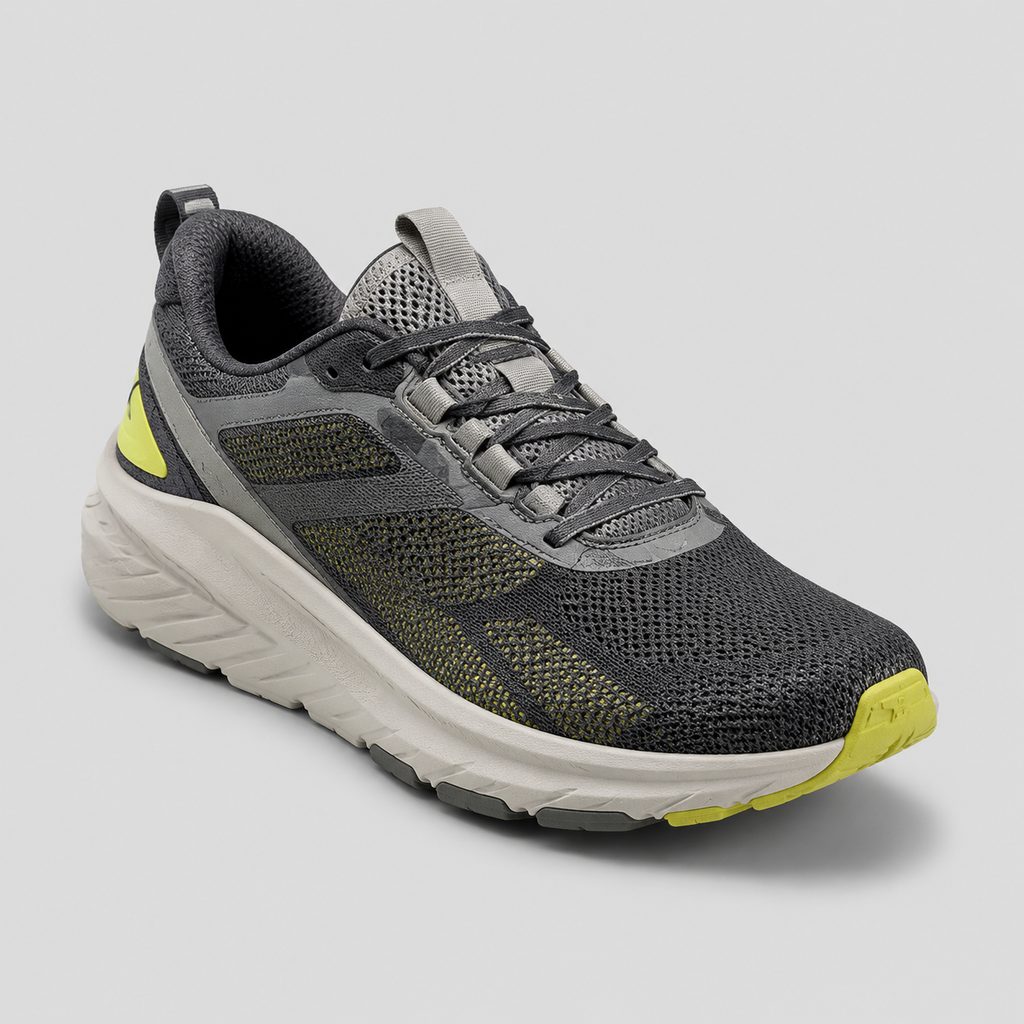
A buyer deciding whether repeat-order sizing is controlled should separate the reference sample, the grading definition, the final-inspection measurement and the reference intended for later orders. These sneaker supplier size grading questions organize that review without treating an abbreviated sizing claim as a complete control procedure.
Custom Shoe Factory's importer and wholesaler page mentions size grading locked to a golden sample, measured length and width at final inspection, and the phrase container after container. It does not define the operating details behind those points. The unresolved details below are therefore presented as buyer-owned requirements or questions for project confirmation, not as documented company procedures.
What is actually published?
The first-party sizing sentence can be separated into four bounded points. Keeping them separate matters because each one leads to a different procurement question.
- Golden-sample relationship
The company states that size grading is locked to the golden sample. The excerpt does not identify that sample by style, marked size, revision or approval status.
- Measured dimensions
The statement names measured length and width. It does not define the measured object, landmarks, units, equipment or method.
- Final-inspection checkpoint
The company places the measurement-based verification at final inspection. The excerpt does not state which sizes or items are checked, how often checks occur or what record is produced.
- Repeat horizon
The words container after container extend the claim across repeated supply. They do not document how a reference is retained, identified or replaced between orders.
A separate About page describes the company's product family as running, training, walking and casual sneakers. That list provides business context. The supplied evidence does not establish that the importer-page sizing statement has been applied to or validated across every style in those four categories.
The missing control fields
The table distinguishes the published wording from information that is absent from the supplied excerpt. Its buyer actions are editorial recommendations, while the confirmation column identifies topics to raise for the specific project.
Published sizing points and unresolved project fields
| Control area | Published basis | Buyer definition or project question |
|---|---|---|
| Reference identity | A golden sample is named as the grading reference. | Define the intended style identifier, reference size, revision and approval status. Ask which physical sample the supplier would recognize for the project. |
| Grade definition | Size grading is described as locked to the golden sample. | State the required size system and range. Ask which base size, grade progression and width treatment would apply. |
| Measurement definition | Measured length and width are named. | Ask what would be measured, where the landmarks would be placed, which method and units would be used, and what limits would apply. |
| Inspection execution | Verification is placed at final inspection. | Ask which sizes or items would be considered, how selection would work and how an out-of-limit result would be handled. |
| Repeat reference | The statement uses container after container. | Define the buyer's intended reference for each repeat order. Ask how a product revision would affect that reference. |
This separation prevents a buyer requirement, a published company statement and an unanswered project question from being recorded as equivalent evidence.
Golden-sample identity
For buyer documentation, the term golden sample should be tied to an identifiable project record. The following fields are recommended buyer-owned controls; the source does not say that Custom Shoe Factory currently creates or manages them.
Style identifier: name the sneaker program or style for which the sample is intended to serve as a reference.
Reference size: record the size system and marked size represented by the physical sample.
Revision: assign a buyer-controlled revision that distinguishes the intended reference from earlier development samples.
Approval status: use the buyer's project terminology to identify whether the reference is under review, conditionally accepted, approved or superseded.
The corresponding supplier inquiry is narrower: which physical sample, marked size and revision would be recognized as the golden sample for this project? The buyer may also ask how that reference could be identified in relevant sampling, quotation or order documents. These are questions for confirmation, not documented services.
If the buyer intends both a physical sample and a digital specification to control the project, the buyer should state which takes priority if the two conflict. Photographs may help distinguish physical samples, but they should supplement rather than replace the chosen identifier and revision.
Grading versus final inspection
For procurement purposes, treat grading and inspection as separate decisions. The published sentence connects grading to a golden sample. It separately states that measured length and width are used for verification at final inspection.
Separate inquiries for grading and final inspection
| Decision | Bounded company statement | Question for the project |
|---|---|---|
| Grade definition | Size grading is locked to the golden sample. | Which size system, base size, progression logic, width treatment and applicable sizes would govern the style? |
| Inspection checkpoint | Measured length and width are used for verification at final inspection. | What would be measured, which items or sizes would be considered, what limits would apply and how would results be evaluated? |
The buyer should keep separate approval entries for these decisions. Approval of a sample should not be recorded as approval of an unstated grading rule. Likewise, a measurement should not be treated as evidence of conformity until the project defines the target, method and acceptance limits.
What do length and width mean?
The available evidence for footwear length and width inspection confirms only that measured length and width are used for verification at final inspection. It does not identify the measured feature or connect the measurements to fit testing or wear testing.
- What finished item, component or dimensional feature would be measured?
- Which start, end and side landmarks would define length and width?
- Which units, equipment, positioning and measurement method would apply?
- Which sizes and items could be selected at final inspection?
- What nominal values and permitted variations would apply?
- How would an out-of-limit result be recorded and addressed for this project?
The buyer should place the agreed definitions in its specification or inspection instruction. The written requirement should let both parties interpret a result against the same stated target. Fit evaluation and wear testing should remain separate project topics unless additional evidence explicitly connects them to the dimensional check.
Repeat-order reference continuity
For repeat-order sneaker sizing control, read container after container only as the repeat horizon of the company's published statement. The excerpt does not document sample version control, record retention, change authorization or the treatment of a later construction revision.
- Which sample identifier and revision would be referenced for a repeat order?
- How could the active reference be confirmed before production?
- What project decision would follow a construction or material revision?
- Would a revision require new nominal length and width values?
- Which party would approve a replacement reference?
As a buyer-owned control, the active reference identifier can be included in each repeat-order package. This recommendation does not describe the supplier's internal sample-management process. It gives the buyer a consistent basis for asking whether the intended sample and grading reference are still recognized.
Project decision matrix
The matrix below assigns each topic to a buyer definition, a bounded published statement or a question requiring project confirmation.
Decision ownership for the sizing review
| Topic | Status | Project action |
|---|---|---|
| Current product definition | Buyer must define | Provide the style identifier, intended size system, applicable range and width offering. |
| Product-family context | Company has published a bounded statement | Record running, training, walking and casual sneakers as the family listed on the About page. Confirm whether the specific project is within scope. |
| Golden-sample relationship | Company has published a bounded statement | Preserve the statement that grading is locked to the golden sample without inferring the sample's size, identity or revision. |
| Controlling reference record | Buyer must define | Assign an identifier, reference size, revision and approval status to the buyer's intended reference. |
| Detailed grading rule | Project requires confirmation | Ask which base size, progression logic, width treatment and applicable sizes would govern the project. |
| Final-inspection checkpoint | Company has published a bounded statement | Record that measured length and width are used for verification at final inspection without assuming a method, tolerance or frequency. |
| Measurement definition | Project requires confirmation | Ask what would be measured, how the measurement would be taken and which acceptance limits would apply. |
| Repeat-order reference | Project requires confirmation | Ask how the intended sample and grade definition would be identified after a repeat order or product revision. |
Use the project inquiry page to share the current product definition. Include the unresolved sizing fields as questions, and ask which development, manufacturability, sampling or quotation options may apply to the project.
Sources and verification
- Wholesale Shoes & Bulk Footwear Supply | Importers First-party site source
- About Custom Shoe Factory | OEM/ODM Athletic Shoes First-party site source
Share the current product definition and ask which development, manufacturability, sampling or quotation options may apply to the project.
Send your project brief