Footwear Sourcing
Running Shoes Wholesale: Define the Product First
A buyer-focused framework for defining a daily-training running shoe before asking which development, sampling, manufacturability or quotation options may apply.
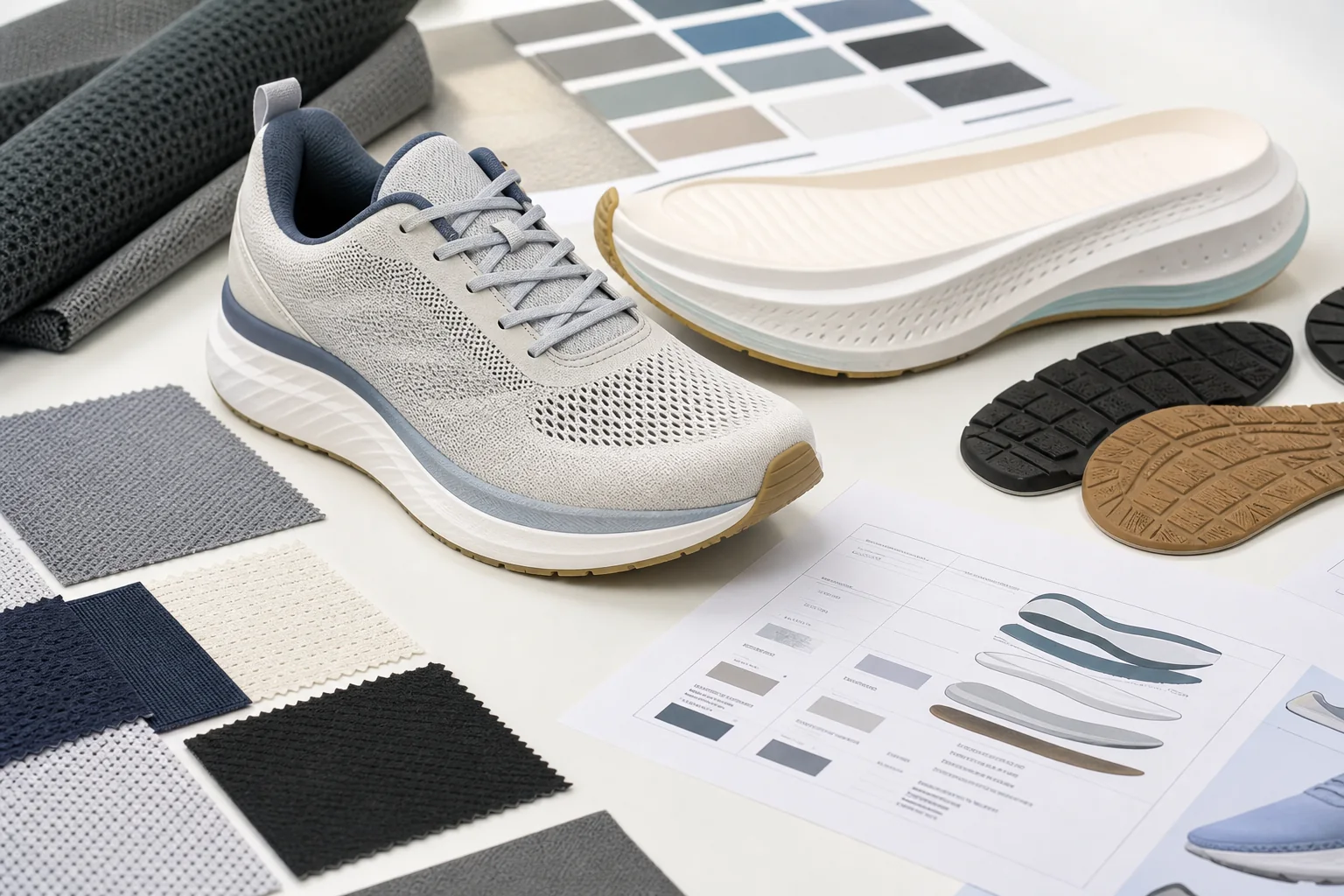
A wholesale running-shoe inquiry becomes more useful when it describes a specific product rather than a broad category. The manufacturer needs to understand what it is being asked to consider, while the buyer needs to distinguish fixed requirements from decisions that remain open.
Start with six inputs: the intended sales channel, a reference product, the upper construction, the cushioning direction, the outsole material and the branding treatment. Together, they form a current product definition that can support a more relevant discussion.
The documented evidence used here covers a daily-training running-shoe range, several upper and outsole examples, engineered-mesh details and one example order format. It does not establish project-specific prices, quantities, timelines, tests, inspection standards or guaranteed services. Those points should be raised as questions for the individual project.
Draw a boundary around the product
Custom Shoe Factory describes itself as a sport-footwear specialist focused on running, training, walking and casual sneakers, rather than a catch-all factory. Within that scope, its running-shoe range is described as performance-inspired daily-training footwear with breathable uppers and cushioned midsoles.
Use that documented direction to decide whether the proposed product belongs in the same general program. Our editorial recommendation is to open the brief with a plain description such as “performance-inspired daily-training running shoe,” then identify the intended wearer and use context. If that direction has not been confirmed, mark it as provisional.
Keep breathability and cushioning at the level supported by the current product definition. A buyer can describe a desired construction or underfoot character, but should not present an untested performance result as established. Any measurable target or required test can be listed separately for discussion.
Record six decisions in one place
The following matrix is an editorial framework for preparing the inquiry. It does not prescribe a particular material combination or confirm what will be manufacturable.
| Decision | Current product definition | Question to raise |
|---|---|---|
| Sales channel | Name the intended retail, ecommerce or private-label placement and describe the planned market position. | What other product information is relevant to that channel? |
| Reference product | Provide a reference pair, drawing, specification or visual reference. Mark the features that matter to the new concept. | Which reference materials can be considered for this project? |
| Upper construction | State the proposed material family and describe the required structure, texture and appearance. | Which upper construction options may apply to the design? |
| Cushioning direction | Describe the intended underfoot character and daily-training use without assigning unsupported performance values. | What information is needed to assess the cushioning concept? |
| Outsole material | Identify EVA, rubber or an unresolved material direction as the current starting point. | Which outsole material and construction may apply? |
| Branding treatment | Attach artwork and identify its placement, colours and preferred visual treatment. | Which application methods may be compatible with the proposed artwork and upper? |
The documented running-shoe range shows mesh, knit and PU upper examples. It separately shows EVA and rubber outsole examples. These are references from the product range, not required pairings or recommendations for a specific shoe.
Describe engineered mesh by structure and zone
Calling for a “mesh upper” does not record how the buyer wants different areas of the upper to be constructed. The company’s materials information identifies air mesh and sandwich mesh as engineered-mesh examples. It also describes knitted or warp-knit synthetic structures with zoned density.
The same source associates engineered mesh with ventilation, light stretch and support. It refers to denser knit at the eyestay and toe. These details provide useful vocabulary for a product brief, although they do not establish the performance of a new design.
Our editorial recommendation is to annotate the upper by zone. Identify where ventilation is sought, where a denser structure is being considered and where light stretch or support is part of the design intent. If the appearance matters, show whether each zone should have a relatively open or dense surface.
The materials page gives 90 to 250 GSM as a typical engineered-mesh range depending on the zone. That range is general material-page context, not a project-specific weight recommendation. Include a GSM value only if it is already a defined requirement; otherwise, ask what weight and zonal structure may be relevant to the proposed upper.
This level of detail makes unresolved choices visible. It also gives the manufacturer a defined upper concept to consider instead of requiring it to interpret a generic request for mesh running shoes.
Include branding with the upper brief
For briefing purposes, treat branding as part of the upper definition. Provide enough information to discuss the artwork alongside the proposed material, panel arrangement and zoned structure.
The engineered-mesh description identifies screen print, heat-transfer film and welded TPU overlays as treatments the material can take. It also references multicolour branding. That material-level description does not confirm that every artwork, colour arrangement, placement or overlay shape can be produced on every proposed upper.
- Attach the available artwork and a placement visual.
- Name a preferred treatment only if one has already been selected.
- List the colours and visual details that need to remain distinct.
- Show the proposed relationship between the artwork, seams, eyestays and defined upper zones.
- Ask which treatment may suit the submitted artwork and construction.
This approach gives a private-label running-shoe inquiry a concrete visual direction while leaving the application method open for project-specific discussion.
State where the shoe will be sold
Retail, ecommerce and private label appear as channel contexts in the documented running-shoe range. Name the intended channel in the brief and describe the product’s planned position within it. Do not infer packaging, size-run, compliance or pricing requirements from the channel label; the supplied evidence does not document those arrangements.
Use the example order format carefully
A listing on the company’s case-studies page describes an example first running-shoe order from a reference pair to inspected first production. It is evidence of one example format, not a universal sequence, timing commitment, inspection standard or list of services included with every order.
The listing can still help a buyer identify questions for the initial discussion:
- What type of reference pair, drawing, specification or visual material can be considered?
- Which development path may apply to the current product definition?
- How might sampling be structured for the proposed upper, sole and branding direction?
- What inspection information may become relevant if the project reaches first production?
- What MOQ and quotation information applies to the defined product?
These are inquiry topics. The applicable process and commercial details remain subject to clarification for the project.
Submit the definition and mark open decisions
Before using the request form, consolidate the current information into a short brief. Our editorial submission checklist is:
- The current daily-training running-shoe direction and whether it is confirmed or provisional.
- The intended wearer, use context, sales channel and market position.
- A reference pair, specification, drawing or visual reference with important features marked.
- The proposed upper family and any defined ventilation, stretch or support zones.
- The cushioning direction without unsupported performance claims.
- The current outsole material or construction direction.
- Brand artwork, placement, colours and preferred treatment, if selected.
- A clear distinction between fixed requirements and open decisions.
Send that product definition, then ask which development, manufacturability, sampling and quotation options may apply. Raise MOQ as a separate project-specific commercial question. The purpose of the brief is not to make every decision final; it is to identify the running shoe that the manufacturer is being asked to assess.
Sources and verification
- Athletic Shoe Manufacturer | Custom Product Range First-party site source
- Footwear Manufacturing Case Studies | Example Project Formats First-party site source
- About Custom Shoe Factory | OEM/ODM Athletic Shoes First-party site source
- Shoe Soles, Uppers & Insole Materials | Footwear Specs First-party site source
Share the current product definition and ask which development, manufacturability, sampling or quotation options may apply to the project.
Send your project brief