Running Shoe Sourcing
Running Shoes Supplier: Build a Quote-Ready Brief
A quote-ready running-shoe brief separates buyer decisions, supporting references and questions that still require supplier assessment.
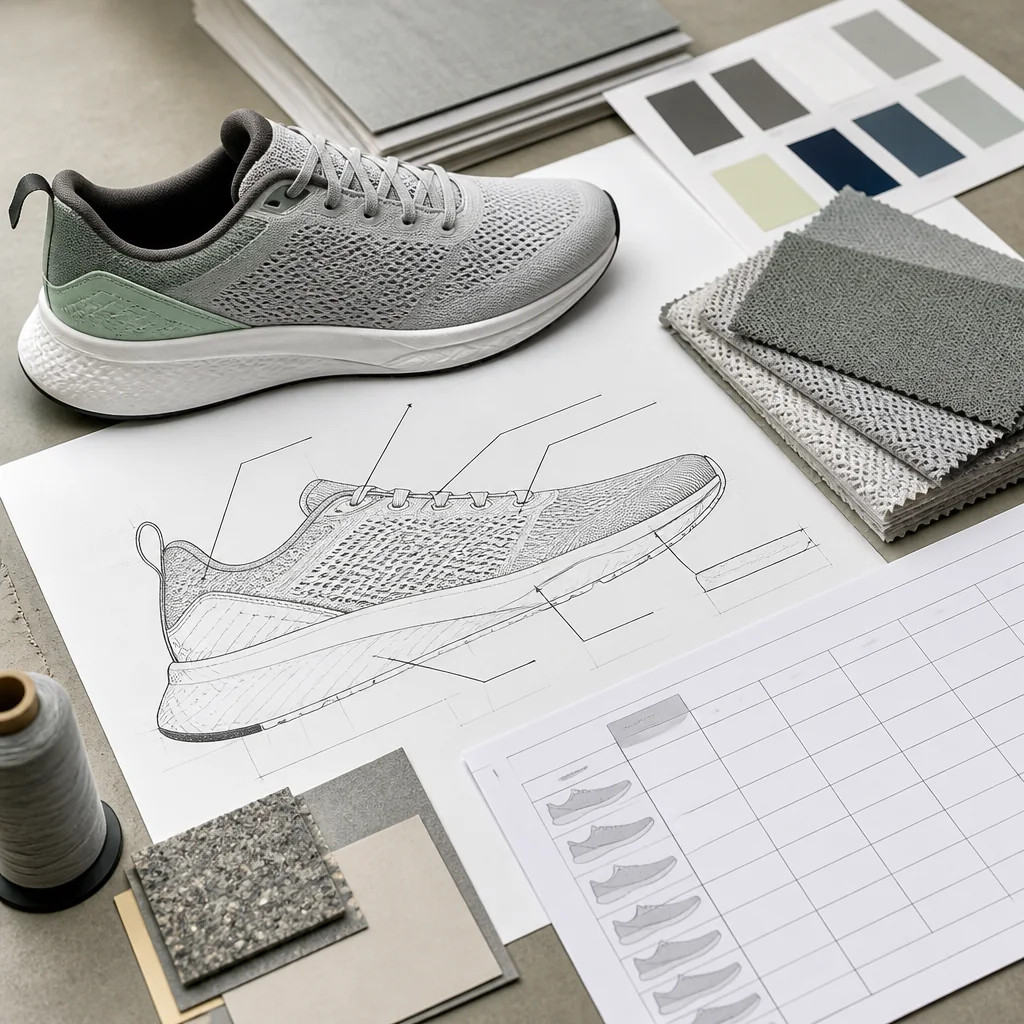
A running shoes supplier cannot assess a fully defined product from a category name alone. Terms such as “private-label running shoe,” “breathable upper” and “cushioned sole” leave the construction, material zones, branding direction and development references open.
This guide recommends that buyers organize those inputs before requesting pricing. The objective is not to predict cost, timing or manufacturability. It is to present the current product definition clearly, show which references support it and identify the decisions that still require project-specific discussion.
Set a baseline for the intended shoe
Custom Shoe Factory describes its focus as running, training, walking and casual sneakers. Within that scope, the running-shoe product information describes performance-inspired daily-training builds with breathable uppers and cushioned midsoles. It also identifies retail, ecommerce and private-label contexts.
Where that direction matches the proposed program, the buyer can use it as a documented starting point. The product definition should still be narrower than “running shoe.” As an editorial recommendation, record the intended role, wearer context and sales channel without attaching unverified performance results to the design.
- Name the intended category, such as a performance-inspired daily-training shoe.
- Describe the expected use in buyer-approved terms.
- State the retail, ecommerce or private-label context where applicable.
- Identify any category exclusions relevant to the inquiry.
- Mark the definition as confirmed, preferred or still open.
The supplied pages do not document professional racing, trail, medical, orthopedic or safety-footwear scope. If a project falls into one of those categories, present it as a direct scope question rather than treating it as part of the documented daily-training direction.
Convert material preferences into build inputs
The running-shoe information lists mesh, knit and PU upper options. It separately lists EVA and rubber outsole options. Those compact material lists can inform an inquiry, but they do not amount to a complete specification for an individual shoe.
More detail is available in the engineered-mesh information. It discusses air mesh and sandwich mesh, as well as knitted or warp-knit synthetic construction. Zoned density is described in relation to ventilation, light stretch and support. Buyers can translate that material vocabulary into drawings and placement notes rather than relying on a broad request for a “breathable mesh upper.”
| Build topic | Documented information | Editorial recommendation for the buyer |
|---|---|---|
| Upper family | Mesh, knit and PU are listed for running shoes. | Name the preferred family and state whether alternatives may be considered. |
| Mesh construction | Air mesh, sandwich mesh, and knitted or warp-knit synthetic construction are discussed. | Identify a preferred construction or leave the selection unresolved for discussion. |
| Zoned density | Zoning is described for ventilation, light stretch and support. | Mark the intended zones on an upper drawing and avoid presenting those attributes as measured shoe results. |
| Material weight | A typical range of 90 to 250 GSM is stated, depending on the zone, with denser knit at the eyestay and toe. | Record GSM as a material direction by zone, not as a mandatory finished-shoe specification. |
| Branding direction | Screen printing, heat-transfer film and welded TPU overlays are listed. | Provide artwork and placement details, then ask which method may suit the proposed material and design. |
| Outsole material | EVA and rubber outsole options are listed. | State the preferred option or combination under consideration and provide a bottom drawing or reference image. |
The 90 to 250 GSM range is typical and depends on the zone. It should not be converted into a universal requirement or evidence of finished-shoe breathability, support or durability. Likewise, the appearance of a branding method on the materials page does not establish that it will suit every mesh, artwork or order.
Declare the development starting point
The case-studies page presents an example running-shoe project format from a reference pair to an inspected first production. That is evidence of an example format, not proof that every project follows the same stages, responsibilities, timing or inspection arrangement.
For an inquiry based on a reference shoe, the buyer-side recommendation is to explain what the reference is intended to communicate. A pair might be supplied for selected characteristics such as silhouette, upper zoning or sole proportion, but that purpose should be stated rather than assumed.
- Identify the starting material. Record whether a physical reference pair, photographs, drawings or design files are available.
- Annotate the relevant features. Show which elements are fixed, preferred, illustrative or not intended for the new design.
- List supporting inputs. Include available artwork, colour references, component notes and size information.
- Expose missing decisions. Keep unresolved items visible so they can be raised as project questions.
Assemble the quote-readiness matrix
Once the role, material direction and starting point are recorded, place them in one matrix. This becomes the working decision memo for the running shoe supplier quote request. It should distinguish buyer-defined inputs from published references and unresolved questions.
| Product decision | Current definition | Supporting evidence or reference | Unresolved supplier question |
|---|---|---|---|
| Intended use | State the running-shoe role and wearer context. | Range plan, design brief or applicable product-page direction. | Does the proposed category fall within the relevant product scope? |
| Upper type | Record mesh, knit, PU or undecided. | Upper sketch, swatch or annotated reference pair. | What additional information is needed to assess the upper? |
| Mesh zoning | Map intended ventilation, stretch, support and denser areas. | Annotated drawing and material notes. | Can the proposed zoning and construction be assessed for manufacturability? |
| Branding method | State the preferred method and placement. | Vector artwork, colour reference and placement drawing. | Which listed method may suit the selected material and design? |
| Midsole direction | Describe the cushioning concept and visual profile without asserting a performance result. | Side drawing, design file or selected reference features. | Which specifications are required for project assessment? |
| Outsole direction | Record the EVA or rubber option under consideration and any proposed coverage. | Bottom drawing, coverage map or reference image. | Which construction details remain open for manufacturability and quotation review? |
| Sales context | State retail, ecommerce or private-label context where applicable. | Internal channel plan. | Which project-specific packing, labelling and commercial inputs should be provided? |
| Reference-pair status | Available, unavailable or being selected. | Photographs and notes identifying the relevant features. | Which development, sampling or quotation options may apply to the available starting material? |
A blank cell is useful when it accurately represents an open decision. Do not fill it with an assumed construction, commercial term or supplier commitment merely to make the brief appear complete.
Keep published evidence and open questions separate
The supplied first-party pages support a limited set of company-specific statements: a focus on running, training, walking and casual sneakers; a performance-inspired daily-training direction; listed upper and outsole options; engineered-mesh information; and an example project format. Each item helps define the conversation, but none is a project-specific quotation or manufacturing assessment.
| Documented on the supplied pages | Still a project question |
|---|---|
| Running, training, walking and casual sneaker focus | Whether the proposed category and construction fit the applicable scope |
| Daily-training direction with breathable uppers and cushioned midsoles | How the proposed shoe should be specified and assessed |
| Listed upper, outsole and engineered-mesh information | Suitability of a material, zone, branding method or construction for the design |
| An example format from reference pair to inspected first production | Applicable development stages, responsibilities, sampling arrangements and inspection requirements |
Minimum quantities, fees, pricing, tooling, payment terms and timing must be requested directly. The same applies to capacity, testing, inspection standards, regulatory status and the manufacturability of the proposed build. These are inquiry topics, not documented outcomes in the evidence supplied for this article.
Mark decisions before sending the brief
A compact status system prevents a visual preference from being mistaken for an approved technical requirement. The editorial recommendation is to apply one status to every matrix entry and to explain any reference that could otherwise be read as a complete specification.
- Confirmed
- A requirement approved for the current product definition.
- Preferred
- A direction the buyer wants assessed but has not fixed.
- Illustrative
- A reference communicating selected characteristics rather than the complete shoe.
- Unresolved
- A point requiring internal review or supplier input.
Before sending the inquiry, check that each row contains a current decision or an explicit open status, an appropriate reference and a clearly written question. The matrix creates a consistent review structure, but it does not guarantee comparable pricing, timing, project acceptance or manufacturing routes.
Send the current definition for assessment
Use the quotation inquiry to share the current matrix and its supporting references. Ask which development, manufacturability, sampling or quotation options may apply to the proposed running-shoe program.
The brief does not need invented answers where decisions remain open. It needs a clear boundary between what the buyer has defined, what the published evidence supports and what still requires direct assessment.
Sources and verification
- Athletic Shoe Manufacturer | Custom Product Range First-party site source
- Footwear Manufacturing Case Studies | Example Project Formats First-party site source
- Shoe Soles, Uppers & Insole Materials | Footwear Specs First-party site source
- About Custom Shoe Factory | OEM/ODM Athletic Shoes First-party site source
Share the current product definition and ask which development, manufacturability, sampling or quotation options may apply to the project.
Send your project brief