Sourcing Guides
Writing a Running Shoe Upper Material Specification
Use published product and engineered-mesh vocabulary to draft a buyer-owned upper definition without treating range labels or project examples as material proof.
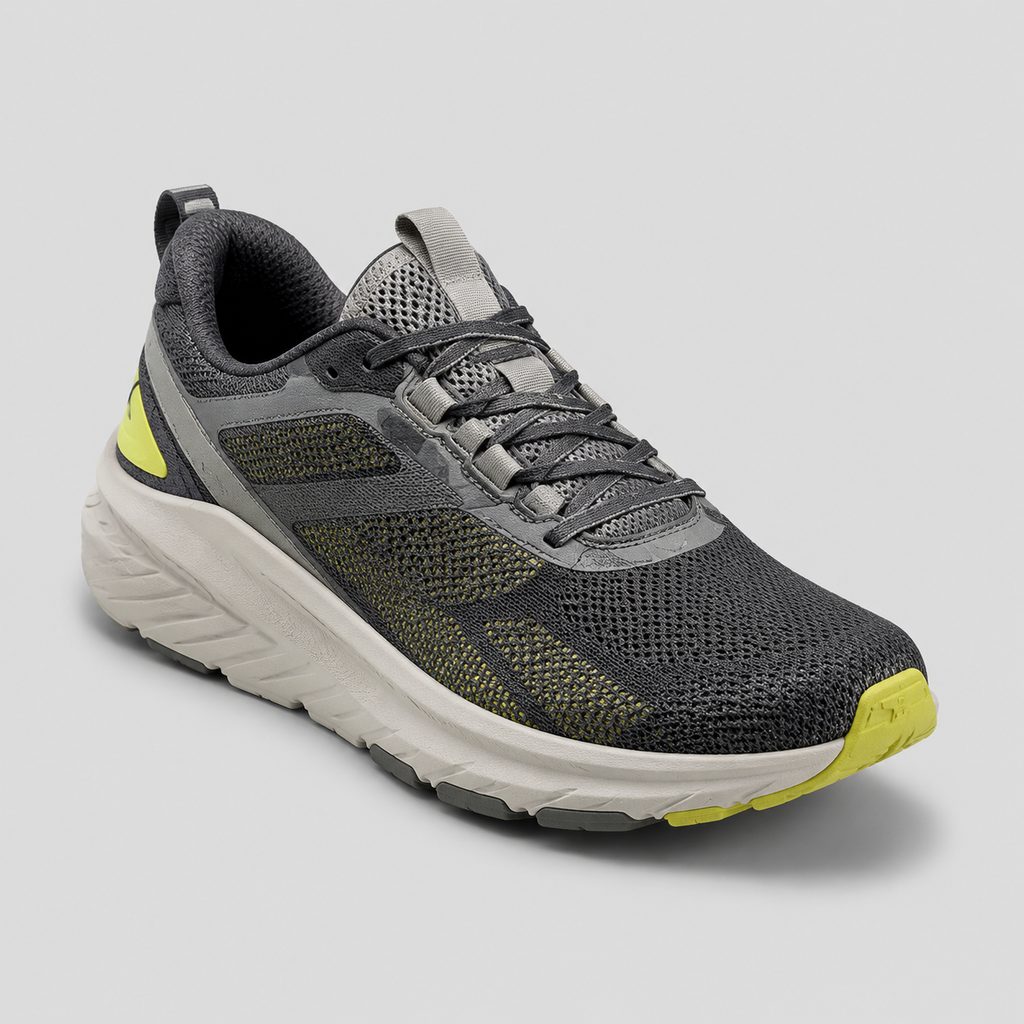
A running-shoe request can be commercially clear and still leave the upper undefined. A phrase such as "mesh upper" does not identify the proposed zone layout, whether a denser knit is being considered, or which branding treatment belongs on the design. It is category intent, not yet a running shoe upper material specification.
This guide uses Custom Shoe Factory's public product, materials, about, and case-studies entries as a limited vocabulary. The recommendations are for the buyer's working brief. They do not replace a last map, a test plan, fit rules, or project-specific confirmation of what may be possible.
Set the sport-family boundary first
The about page describes Custom Shoe Factory as a sport-footwear specialist focused on running, training, walking, and casual sneakers rather than a catch-all factory. For a buyer, that is a useful category note to record before defining upper zones.
Keep this note separate from material language. A running category selection does not specify engineered mesh construction, GSM, or a branding method. It also does not establish a performance result for a proposed upper.
Use product-range wording for the broad build
The product range page gives broad running-shoe labels. Those labels can anchor the product description, but they do not allocate an upper material to a particular pattern piece.
| Published range entry | Buyer use |
|---|---|
| Breathable / cushioned running shoes; performance-inspired daily-training builds with breathable uppers and cushioned midsoles | Use this as high-level running-program wording. Do not add stack, drop, cushioning, or lab claims that the entry does not state. |
| Mesh / knit / PU uppers | Record a candidate upper family. Leave the zone-level material definition to the materials entry and the buyer's pattern map. |
| EVA and rubber outsoles | Keep sole information on its own line. It is not evidence about the mesh construction. |
| Retail, ecommerce, private label | Use these as published commercial labels, not as proof of a project-specific packing, volume, or fulfillment arrangement. |
A brief that says only "mesh upper, EVA midsole, rubber outsole" has repeated broad range wording. It has not yet described the running upper in a way that separates the vamp, quarter, eyestay, toe, tongue, or collar.
Move from category labels to engineered-mesh terms
The materials page is the public entry that supplies more detailed wording for an engineered mesh running upper. Use its terms as candidate fields. The entry should not be read as confirmation that every term belongs on every running design.
| Specification field | What the materials entry states | Editorial use in the buyer brief |
|---|---|---|
| Material labels | Engineered mesh, air mesh, sandwich mesh | Name a candidate material for each zone instead of using "generic mesh." |
| Construction | Knitted or warp-knit synthetic | Record the construction wording where it applies to the proposed material. |
| Density purpose | Zoned density for ventilation, light stretch and support | Use these as stated purposes. Do not rewrite them as guaranteed outcomes for the finished shoe. |
| Branding treatments | Screen print, heat-transfer film, welded TPU overlays; multi-colour branding is described as easy | List a candidate treatment for each graphic area and retain colour-process limits as an open question. |
| Published mass reference | Typically 90-250 GSM depending on the zone | Record this only as a published typical band by zone, not as a single fixed grade for the whole upper. |
| Denser areas | Denser knit at the eyestay and toe | Note these areas when they are part of the buyer's pattern intent. |
| Best-for wording | Running, training, and summer styles that need maximum airflow at a sensible cost | Use this as the entry's category framing, not as a durability, comfort, or airflow guarantee. |
The 90-250 GSM figure is a published reference for athletic footwear upper GSM zones. It does not state the GSM for an entire shoe, and it does not identify a grade that has been approved for a particular project. Similarly, the listed branding treatments are material-page vocabulary, not a pre-approved decoration plan.
Draft the upper by zone
A running shoe upper material specification is more useful when its fields can be reviewed one at a time. The following record is an editorial template for the buyer. Zone names, pattern boundaries, and design choices remain buyer-defined.
- Zone name
- Identify the pattern area, such as vamp, tongue, medial quarter, lateral quarter, collar, eyestay, or toe.
- Mesh family candidate
- Use engineered mesh, air mesh, or sandwich mesh where the published vocabulary fits the concept.
- Density intent
- Use the materials entry's stated terms: ventilation, light stretch, and support through zoned density.
- GSM reference
- State that 90-250 GSM is the published typical band by zone. Do not present it as a locked project specification.
- Branding method candidate
- Record screen print, heat-transfer film, welded TPU overlay, or no proposed treatment for the relevant graphic area.
- Denser-area note
- Record a denser-knit intention at the eyestay or toe only when that is part of the design brief.
- Separate product notes
- Keep outsole materials, midsole intent, and channel labels outside the upper-material rows.
Hypothetical illustration only: a buyer might write, "Vamp: air mesh; density intent: ventilation; GSM: within the published typical 90-250 band. Eyestay: denser knit. Lateral graphic: heat-transfer film." This is a drafting example, not evidence of a completed customer build or a validated combination.
Keep the example order format separate
The case-studies page presents a running-shoe launch for a new brand as an example of how a first running-shoe order is structured, from a reference pair to inspected first production. That excerpt describes an example project format.
It does not list mesh construction, zone-specific GSM, or a branding method. For the buyer, the project-format example can remain a separate prompt for process questions. It should not be combined with the materials entry to create a single claim about a particular upper or project path.
Leave unstated technical items open
The cited excerpts do not settle several details that can matter to a running shoe OEM material brief. Record them as questions instead of assigning an assumed answer to the supplier.
- The exact zone map for the buyer's last and pattern pieces.
- Test methods, acceptance criteria, and any required lab protocol.
- Colourway process limits for print, film, or TPU on the selected material.
- Midsole grades, geometry, and cushioning measurements.
- Size-run fit rules, grading authority, and approval criteria.
- The sampling sequence, revision decisions, and approvals for a specific inquiry.
- Packing, labeling, and export-documentation requirements for the intended channel.
Keeping these questions visible prevents a broad product description from becoming a technical assumption. It also makes clear which parts of the definition come from the buyer and which parts require a later project discussion.
Submit the current definition for assessment
When the zone record is complete enough to communicate the design intent, share it with the unresolved-question list. Use the request-a-quote page to ask which development, manufacturability, sampling, or quotation options may apply to the project. Those are inquiry topics, not commitments established by the public product or materials entries.
- State the sport-family choice and the broad running-product description.
- Attach the zone record with candidate mesh terms and the published typical GSM reference clearly labeled.
- Keep sole notes and commercial-channel labels separate from the upper-material rows.
- List unanswered technical and process questions without filling them with assumed defaults.
This approach keeps the running shoe upper material specification specific enough for a useful discussion while preserving the limits of the public evidence. It also avoids turning a product-range label or an example project format into a material claim.
Sources and verification
- Athletic Shoe Manufacturer | Custom Product Range First-party site source
- Shoe Soles, Uppers & Insole Materials | Footwear Specs First-party site source
- Footwear Manufacturing Case Studies | Example Project Formats First-party site source
- About Custom Shoe Factory | OEM/ODM Athletic Shoes First-party site source
Share the current product definition and ask which development, manufacturability, sampling or quotation options may apply to the project.
Send your project brief