Sourcing Guides
Running Shoe Sampling Brief for Suppliers
A pre-request workflow that turns a vague “running shoes” sample ask into an assessable definition: family match, mesh or knit upper detail, cushioning inputs, and a bounded reference pair.
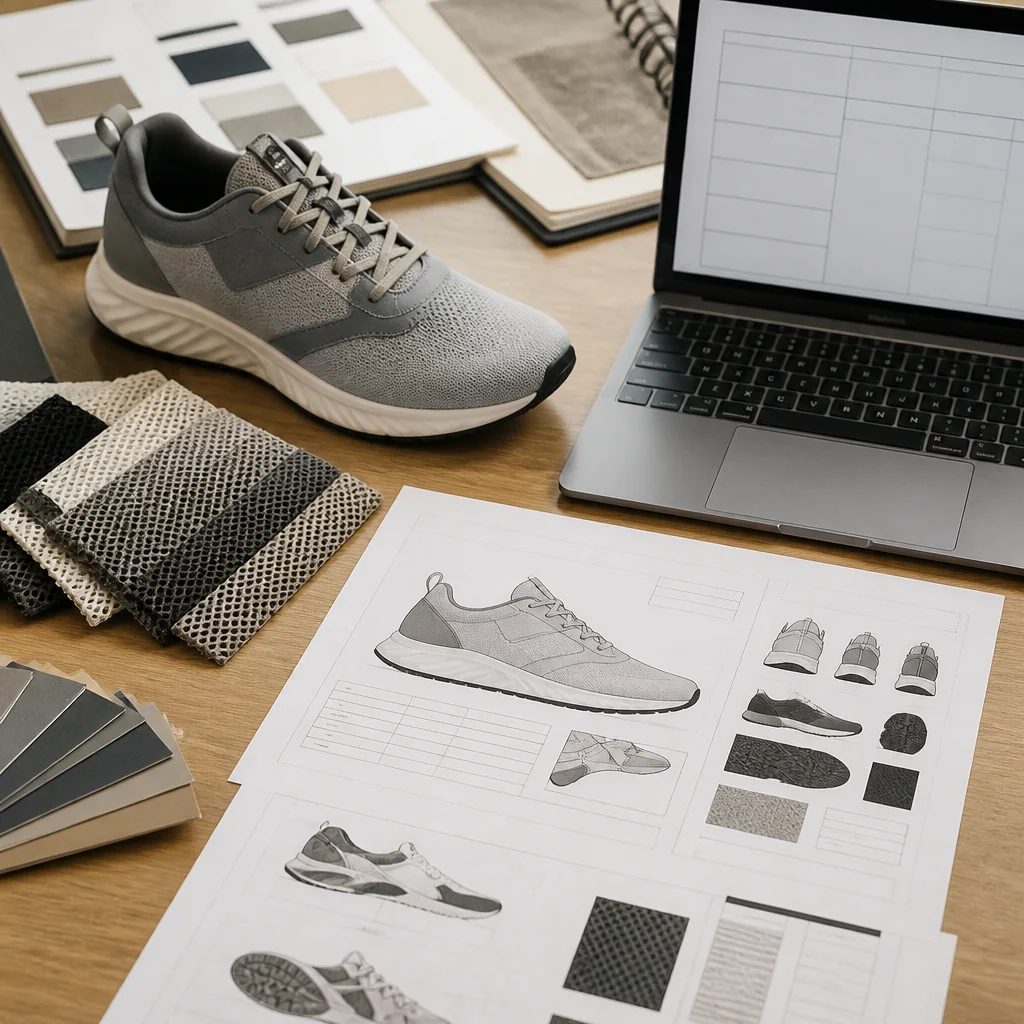
UK brands, importers, and product-development teams often open a sample request while the product is still only labelled “running shoes.” From that label alone, a factory cannot judge manufacturability, upper construction, or a sensible development path. A running shoe sampling brief for suppliers works when it closes those gaps first, then shares the current definition so a supplier can say which development, manufacturability, sampling, or quotation options may apply. Treat sampling as a gated request: align the intended shoe with the published running-shoe family and engineered-mesh notes, state what any reference pair is allowed to prove, and hand off a definition that still shows its open items.
Why sampling requests stall before they start
Premature sample asks fail for a practical reason. When the only product language is a category name, the supplier cannot tell whether the program sits inside a focused sport-footwear range or whether it is a catch-all athletic request that needs a different specialist. Custom Shoe Factory describes itself as a sport-footwear specialist covering running, training, walking, and casual sneakers rather than a catch-all factory. That framing sets a fit question before any sample conversation starts: does the intended build belong in that family, or is the brief still too broad to assess?
Sampling is not the place to invent the product. If upper construction, cushioning intent, outsole type, channel, and the role of a physical reference are undefined, development questions arrive as guesswork. Editorial guidance for buyers is simple: freeze enough of the build that a supplier can respond to a real definition, not a mood board of “breathable running shoes.”
Gate 1: does the brief match the published running-shoe family?
On the product range page, running shoes are described as performance-inspired daily-training builds with breathable uppers and cushioned midsoles. Listed upper options are mesh, knit, and PU. Outsoles are stated as EVA and rubber. Channel labels named with that family are retail, ecommerce, and private label. Those statements are the ceiling for what this article treats as the published running-shoe family.
- Write the program as daily-training running footwear, not generic athletic or fashion sneakers that only share a silhouette.
- Name the intended channel among retail, ecommerce, or private label so assortment language stays honest.
- Confirm that breathable uppers and cushioned midsoles are design intent, not lab claims you will later ask the factory to certify without data.
- If the shoe is closer to training, walking, or casual, say so instead of forcing it into the running label for convenience.
Buyers who need a wider view of the product family can review the running and athletic product range before drafting sample language. The gate is alignment, not marketing copy. If the brief cannot sit next to “performance-inspired daily-training builds,” sampling will reopen the same definition fight later.
Gate 2: turn “breathable mesh” into mesh, knit, or PU language
Vague breathability language is the second common stall. The materials page describes engineered mesh as air mesh or sandwich mesh: knitted or warp-knit synthetic with zoned density for ventilation, light stretch, and support, typically run at 90–250 GSM depending on the zone, with denser knit at the eyestay and toe. It notes that the construction takes screen print, heat-transfer film, and welded TPU overlays cleanly, and positions engineered mesh as a workhorse athletic upper for running, training, and summer styles that need airflow at a sensible cost. Separately, the running-shoe family lists mesh, knit, and PU uppers. Keep those statements separate: engineered-mesh detail is material guidance; mesh/knit/PU is the product-family upper set.
| Buyer phrase to retire | Assessable language to send instead |
|---|---|
| “Breathable mesh upper” | Air mesh or sandwich mesh; engineered mesh zones; target GSM band if known |
| “Soft knit look” | Knit upper as a family option; call out stretch or denser support zones if critical |
| “PU panels for structure” | PU as an upper option; state where overlays or panels should reinforce |
| “Easy branding” | Overlay method preference among screen print, heat-transfer film, or welded TPU, if already decided |
A breathable running shoe upper specification does not need to be a full tech pack at this stage. It does need enough mesh, knit, or PU language that manufacturability can be discussed without inventing materials the brief never named. More material context sits on the shoe soles, uppers, and insole materials page. Where GSM, overlay method, or zone density remain open, list them as open items rather than silent assumptions.
Gate 3: midsole and outsole intent without performance claims
The product range description pairs cushioned midsoles with EVA and rubber outsoles for the running-shoe family. That is build-input language, not a published test method, cushioning score, or durability guarantee. Buyers should state intent in the same bounded way:
- Cushioned midsole as a program goal for daily training, without inventing foam chemistry or stack-height numbers the evidence does not provide.
- Outsole intent as EVA and rubber where that matches the published family, or as an open decision if the brief is still exploring alternatives.
- No lab standard, abrasion rating, or energy-return claim unless the brand already owns those requirements from its own testing plan.
Editorial advice: treat midsole and outsole lines as manufacturability signals. They tell a supplier what kind of daily-training runner you think you are building. They do not convert into performance warranties by repetition.
Gate 4: one limited job for the reference pair
The case-studies page includes an example titled “Running Shoe Launch for a New Brand,” described as how a first running-shoe order is structured from reference pair to inspected first production. That published running shoe reference pair to first production framing is stage language for order structure. It is not a completed client case, not a guaranteed process map, and not permission to treat a borrowed pair as a full production specification.
- State what the reference pair is allowed to prove: silhouette preference, approximate last feel, color direction, or construction cues you want to discuss.
- State what it is not: material callouts you never measured, compliance proof, or a frozen bill of materials.
- Write the path in order terms only: reference pair toward inspected first production, with every change between those stages still owned by the brand’s written decisions.
- If no pair exists, say so and rely on written upper, midsole, and outsole intent instead of implying a silent physical standard.
Buyers reading example project formats can open the footwear manufacturing case studies page for the published framing. In the sampling brief, keep the reference pair on a short leash so OEM running shoe sample development does not collapse into “make it like this” without change control.
When sampling questions and quotation questions should stay apart
A common failure mode is one email that mixes “please sample this” with “what is the unit price for production.” Those are different assessment jobs. The product range and case-study excerpts describe family attributes and example order structure; they do not document a named sampling service package, fee schedule, or service-level agreement. Buyers should keep topics distinct:
- Definition and manufacturability: Does this build sit in the running family? Are mesh, knit, or PU choices and EVA/rubber outsole intent clear enough to review?
- Development and sampling: What development or sampling paths fit the current definition and its gaps?
- Quotation: Which price inputs make sense only after the definition is stable enough that cost talk is not fictional?
Frame the inquiry as separate assessment topics tied to the written definition. Do not assert that a factory has already packaged those topics into a formal product. Channel labels such as retail, ecommerce, and private label describe intended routes to market; they do not, by themselves, define packing, assortment, or fixture requirements.
Pre-sampling handoff: definition plus visible gaps
Before you request samples, assemble a short send package that a supplier can assess without reverse-engineering your intent. The package should combine what the published sources support with the decisions you still own.
- Confirmed family: daily-training running build with breathable upper intent and cushioned midsole intent, or an honest reassignment to training, walking, or casual if that is more accurate.
- Upper language: mesh, knit, or PU; engineered-mesh notes such as air/sandwich mesh, zoned density, 90–250 GSM band, and overlay methods only where you have actually decided them.
- Bottom unit intent: cushioned midsole plus EVA and rubber outsole language where it matches the family, otherwise marked open.
- Channel: retail, ecommerce, or private label as a market route, not as invented packaging rules.
- Reference pair role: the single job the pair is allowed to do on the path from reference pair to inspected first production.
- Visible gaps: every unset GSM zone, overlay method, last preference, or outsole decision listed plainly so sampling is not mistaken for a frozen tech pack.
Company context for specialist sport-footwear focus is summarized on the about Custom Shoe Factory page. When the definition and gaps are written down, share that package and ask which development, manufacturability, sampling, or quotation options may apply to the project through the request a quote form. The handoff succeeds when the supplier can see both the locked attributes and the open ones, not when the email pretends completeness.
A running shoe sampling brief for suppliers is therefore a gate sequence, not a wish list. Match the family, convert breathability into upper construction language, keep midsole and outsole statements inside published build inputs, limit the reference pair, and keep sampling questions separate from quotation questions. That order reduces rework because each gate removes one ambiguity that otherwise reappears after samples arrive.
Sources and verification
- Athletic Shoe Manufacturer | Custom Product Range First-party site source
- Shoe Soles, Uppers & Insole Materials | Footwear Specs First-party site source
- Footwear Manufacturing Case Studies | Example Project Formats First-party site source
- About Custom Shoe Factory | OEM/ODM Athletic Shoes First-party site source
Share the current product definition and ask which development, manufacturability, sampling or quotation options may apply to the project.
Send your project brief