Footwear Sourcing
Custom Running Shoe Manufacturer: Build a Sole RFQ
Treat cushioning intent, midsole construction and outsole construction as separate RFQ decisions. This question sheet preserves documented terms while keeping unresolved sole details visible.
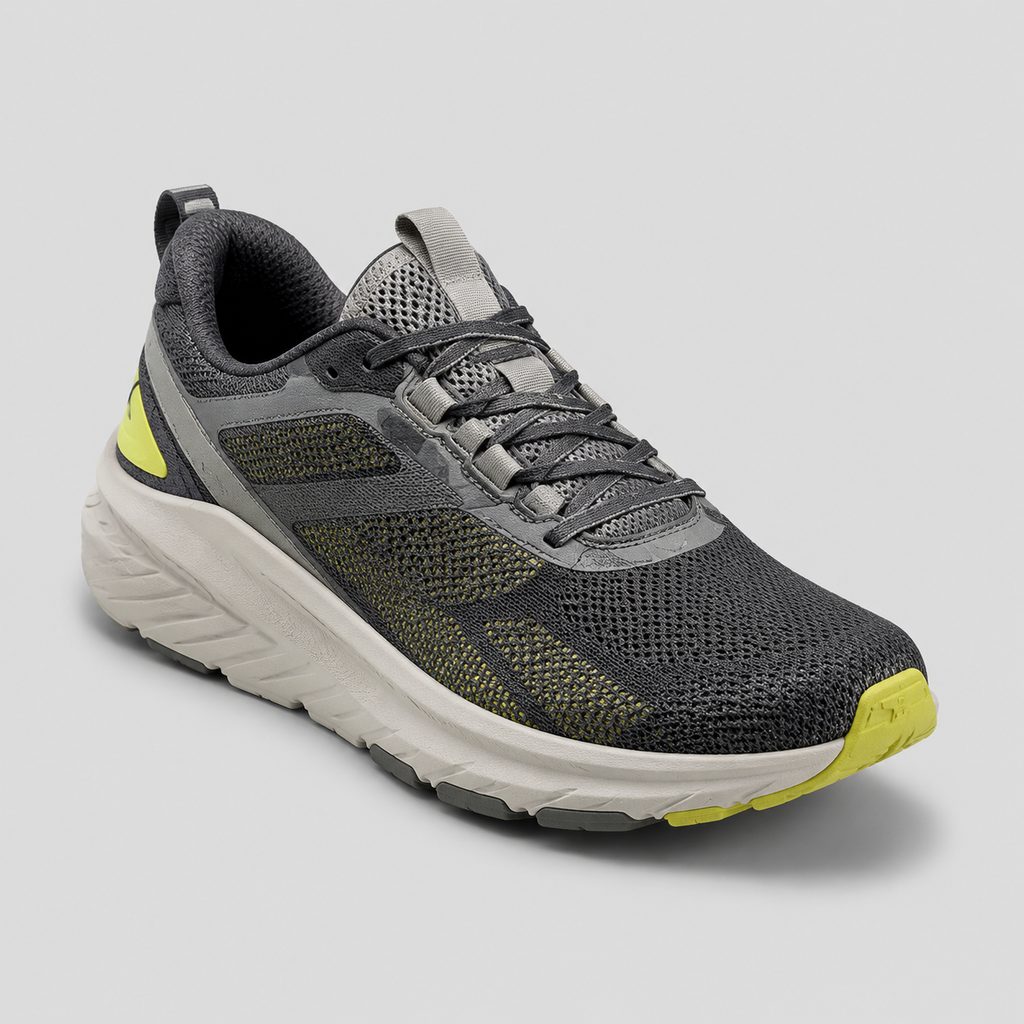
For this RFQ, "cushioned" is an objective, not a complete midsole specification. The available running-shoe copy describes cushioned midsoles without naming a measurable cushioning target or midsole material. It places the separate phrase "EVA & rubber outsoles" in the outsole context.
Moving EVA into the midsole field would add an assumption that the source does not support. The same is true of treating EVA and rubber as a confirmed combination, a choice between alternatives or a construction available for every order. A buyer approaching a custom running shoe manufacturer can avoid those inferences by separating what is fixed, what remains open and what requires an answer.
The status labels, worksheet and RFQ prompts below are editorial recommendations for buyers. They are not presented as company forms, confirmed development routes or promises that every inquiry topic will be available.
Set the decision status first
Start with the state of each product decision rather than filling every field with a familiar footwear term. For the buyer's working file, three labels can distinguish approved requirements from gaps:
- Fixed
The product team has selected the requirement and included it in the current tech pack or design definition.
- Open
No requirement has been selected. The field remains blank or is marked unresolved.
- Question
The buyer needs information about the submitted design before deciding how to complete the field.
These are buyer-side recordkeeping labels. They help prevent an open material or construction decision from appearing as an approved specification.
Keep each product term with its component
The running-shoe product copy describes performance-inspired daily-training builds. It refers to breathable uppers and cushioned midsoles. It separately lists mesh, knit and PU as upper terms.
For the outsole, the source uses the wording "EVA & rubber outsoles." It does not define the physical relationship between EVA and rubber. It also does not say whether that wording applies to a particular buyer's design. Record it as an outsole reference until the inquiry produces information about the proposed shoe.
| Component | Source wording | Recommended RFQ treatment |
|---|---|---|
| Upper | The copy refers to breathable uppers. It separately lists mesh, knit and PU as upper terms. | Use the terms only as category references unless the product team has selected an upper requirement. |
| Midsole | Cushioned midsoles | Record "cushioned" as a descriptive objective. Do not infer a material, geometry or measurable target. |
| Outsole | "EVA & rubber outsoles" | Keep the complete phrase in the outsole field. Ask how, or whether, it relates to the proposed design. |
The About page excerpt calls Custom Shoe Factory a sport-footwear specialist focused on running, training, walking and casual sneakers. That statement supplies company and category context; the editorial recommendation is to define the sole package separately in the buyer's project documents.
Build the sole-package question sheet
The central RFQ document can place source wording, buyer decisions and questions in different columns. Unknown details should remain visible instead of being completed with conventional specifications.
| Brief field | Documented language | Buyer entry | Status | Question to submit |
|---|---|---|---|---|
| Intended use | Performance-inspired daily-training builds | Identify the concept as a daily-training running shoe. Add only use requirements approved by the product team. | Fixed at category level; other details may remain open | What other buyer inputs would be needed to discuss the intended use? |
| Cushioning objective | Cushioned midsoles | Enter the product team's approved cushioning objective or mark the decision open. | Fixed or open | What information would be needed to discuss the intended cushioning outcome? |
| Midsole construction | No midsole material or construction is named in the supplied product excerpt. | Enter the construction already shown in the tech pack or leave the field unresolved. | Fixed, open or question | Which construction routes, if any, may be relevant to the submitted design? |
| Outsole construction | "EVA & rubber outsoles" | Label this as source wording, a buyer-approved requirement or a point needing clarification. | Fixed, open or question | How should this outsole wording be interpreted for the proposed shoe? |
| Upper family | The source lists mesh, knit and PU as upper terms. | Record an approved upper family, a buyer reference or an open decision. | Fixed, open or question | Are any of the listed upper terms relevant to the submitted design? |
| Other sole details | No further sole specification is provided in the supplied excerpt. | List only details that the buyer has approved. Identify every remaining gap. | Open or question | Which open fields would need decisions before development, DFM, sampling or quotation could be discussed? |
Used this way, the running shoe midsole and outsole specification becomes a decision record rather than a collection of category descriptors. A reader can see which terms came from company copy, which requirements came from the buyer and which entries still need discussion.
Apply the OEM statement at its stated boundary
The OEM statement says Custom Shoe Factory manufactures to the buyer's tech pack and design. In a separate action, the company says it flags manufacturability issues during DFM.
Those statements support a build-to-spec boundary. They do not document DFM as cushioning-performance validation, design approval or product testing. For this worksheet, the editorial recommendation is to submit fixed requirements in the current design definition while retaining open fields and questions in the accompanying sheet.
- Place approved construction decisions in the tech pack or design definition.
- Keep unresolved decisions marked as open rather than supplying assumed values.
- Attach each question to the component field it concerns.
- Ask which manufacturability discussions may apply to the current design.
This structure also keeps the buyer's request focused when contacting an OEM running shoe manufacturer: the design documents show what has been decided, while the question sheet identifies what has not.
Turn the gaps into bounded questions
The following prompts are editorial inquiry topics. They do not establish that Custom Shoe Factory offers every option mentioned or that an option will suit a particular program.
- Midsole: Which midsole construction routes, if any, may be discussed for the current design?
- Outsole: How does the phrase "EVA & rubber outsoles" relate, if at all, to this proposed shoe?
- Buyer inputs: What drawings, design details, references or decisions would be needed to review manufacturability?
- Development: Which development options, if any, may apply while the listed sole fields remain open?
- Sampling: Which sampling options, if any, may apply, and what must the buyer decide first?
- Quotation: What information must be fixed before a running shoe manufacturing quotation can be discussed, and how would unresolved fields be handled?
Each prompt should stay with its corresponding RFQ field. That makes the source of the question clear without converting a possible discussion topic into a claimed factory capability.
Use the first-order listing only as a prompt
The case-studies index advertises an example about structuring a first running-shoe order from a reference pair to inspected first production. A buyer can use that listing to ask which stages may apply to the current inquiry.
Read the listing at that limited scale. It is not evidence of a universal order sequence, a standard sampling route, a particular inspection protocol or a documented customer outcome.
Submit the current sole definition
The final inquiry should show both the current product definition and its limits. An editorial submission sequence is:
- Identify the program as a daily-training running shoe and include only approved intended-use details.
- Attach the current tech pack or design definition when available.
- Separate cushioning intent, midsole construction and outsole construction.
- Mark each entry as fixed, open or question.
- Include the sole-package question sheet with the component-specific prompts.
- Ask which development, manufacturability, sampling or quotation options may apply to the submitted information.
Share the current running-shoe definition with the unresolved fields intact. The request can then focus on the development and purchasing decisions that still need answers without treating broad product-page wording as a finished sole specification.
Sources and verification
- Athletic Shoe Manufacturer | Custom Product Range First-party site source
- About Custom Shoe Factory | OEM/ODM Athletic Shoes First-party site source
- OEM / ODM Shoe Development | Custom Footwear Manufacturing First-party site source
- Footwear Manufacturing Case Studies | Example Project Formats First-party site source
Share the current product definition and ask which development, manufacturability, sampling or quotation options may apply to the project.
Send your project brief