Sourcing Guides
Running Shoe OEM Construction Specifications: Mesh, Knit, or PU
Performance labels are not factory inputs. Name published running-shoe upper, midsole, and outsole fields so an OEM running shoe tech pack, DFM review, and later BOM custody rest on a stable definition.
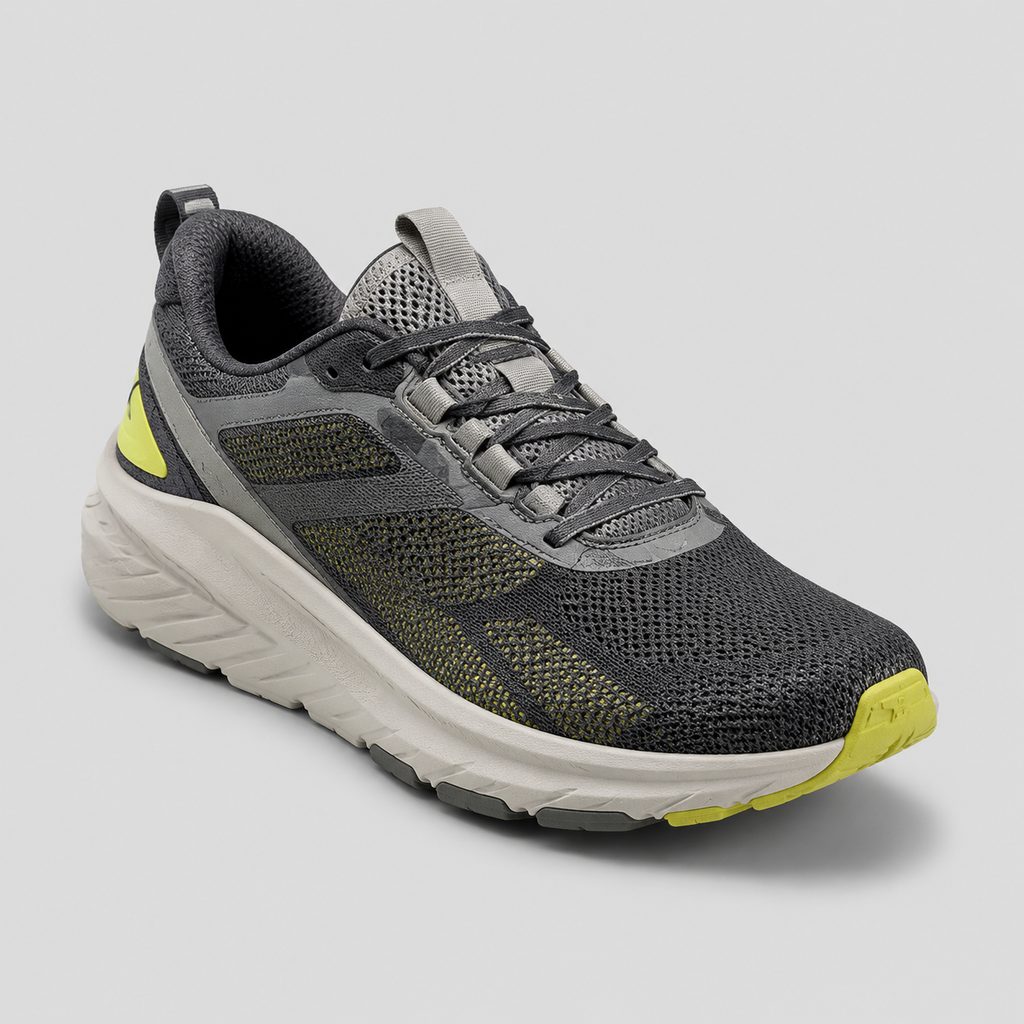
When a brand brief only names “performance running,” “daily training feel,” or “breathable and cushioned,” running shoe OEM construction specifications are still incomplete. Brands, importers, and product-development teams often stop at lifestyle language. An OEM path that manufactures to a tech pack and design cannot flag manufacturability issues or hold a stable bill of materials until upper, midsole, and outsole choices exist as written fields the factory can build against.
Treat the site’s published material vocabulary as buyer-owned construction decisions. It is not lab proof. It is not a finished OEM running shoe tech pack either.
Performance language is not a construction input
Intent and construction do different jobs. “Running,” “training,” and “performance-inspired” explain why the shoe exists. They do not name an upper family, a midsole design goal, or outsole materials.
On a build-to-spec path, manufacturing follows the tech pack and design the buyer already owns. Manufacturability issues are flagged during DFM against that pack. Marketing adjectives do not replace those inputs. Public product copy also stops short of test methods: breathable uppers and cushioned midsoles appear as product-range language, while lab methods, cushioning metrics, breathability scores, and durability certifications do not.
Editorial recommendation for buyers: convert performance claims into construction decisions first, then ask which sampling, packing, or quotation details may apply. Do not treat absent metrics as factory guarantees.
Why stay inside the published sport-footwear family?
Construction talk only helps inside the supplier’s documented product family. The company positions itself as sport-footwear specialists with one family done consistently: running, training, walking, and casual sneakers, not a catch-all shoe factory.
That boundary is a procurement filter. Programs outside athletic and casual sneaker construction should treat category fit as an open question before material freezes. Even inside the family, do not borrow the running-shoe option set for training or walking by inference. Only the running-shoe product description publishes the upper and outsole language used below. Keep each program’s sneaker upper midsole outsole specs on its own list until confirmed.
Construction fields the running-shoe page actually freezes
Running shoes are described as performance-inspired daily-training builds with breathable uppers and cushioned midsoles. Published upper options are mesh, knit, and PU. Published outsole materials are EVA and rubber. Retail, ecommerce, and private label appear as channel contexts on the same range. Use that description as a buyer-controlled field set.
| Buyer field | Published running-shoe language | What you freeze | What stays open |
|---|---|---|---|
| Upper intent | Breathable uppers | Breathability as a design goal for the upper | Lab method, fabric open area, membrane claims |
| Midsole intent | Cushioned midsoles | Cushioning as a midsole design goal | Foam chemistry, hardness, energy-return metrics |
| Upper family | Mesh / knit / PU uppers | One primary family from the published set | Exact fabric specs, coatings, colorways; any hybrid panel map |
| Outsole materials | EVA and rubber outsoles | That EVA and rubber appear as the published material set for the bottom unit | Compound grades, tread pattern IP, abrasion tests, unlisted layouts |
| Channel context | Retail, ecommerce, private label | Where the shoe will sell, for packaging and assortment talk | Not a substitute for construction definitions |
Channel labels describe product-range contexts. They are not construction definitions and should not be read as packaged OEM service tiers. An inquiry that leads with “private label running shoes” but never chooses mesh, knit, or PU still leaves the upper undefined for review.
Mesh, knit, or PU: which upper freezes first?
Mesh, knit, and PU are the only published upper families for running shoes. The first factory-readable decision is which of those three carries the primary upper. Until that choice is locked, “breathable upper” remains intention, not a build instruction.
If a design needs panels that mix families, treat that hybrid map as an open development question outside the single-family list the product page publishes. Do not present the hybrid as an already-supported freeze option.
- State product family as running shoes inside the sport-footwear range, not as a generic sneaker request.
- Choose a primary upper family: mesh, knit, or PU. Record any multi-family layout as an open item requiring confirmation.
- Keep channel labels (retail, ecommerce, private label) separate from the upper decision. Note channel for assortment and packaging questions only.
- Attach midsole intent as “cushioned midsole” only when it matches the brand brief. Foam grade and geometry stay buyer-owned open items unless already written into the tech pack.
- Name outsole materials from the published set (EVA and rubber) without inventing bottom-unit layouts the page does not list.
- Only after those fields are written should you submit the tech pack and design for an athletic footwear manufacturability review.
That order is editorial buyer discipline, not a published factory workflow. It keeps upper-family choice from being deferred until late development, when material changes are harder to reverse in pattern and tooling discussions you may still need to open with the factory.
The tradeoff when DFM arrives too early
Documented OEM scope is narrow: manufacture to the buyer’s tech pack and design, flag manufacturability issues during DFM, and hold the bill of materials and tooling across reorders. DFM attaches only after construction fields and ownership of the pack are clear enough to review. It does not author the design, invent materials outside the pack, or approve a sample for the brand.
Bring DFM in before those fields exist and the tradeoff is immediate. Either manufacturability comments stall, or they drift into design authorship the OEM path does not claim. If the pack still says “performance upper” without mesh, knit, or PU, there is no stable target to flag against.
Buyer guidance: freeze construction fields first, then request DFM against ownership you already claim. If design is still exploratory, call that status an open development question rather than OEM DFM readiness. For service scope and how OEM sits beside ODM language on the site, use the OEM / ODM shoe development page as the ceiling for what “build to spec” includes. Do not expand that ceiling into design services the page does not state.
What BOM and tooling custody needs first
Holding bill of materials and tooling across reorders presupposes a first definition the buyer is willing to freeze. Without named construction fields, later reorders have no stable BOM to hold. The published custody statement is about continuity across reorders. It does not publish lead times, ownership contracts, or quantity thresholds.
- Product family locked as running shoes within sport footwear.
- Primary upper family named as mesh, knit, or PU; multi-family maps listed as open if needed.
- Breathable upper intent and cushioned midsole intent stated as design goals, with metric tests listed as buyer-owned open items.
- Outsole materials named using the published EVA and rubber set.
- Tech pack and design ownership confirmed as buyer-controlled inputs for OEM build-to-spec.
- DFM questions listed against those inputs, not against vague performance claims.
- Reorder intent noted only as a future need for BOM and tooling continuity, without assuming commercial thresholds.
If any of those lines are still marketing adjectives, freeze them before asking the factory to hold a BOM you have not defined. For company positioning inside athletic footwear rather than catch-all categories, the about page restates the single product-family focus that should already constrain the brief.
What the first-order example can and cannot answer
Case-study language describes how a first running-shoe order is structured: from reference pair to inspected first production. Read that line as a question source for order structure. It is not proof of a default route, a completed customer outcome, or an inspection standard.
A reference pair is a physical or visual input. Locked construction specifications are written decisions. Related, not interchangeable.
| Input type | What it can answer | What it cannot replace |
|---|---|---|
| Reference pair | Shape, proportion, and visual cues for a first-order structure discussion | A frozen upper family, midsole intent, and outsole material set |
| Locked construction fields | Written inputs for the tech pack, DFM, and later BOM continuity | Automatic proof of fit, comfort, or lab performance |
| “Inspected first production” wording | A prompt to ask what inspection scope applies to your order | A published AQL, test method, or guaranteed process path |
Use the example path to ask structural questions only. Will this program start from a reference pair? Is first production inspection defined in the pack? Keep those questions separate from inventing a process promise. The case studies page is the place to re-read the published example wording without stretching it into a customer narrative beyond the line itself.
Inquiry package: locked construction versus open items
When you share the product definition and ask which development, manufacturability, sampling, or quotation options may apply, separate locked fields from open questions. A clean package for request a quote keeps the factory from reverse-engineering construction from performance language alone.
- Locked now: product family (running shoes within sport footwear); primary upper family (mesh, knit, or PU); breathable upper and cushioned midsole as design intents if they apply; outsole materials from the EVA and rubber set; channel context if relevant for assortment talk.
- Attached ownership: current tech pack and design status (complete, partial, or still exploratory); confirmation that OEM is the intended path if you want build-to-spec manufacturing against your pack.
- DFM questions: manufacturability issues you want flagged against the locked fields and pack, not open-ended redesign requests.
- Open items (evidence absent or buyer-owned): lab tests, cushioning metrics, exact foam grades, MOQ, unit price, lead time, packing standards, hybrid upper maps, and any training or walking construction claims not published on the running-shoe page.
- Structure questions only: whether a reference-pair-to-first-production structure is relevant for this order, without treating the published example as a guaranteed route.
Review the athletic shoe product range once more before you submit, only to confirm you are not extending the running-shoe stack into categories that do not publish the same options. Then send the locked fields, the pack status, and a short list of open questions.
That sequence respects the published OEM boundary: manufacture to your tech pack and design, flag manufacturability issues during DFM, and hold bill of materials and tooling across reorders once a first definition exists to hold. Performance language can stay in the brand deck. Mesh, knit, PU, EVA, rubber, breathable upper intent, and cushioned midsole intent belong in the written construction set the factory can actually use.
Sources and verification
- OEM / ODM Shoe Development | Custom Footwear Manufacturing First-party site source
- About Custom Shoe Factory | OEM/ODM Athletic Shoes First-party site source
- Athletic Shoe Manufacturer | Custom Product Range First-party site source
- Footwear Manufacturing Case Studies | Example Project Formats First-party site source
Share the current product definition and ask which development, manufacturability, sampling or quotation options may apply to the project.
Send your project brief