Product Development
running shoe first production inspection questions
Turn the published reference-pair-to-inspected-first-production wording into a focused buyer inquiry without assuming an undocumented procedure.
A buyer who sees "from reference pair to inspected first production" in a running-shoe case-study description has an immediate decision to make: identify what still needs a project-specific answer. This guide on running shoe first production inspection questions begins with that decision. The cited entry supplies two endpoints for an example order structure. It does not supply enough detail to turn those words into a project inspection plan.
The useful next step is to separate three subjects in the request: the product under discussion, the reference material, and the unanswered first-production points. The prompts in this article are editorial recommendations for the buyer. They do not describe a documented company service or promise that a particular development, sampling, or inspection activity applies.
What Does the Case-Study Line Establish?
The case-studies page labels an item "Running Shoe Launch for a New Brand." Its description says that a first running-shoe order is structured from a reference pair to inspected first production. That is useful context for a sourcing conversation because it identifies the two terms a buyer may need to address.
The line is brief. It places a reference pair and inspected first production in the same example description, but it does not assign a role to the pair or describe how inspection is handled. Reading the wording at that limited scope keeps a compact marketing excerpt from becoming an assumed project procedure.
Published Wording and Project Questions
The table is the evidence boundary for this inquiry. The left column stays with the supplied case-study excerpt. Every item in the right column is a question for the buyer to raise in a project response.
| What the case-study excerpt establishes | What the buyer should seek to confirm |
|---|---|
| A first running-shoe order is described as moving from a reference pair to inspected first production. | Ask whether, and in what way, those two endpoints relate to the proposed project. |
| The excerpt names a reference pair but gives it no further role. | Identify the pair, images, or other material being discussed and ask which details are relevant. |
| The excerpt uses the phrase "inspected first production." | Request clarification on the inspection actor, timing, scope, and criteria for the project. |
| The supplied excerpt does not report an inspection result, decision, or resulting record. | Ask whether a record or decision point may be available. Do not assume a report, photographs, test result, or approval outcome. |
This distinction gives a running shoe production inspection discussion a clear starting point. It also keeps an athletic footwear inspection inquiry focused on information still needed instead of treating a case-study phrase as proof of a defined process.
Product Identification Comes First
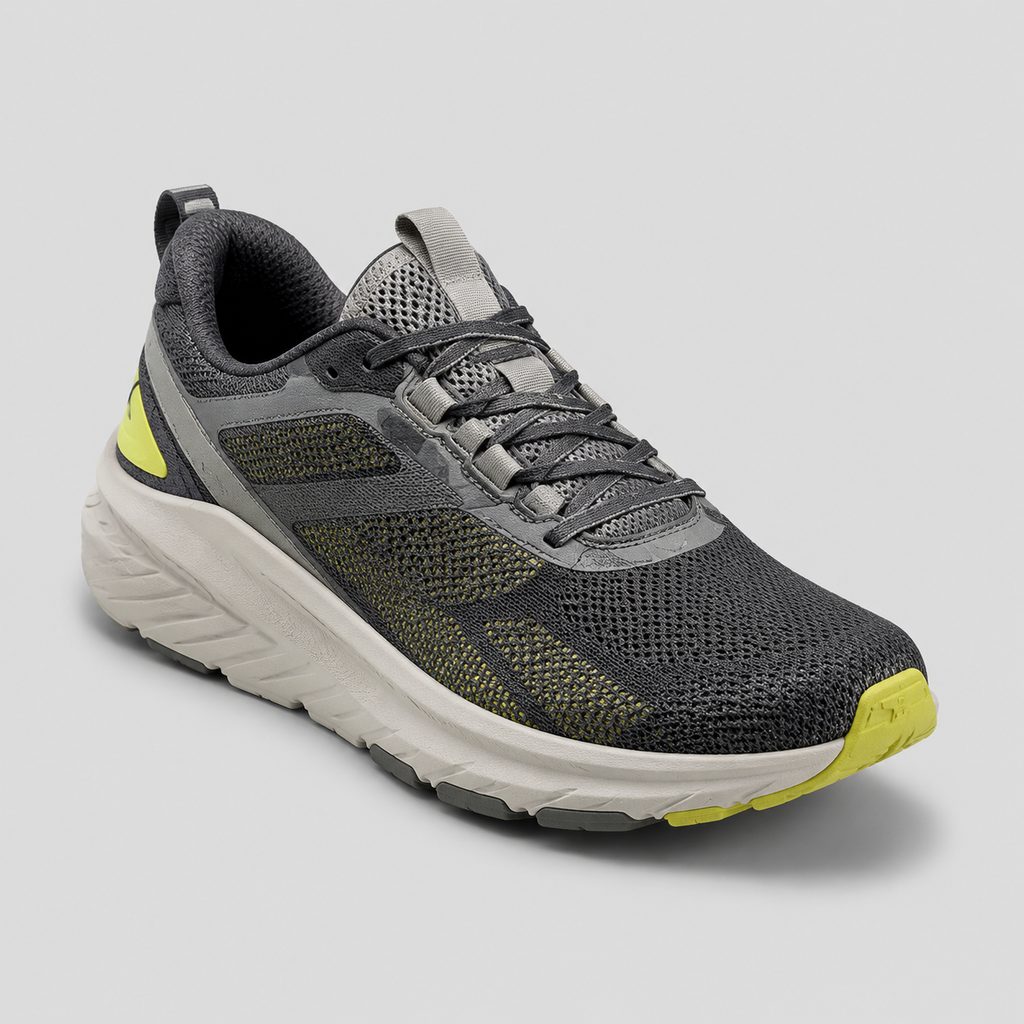
The products page describes its running-shoe range as performance-inspired daily-training builds with breathable uppers and cushioned midsoles. The same entry names mesh, knit, and PU uppers. It separately names EVA and rubber outsoles.
The about page describes the stated sport-footwear family as running, training, walking, and casual sneakers. These statements give a buyer category language for an inquiry. They do not select a material, construction, or component combination for a new style.
As an editorial recommendation, begin the request by identifying the intended category and use. Then describe the currently proposed upper, outsole, color, branding, and intended-use points that the team wants to discuss. Those details make clear what product is being considered without presenting any item as an approved specification. A team can cite the published running-shoe range as category context while keeping its own product definition separate.
Reference Pair Discussion
The case-study wording supports treating the reference pair as a subject for discussion. It does not label the pair an approved sample, a production instruction, a grading anchor, or an inspection benchmark. Running shoe reference pair questions should therefore identify what the buyer wants clarified rather than give the pair an unsupported status.
The following is an editorial checklist for the buyer:
- State whether the reference material consists of a physical pair, images, or another format, and identify which version is current.
- List the elements the team wants to discuss, such as upper appearance, closure arrangement, outsole appearance, color direction, branding location, or packaging presentation.
- Mark each point as an observation, a proposed direction, or an item that remains undecided.
- Ask which details need further definition for manufacturability, sampling, or quotation consideration.
- Keep questions about the pair separate from the unanswered first-production items in the table.
This format does not tell the respondent what the pair must mean. It gives the buyer a legible way to show the material under discussion and to preserve unresolved points for a project response.
Material Descriptions and Acceptance Questions
The materials page has an engineered-mesh entry that names air mesh and sandwich mesh. It describes engineered mesh as knitted or warp-knit synthetic with zoned density for ventilation, light stretch, and support. The entry says the material typically runs from 90 to 250 GSM depending on the zone, with denser knit at the eyestay and toe.
The same materials entry says engineered mesh takes screen print, heat-transfer film, and welded TPU overlays cleanly. Those are material-page descriptions. Nothing in the supplied excerpt sets a project-specific acceptance threshold, tolerance, test method, artwork-placement rule, or inspection criterion.
For a buyer considering engineered mesh, the editorial recommendation is to record material questions on their own line in the inquiry. Ask which material details require discussion for the proposed style, including whether the stated range or zoned construction is relevant. Leave any target value or acceptable result open until a project response addresses it. That avoids turning a general material description into an inspection requirement for every running-shoe program.
Inquiry Record for the Project
A concise buyer-created record can hold the open topics without describing them as confirmed services or controls. It should separate the product direction from the reference-pair discussion and from the questions carried forward from the evidence table.
- Product direction
- Identify the intended product category and use. Describe the currently proposed components, materials, color direction, branding, and other points the team wants considered. This is a buyer-side summary, not a final specification.
- Reference material
- Name the pair, images, or other material supplied for discussion. List the features the team wants reviewed and identify what remains undecided. Do not assign the reference pair an approval or control status that has not been provided in a response.
- First-production clarification
- Carry forward the open questions in the evidence table. Request a project-specific response to the inspection points rather than inferring them from the published case-study description.
- Project applicability
- Ask which development, manufacturability, sampling, or quotation options may apply to the current product definition. The request asks for applicable information; it does not assert that a particular option is available.
- Internal review
- As an editorial recommendation, assign internal reviewers for product, commercial, and first-production questions. This helps the buyer distinguish its own decisions from items awaiting a response.
The record can be brief. Its value is in making it apparent which statements come from the buyer, which come from the published excerpts, and which still require confirmation.
A Focused Project Request
Share the current product definition through the project inquiry page. Include the reference material being discussed, then ask which development, manufacturability, sampling, or quotation options may apply. Add the first-production questions from the table in the same request.
The published case-study line remains useful as the reason for asking. Until the project receives a response, it should be treated as an example endpoint description rather than a confirmed inspection procedure.
Sources and verification
- Footwear Manufacturing Case Studies | Example Project Formats First-party site source
- Athletic Shoe Manufacturer | Custom Product Range First-party site source
- About Custom Shoe Factory | OEM/ODM Athletic Shoes First-party site source
- Shoe Soles, Uppers & Insole Materials | Footwear Specs First-party site source
Share the current product definition and ask which development, manufacturability, sampling or quotation options may apply to the project.
Send your project brief