Sourcing Guides
Private Label Wholesale Running Shoes Manufacturer Fit Screen
A buyer can compare a private label running-shoe brief with the supplier's product family, running-shoe build language, material notes, and example-project format before asking which development or quotation options may apply.
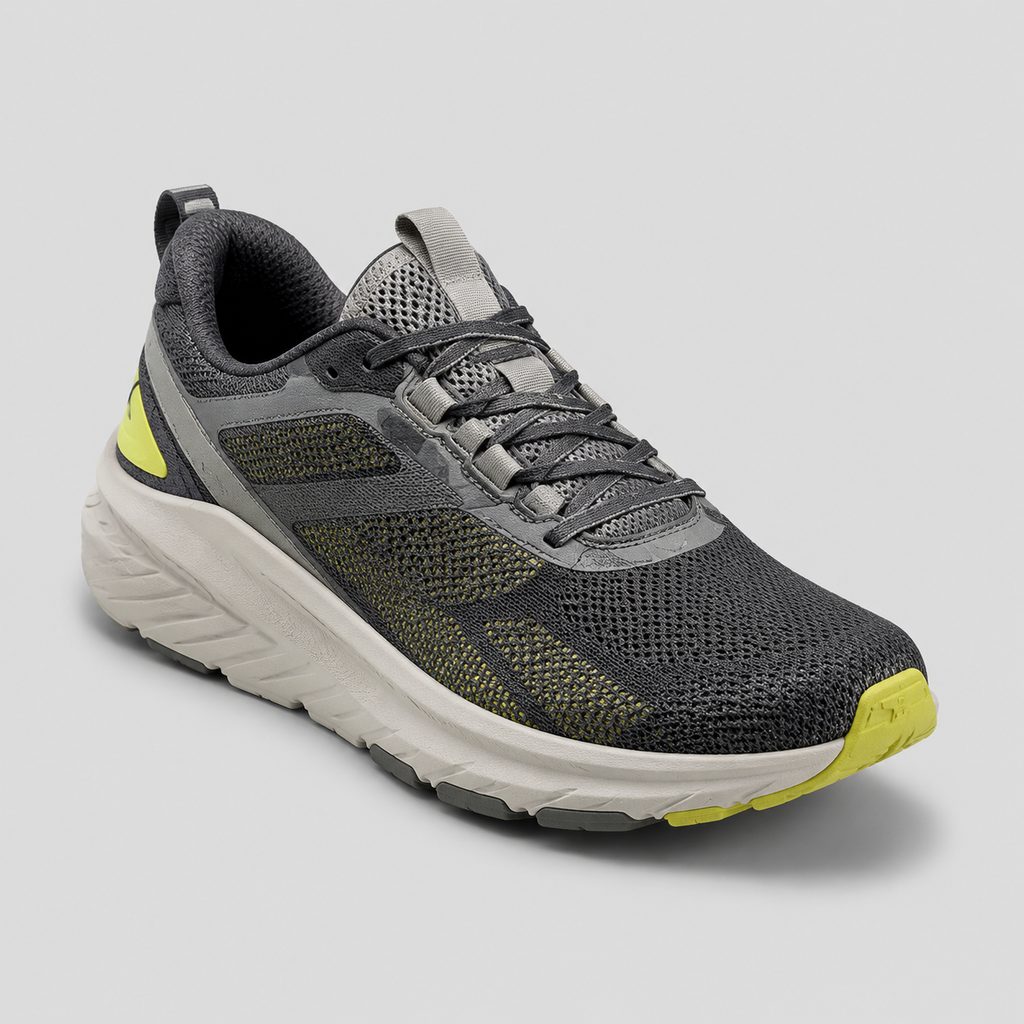
A buyer looking for a private label wholesale running shoes manufacturer has a narrow decision to make before sending a quote request: is the planned daily-training shoe close enough to the supplier's published range to justify a project inquiry? Price, MOQ, sample timing, packing, and shipment questions matter, but they are not the first screen. The first screen is whether the product belongs in the athletic-footwear family the supplier describes.
Custom Shoe Factory's first-party pages give buyers enough information to make that early call, while leaving many commercial and technical details unresolved. The about page describes the company as focused on one sport-footwear family: running, training, walking, and casual sneakers. The product-range page describes running shoes as performance-inspired daily-training builds with breathable uppers and cushioned midsoles. It lists mesh, knit, and PU uppers. It also names EVA and rubber outsoles, and it includes retail, ecommerce, and private label among the stated use contexts.
Those statements are useful, but they are not a finished specification. They do not confirm a particular model construction, sample schedule, test result, certification, price level, production capacity, or universal launch process. A stronger buyer inquiry keeps that line clear: use the published language to decide whether the project is relevant, then ask which development, sampling, quotation, packing, and quality-control options may apply to the current brief.
Decide Whether The Brief Belongs In The Range
The about-page wording is intentionally narrower than a general footwear-factory claim. It says Custom Shoe Factory works around running, training, walking, and casual sneakers, not every footwear category. A buyer sourcing leather dress shoes, sandals, safety boots, or other unrelated categories should not treat the athletic-footwear wording as evidence for those products.
For a daily-training running shoe, the match is more plausible because the product-range page includes running shoes and describes them with daily-training language. For a training shoe, walking sneaker, or casual athletic sneaker, the about-page category wording also gives a starting point for discussion. The buyer still needs to ask whether the exact construction, material direction, target use, branding plan, and commercial expectations are practical for the project.
As an editorial recommendation for the buyer, separate category relevance from negotiation. Send commercial questions after the product family is clear. MOQ, unit price, tooling, lead time, packing, inspection, export documentation, and logistics details should be requested for the specific shoe, because the supplied evidence does not publish those terms.
Compare The Shoe Brief With The Running-Shoe Entry
The running-shoe entry is most helpful when treated as a checklist of published vocabulary, not as a menu of guaranteed specifications. It lets a buyer compare the current brief with the supplier's own description before asking for a development or sampling path.
| Part of the buyer brief | What the source says | What to ask next |
|---|---|---|
| Product direction | The product-range page describes running shoes as performance-inspired daily-training builds. | Ask whether the intended use and target product position are suitable for the buyer's current design. |
| Upper concept | The product-range page refers to breathable uppers. | Ask which construction, lining, panel layout, reinforcement, and colorway should be considered. |
| Upper materials | The product-range page lists mesh uppers. | Ask whether mesh is suitable for the project or whether it should be combined with other upper materials. |
| Upper materials | The product-range page lists knit uppers. | Ask whether knit is a candidate for the brief and how it would affect the upper design. |
| Upper materials | The product-range page lists PU uppers. | Ask whether PU belongs in the upper plan, including overlays, panels, or reinforcement areas. |
| Midsole direction | The product-range page refers to cushioned midsoles. | Ask about foam direction, geometry, stack height, comfort expectations, and any validation requirements. |
| Outsole terms | The product-range page names EVA outsoles. | Ask whether EVA is relevant to the outsole or sole-unit plan for this shoe. |
| Outsole terms | The product-range page names rubber outsoles. | Ask about rubber placement, tread design, compound expectations, tooling needs, and durability requirements. |
| Sales context | The product-range page includes retail as a use context. | Ask what packaging, labeling, carton marking, and quotation information would be needed for that channel. |
| Sales context | The product-range page includes ecommerce as a use context. | Ask what packing or presentation details should be discussed for that sales route. |
| Sales context | The product-range page includes private label as a use context. | Ask which logo, label, branding, and packaging questions should be answered before sampling. |
This comparison helps a buyer avoid two mistakes. One mistake is sending a broad request for wholesale running shoes with no product definition. The other is assuming the published entry already confirms every build detail. The better middle ground is a private label running shoe sourcing request that names the intended product type, then asks the supplier which parts can be developed, sampled, quoted, or checked for manufacturability.
Use Material Notes To Sharpen The Upper Question
The materials page gives a separate record for engineered mesh. It describes engineered mesh as air mesh or sandwich mesh. It describes the material as knitted or warp-knit synthetic with zoned density for ventilation, light stretch, and support. It says engineered mesh takes screen print, heat-transfer film, and welded TPU overlays cleanly. It also says multi-colour branding is easy. The same record gives a typical 90-250 GSM range depending on the zone, with denser knit at the eyestay and toe. It identifies running, training, and summer styles needing maximum airflow at a sensible cost as best-fit uses.
For a private label running shoe, that record should shape the questions the buyer asks about the upper. It should not be treated as proof that any mesh upper will meet a durability target, fit target, airflow test, wear test, or outsole performance requirement. Those remain separate project questions.
Ask whether the upper should use engineered mesh, knit, PU, or a mixed construction.
If engineered mesh is a candidate, ask which zones need ventilation, light stretch, support, or denser knit.
Discuss branding early if screen print, heat-transfer film, welded TPU overlays, or multi-colour branding may affect the panel layout.
Ask whether the typical GSM range is relevant to the design, and whether different zones need different densities.
Keep outsole traction, midsole cushioning, size grading, fit validation, and testing requirements outside the mesh decision unless the supplier connects them for the project.
Keep Confirmed Facts Separate From Project Questions
The most useful first message does not blur published facts with assumptions. It separates what the buyer can already see on the site from the questions that still need a supplier response.
| Area | Confirmed by the supplied sources | Buyer should ask |
|---|---|---|
| Product family | The about page frames Custom Shoe Factory around running, training, walking, and casual sneakers. | Whether the exact product category and construction fit that family. |
| Running-shoe direction | The product-range page describes running shoes as performance-inspired daily-training builds. | Whether the buyer's intended use and product position fit that running-shoe direction. |
| Upper and midsole language | The product-range page describes running shoes with breathable uppers. | Which upper construction, lining, reinforcement, and branding approach apply. |
| Upper and midsole language | The product-range page describes running shoes with cushioned midsoles. | Which cushioning direction, foam expectations, and comfort questions apply. |
| Upper materials | The product-range page lists mesh, knit, and PU uppers. | Which material direction or combination should be explored for the product. |
| Outsole terms | The product-range page names EVA outsoles. | Whether EVA belongs in the outsole or sole-unit plan. |
| Outsole terms | The product-range page names rubber outsoles. | How tread, rubber placement, tooling, and durability expectations should be handled. |
| Private label context | The product-range page includes private label among the running-shoe use contexts. | Which logo, label, packaging, carton marking, and quotation details are needed. |
| Engineered mesh | The materials page describes engineered mesh characteristics, branding compatibility, a typical GSM range, and best-fit uses. | Whether engineered mesh is suitable for this upper design and which zones need different treatment. |
| Example-project format | The case-studies page presents a running-shoe launch example structured from reference pair to inspected first production. | Whether a reference pair is useful, and which development, sampling, inspection, or quality-control options may apply. |
| Commercial terms | The supplied evidence does not state MOQ, unit price, sample lead time, production lead time, capacity, or shipping timeline. | Ask which MOQ, pricing basis, timing, packing, and logistics information can be quoted for the current brief. |
| Compliance and testing | The supplied evidence does not state certifications, lab-test results, regulatory approvals, or audit outcomes. | Ask what testing, documentation, compliance, or audit information is available or required for the target market. |
Handle The Example Project Format Carefully
The case-studies page includes a running-shoe launch example described as moving from reference pair to inspected first production. That is a useful format for a running shoe sampling inquiry because it tells the buyer that a reference pair may be a practical starting point to discuss.
It should not be stretched further than that. The supplied excerpt does not prove a verified customer result, a fixed production process, a standard lead time, or an inspection promise for every order. A buyer can say that a reference pair is available and ask whether it would help the supplier evaluate pattern direction, materials, construction, sampling options, and first-production inspection questions for the current project.
Build The Inquiry Around The Current Shoe
A concise supplier inquiry should give enough information to be evaluated without pretending every detail is already solved. Start with the current product definition: daily-training running shoe, training shoe, walking sneaker, or casual athletic sneaker. Add the intended sales context if it affects branding or packing, such as retail, ecommerce, or private label.
Then describe the upper direction in practical terms. If engineered mesh is being considered, mention the need for airflow zones, support zones, stretch, denser knit areas, screen print, heat-transfer film, welded TPU overlays, or multi-colour branding only where those needs are real. If knit, PU, or a mixed upper is more likely, say that instead.
Next, give high-level midsole and outsole expectations. For the midsole, that may mean the desired cushioning direction or comfort target. For the outsole, that may mean EVA relevance, rubber coverage, tread intent, or tooling questions. Keep test standards, compliance documents, size grading, final fit validation, and durability requirements as questions unless they are already defined in the buyer's own brief.
The handoff can be direct: share the product definition, intended channel, upper direction, broad midsole and outsole expectations, reference-pair availability, branding needs, and questions about development, manufacturability, sampling, MOQ, quotation, packing, and quality-control options. Buyers can review the product range, materials, example project formats, and company scope before using the request a quote page.
Evidence Boundary
This article uses only first-party sources from Custom Shoe Factory: the product-range page, the case-studies page, the about page, and the materials page. Those sources support the athletic-footwear family, the running-shoe product language, the engineered-mesh material note, and the existence of an example running-shoe launch format. They do not support claims about MOQ, pricing, lead times, production capacity, certifications, lab testing, audit results, customer outcomes, or a fixed production process.
That boundary is useful for a buyer. It shows what can be checked before the first message and what must be asked directly. The result is a cleaner request: confirm the product category, describe the build direction, identify material assumptions, and leave unresolved commercial and technical questions for a project-specific response.
Sources and verification
- Athletic Shoe Manufacturer | Custom Product Range First-party site source
- Footwear Manufacturing Case Studies | Example Project Formats First-party site source
- About Custom Shoe Factory | OEM/ODM Athletic Shoes First-party site source
- Shoe Soles, Uppers & Insole Materials | Footwear Specs First-party site source
Share the current product definition and ask which development, manufacturability, sampling or quotation options may apply to the project.
Send your project brief