Footwear Sourcing
Private Label Walking Shoes Sourcing Questions for the First Brief
Use an evidence-boundary register to keep a walking-shoe inquiry from inheriting running-shoe specifications, private-label claims, or workflow assumptions that have not been published for walking footwear.
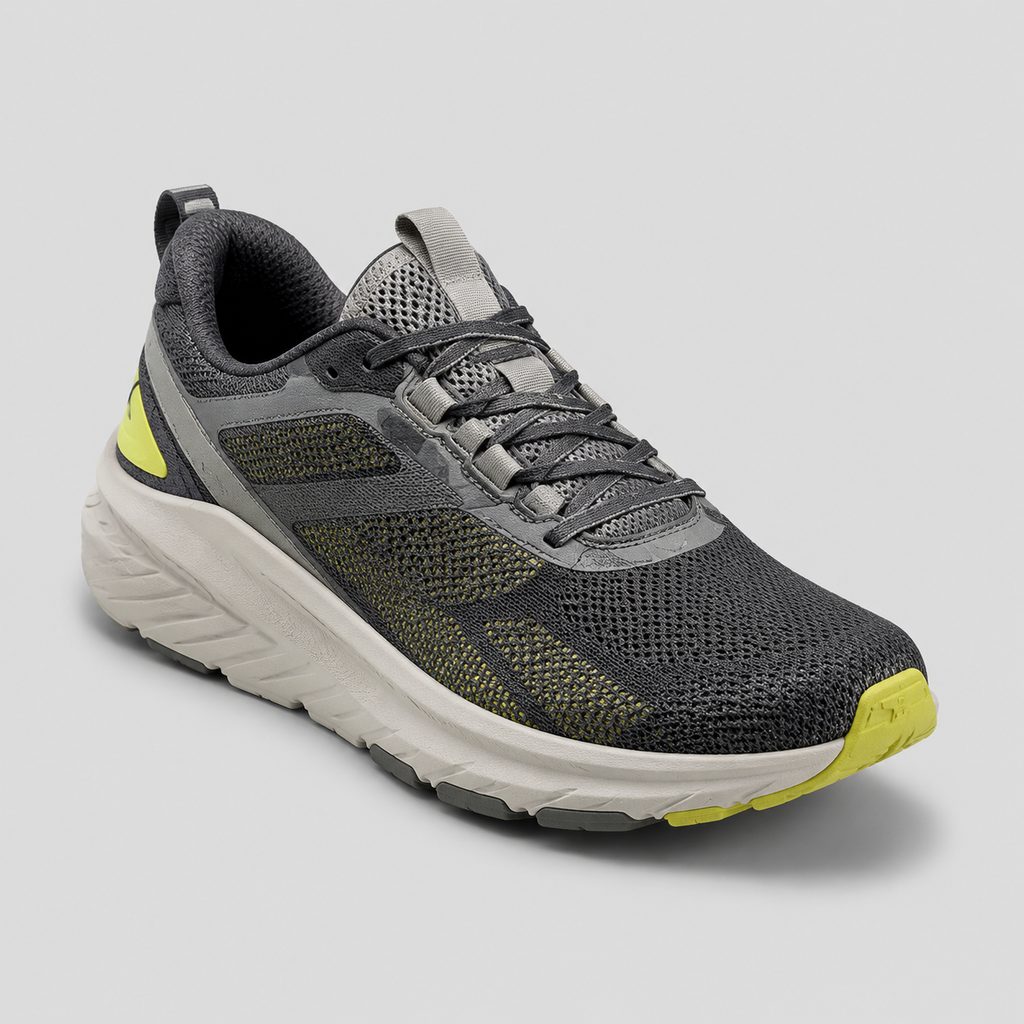
Private label walking shoes sourcing questions work best when the inquiry separates the buyer's current concept from statements a public source actually supports. The About page places walking alongside running, training, and casual sneakers in one product family. That statement identifies a relevant published category context, but it does not specify a walking construction or state that the running entry's private-label wording applies to walking.
The first brief can therefore be useful without pretending that every component, commercial term, or development step has already been confirmed. An editorial recommendation is to make the distinction visible in the document itself: keep source-backed statements in one record and buyer choices or questions in another.
Keep two records in the brief
The source record captures the wording and scope of a published page. The project record captures the proposed walking concept and the points that remain open. Keeping them apart prevents a detail from a running page, a materials entry, or a running case example from becoming an unstated walking-shoe requirement.
| Source record | Project record |
|---|---|
| The About page lists running, training, walking, and casual sneakers as one product family. | State the proposed product as a walking-shoe concept. Leave its classification, construction, material direction, branding arrangement, and commercial route open unless they are part of the buyer's own definition. |
| The products page publishes a running-shoe entry with running-specific build and channel language. | Record any desired upper, midsole, outsole, retail, ecommerce, or private-label direction as a proposal or a question for the current project. |
| The materials page describes engineered mesh in stated athletic contexts. | Ask whether engineered mesh is relevant to the walking concept rather than listing it as an established walking-shoe material. |
| The case-studies page presents an example involving a first running-shoe order. | Label every reference by its intended purpose. Do not treat the example as a published walking-shoe sequence. |
This register is an editorial tool for the buyer, not a substitute for a product decision. It makes the current state of the brief legible: one reader can see what has been proposed, while another can see what still needs an answer.
Keep each source in its own scope
The pages can still be useful, provided their statements remain attached to the product or material context in which they were published. The following distinctions are especially important when a buyer is comparing a prospective private label walking shoe supplier.
The running range
The published running-shoe entry describes performance-inspired daily-training builds with breathable uppers and cushioned midsoles. It names mesh, knit, and PU uppers. It separately lists EVA and rubber outsoles. Retail, ecommerce, and private label appear in that same running-shoe entry.
Those statements describe the running range. They should not be rewritten in a walking shoe specification brief as confirmed walking components, sales-channel options, or a confirmed private-label arrangement. A buyer may propose any of those directions, but the brief should mark them as proposed until their applicability to the current concept is answered.
Engineered mesh
The materials page describes engineered mesh as air mesh and sandwich mesh. It calls the material a knitted or warp-knit synthetic with zoned density for ventilation, light stretch, and support. The page says it takes screen print, heat-transfer film, and welded TPU overlays. Its stated best-use context is running, training, and summer styles.
This material entry can identify a discussion topic; it does not add engineered mesh to the walking project by default. Where the concept includes a material preference, the buyer can name that preference and ask whether it may apply. The source wording should remain attached to its published material and use context.
The running case example
The case-studies page introduces a first running-shoe order and describes it from a reference pair to inspected first production. That is a published example about a running-shoe order. It does not document the same reference handling, review path, inspection point, or outcome for a walking project.
Its practical value for a buyer is narrower: it is a reminder to state what a supplied reference is meant to communicate. A reference can be identified as visual direction, a fit benchmark, a component idea, or an approval comparator. The buyer should not let a reference image silently define unseen construction or performance characteristics.
Write the buyer's intent after mapping the evidence
A walking shoe specification brief does not need a borrowed technical package to be clear. The editorial recommendation is to describe the intended product first, then identify the decisions that the buyer has not made. This gives the recipient a current project definition without presenting unresolved choices as published facts.
- Wearer and use context: State the intended wearer, the anticipated use setting, and the role the style is expected to play in the range.
- Silhouette direction: Describe the desired overall appearance. Attach references and state whether each one concerns proportion, color balance, a single visual detail, fit, or another specific purpose.
- Fixed requirements: Identify decisions that the buyer has already made, such as required brand elements, a required presentation detail, or an intended shape.
- Open priorities: List matters that still need to be balanced, such as visual character, perceived comfort, support, weight, durability, or target positioning. These are buyer priorities, not claims about a particular build.
- Decision ownership: Name the people who can approve visual changes, branding interpretation, component alternatives, and commercial assumptions.
These fields make it easier to distinguish a fixed request from an exploratory one. They also keep the walking brief focused on the proposed product instead of on a list copied from nearby published content.
Ask questions that retain the open decisions
A walking shoe development inquiry can request useful information without implying that a service, term, or result has been published for the project. Start with the product-family statement, then move through the technical and commercial unknowns.
- Product-family fit: Does the current concept align with the published product-family statement that includes walking?
- Construction and material relevance: Which construction or material directions, if any, may apply to the buyer's stated walking intent? Which requested elements need more definition or revision?
- Information needed for assessment: What additional product definition, reference context, branding information, target-market information, or priority details would be needed before manufacturability can be considered?
- Possible project information: Which development, sampling, MOQ, packing, and quotation details may apply to this project, and what assumptions or dependencies would affect them?
The questions request an answer without supplying it in advance. That is the point of retaining an unknown as an unknown: it preserves a clear decision for the buyer instead of creating an apparent confirmation from unrelated source language.
Send a short current-state inquiry
The final inquiry can be compact. Its job is to give the recipient the present product definition and a controlled list of questions, rather than to simulate a complete technical package with running-range details.
- Buyer-supplied definition
- Identify the project as a walking-shoe concept. Describe the intended wearer and use context. Attach references with their stated roles. List fixed brand or presentation requirements separately from open priorities.
- Questions for applicability
- Ask whether the concept fits the published product-family statement that includes walking, which construction or material directions may apply, what information is needed for manufacturability consideration, and which development, sampling, MOQ, packing, or quotation details may apply.
- Requested response format
- Ask for assumptions, dependencies, alternatives, and further questions to be identified separately from points that can be addressed from the current definition.
Share the current product definition through the request-a-quote page and ask which development, manufacturability, sampling, or quotation options may apply. The brief remains credible when it preserves the distinction between the buyer's intent, the published source scope, and the decisions still awaiting an answer.
Sources and verification
- About Custom Shoe Factory | OEM/ODM Athletic Shoes First-party site source
- Athletic Shoe Manufacturer | Custom Product Range First-party site source
- Shoe Soles, Uppers & Insole Materials | Footwear Specs First-party site source
- Footwear Manufacturing Case Studies | Example Project Formats First-party site source
Share the current product definition and ask which development, manufacturability, sampling or quotation options may apply to the project.
Send your project brief