Sourcing Guides
Private Label Sneakers First Production Brief
A reference pair alone is not a first production brief. Place the style in a published athletic family, name upper and sole direction, assign one job to the pair, and ask which development path may apply.
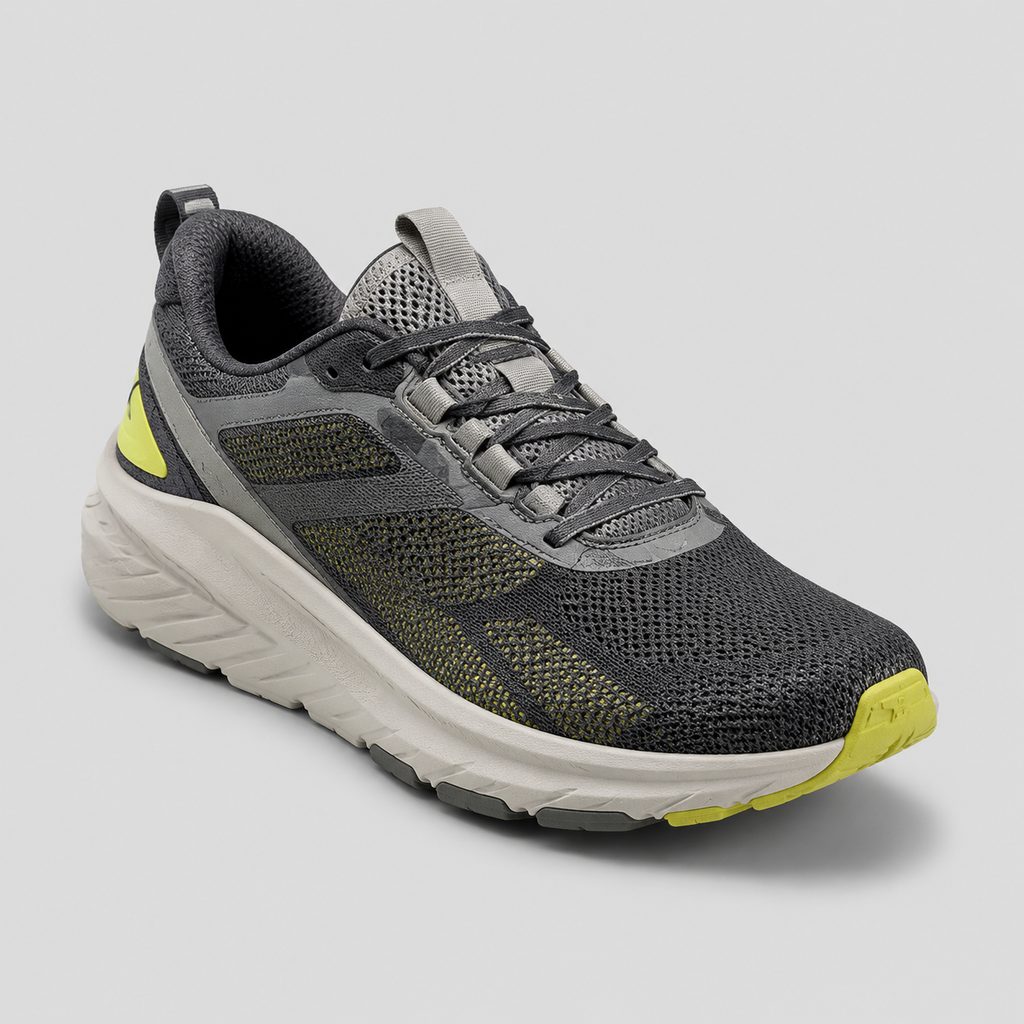
A private label sneakers first production brief begins with a readable handoff, not a silent box. When a private label sneakers reference pair arrives without athletic-family placement, material direction, or a stated assessment job, sampling and first-production review become guesswork. Different readers invent different priorities from the same shoe.
Teams that already hold a physical sample still need that package before a private label sneakers first order conversation. Name the published athletic lane, translate what you see into upper and sole language the manufacturer already uses, give the pair one explicit job, then ask which development, manufacturability, sampling, or quotation path may apply. MOQ, price, and lead time remain project-specific questions rather than assumed commitments.
When the private label sneakers reference pair is not a brief
A pair documents appearance, proportion, and sometimes construction. It does not document intent. The usual failure is quiet delivery: no lane, no build cues, no line that says what the factory should evaluate first. Without those anchors, an athletic private label sneakers sample handoff collapses into reverse-engineering.
The published case-study library frames one first running-shoe order as a path from reference pair to inspected first production. Treat that framing as a scope boundary and a reminder that first orders benefit from an explicit arc. It is not a hidden process checklist, and this article does not invent intermediate factory steps the page does not describe.
If the only instruction is “make this,” someone on the manufacturing side must invent answers for upper construction, outsole intent, cushioning direction, and brand execution at once. That is a procurement risk created by an incomplete handoff. Editorial recommendation for the buyer: own the decisions you can state, and turn the rest into explicit questions instead of silent expectations.
Product-family placement that factories can read
Map the style to the product family the manufacturer publishes before you treat the program as factory-readable private label work. Positioning on the about page is narrow: sport-footwear specialists focused on running, training, walking, and casual sneakers, not a catch-all footwear plant. If the silhouette sits outside those lanes, range fit is the first open question.
Use this placement checklist before you draft material language:
- Running: daily-training or performance-inspired use, with breathable upper and cushioned midsole direction as a starting frame.
- Training: multi-movement or gym-facing use that still fits athletic sneaker construction language.
- Walking: comfort-forward athletic builds rather than dress or industrial footwear.
- Casual sneakers: lifestyle silhouette that still belongs in the same athletic family, not boots or safety shoes.
On the product range, retail, ecommerce, and private label appear as commercial contexts for athletic builds. That is range context, not a prepackaged service menu. Name the end channel in the brief only when it changes material, packing, or presentation questions for the current shoe.
Upper and sole language already on the range
Vague “sneaker” wording leaves too much open. Replace it with upper and outsole terms already published for athletic builds. For running shoes, the product entry describes performance-inspired daily-training builds with breathable uppers and cushioned midsoles. The same entry lists mesh, knit, or PU uppers. It also lists EVA and rubber outsoles. Use those cues as a translation layer from the physical pair to a factory-readable brief.
| What you see on the pair | Language that belongs in the brief | Why it matters for first production |
|---|---|---|
| Open, ventilated upper panels | Breathable upper direction; candidate mesh or knit zones | Signals airflow priority without inventing a full BOM |
| Soft midsole feel underfoot | Cushioned midsole direction | Captures comfort intent without folding midsole language into outsole terms |
| Coated or synthetic leather-look panels | PU upper option under review | Keeps coated panels out of a mesh-only assumption |
| Rubber contact areas on the sole | EVA and rubber outsole language where the build supports it | Gives outsole discussion a published vocabulary separate from midsole cushioning |
Do not merge every option into one universal capability claim. State only what you want assessed on this style. If the pair mixes knit quarters with PU overlays, say so. If only the outsole is open, keep upper language short and precise. Keep midsole observations and outsole observations in separate lines so cushioning direction is never mistaken for outsole compound language.
Mesh detail: when it sharpens the upper question
Mesh language helps when the upper is the decision surface. It is premature when the pair is mainly a fit or silhouette reference. The materials page describes engineered mesh as a workhorse athletic upper: air mesh or sandwich mesh, knitted or warp-knit synthetic with zoned density for ventilation, light stretch, and support. The same materials description notes clean acceptance of screen print, heat-transfer film, and welded TPU overlays. Typical GSM ranges are 90 to 250 depending on the zone, with denser knit at the eyestay and toe. Those points are positioned as best for running, training, and summer styles that need airflow at a sensible cost.
Bring that language into the brief only when you need an upper answer. Useful mesh-ready questions include zone density for ventilation versus support, whether sandwich mesh is preferred over air mesh in a high-wear panel, or whether overlays must sit cleanly on the knit. If branding method is still undecided, you can note that the materials description supports multiple decoration routes. That note is not a logo-approval package, and it is not a decoration shortlist for every private label style.
If the pair’s upper is PU-forward or largely knit without engineered mesh intent, skip GSM and zone language. Over-specifying mesh on a non-mesh build creates false precision and distracts from the real first-production questions.
The single job that makes a first order readable
For a private label sneakers first order, the pair should carry one primary job. Multiple unspoken jobs push the factory to optimize for everything and satisfy nothing. Choose one purpose and write it as an instruction:
- Fit reference: last feel, volume, or size experience to review first.
- Construction reference: lasting method, stitching density, or assembly cues to assess.
- Material target: hand feel, mesh openness, or sole compound direction to match or approximate.
- Overall appearance: silhouette, proportion, and visual balance, with materials still open.
Secondary notes can exist, but they should not compete with the primary job. If appearance is primary, say that fit is approximate only. If material target is primary, say silhouette may flex. The published first running-shoe example format starts from a reference pair and ends at inspected first production; a single-job assignment is what makes that arc usable without inventing undocumented intermediate steps.
Buyer decisions versus manufacturer questions
A clean brief separates what you already own from what you still need answered. Mixing the two turns every email into a negotiation about missing inputs.
| Buyer-owned before inquiry | Open manufacturer questions |
|---|---|
| Athletic family placement: running, training, walking, or casual sneakers | Whether the current definition is manufacturable as briefed |
| Primary job of the reference pair | Which development path, if any, the style needs |
| Upper and sole direction in published language | Which sampling route may apply to this project |
| What must match the pair versus what may change | Which quotation information applies once the build is clear |
| Channel context only when it changes packing or presentation | Whether quotation or sampling still needs clarification for first-production readiness |
You do not need a finished tech pack to start, but you do need enough ownership that the manufacturer is not asked to invent brand intent. Keep the topics distinct: development, manufacturability, sampling, and quotation. Asking which of those paths may apply to the project is appropriate. Presenting them as guaranteed packages is not supported by the excerpts.
What belongs in the first production brief
Assemble a compact package rather than a catalog strategy memo. The goal is a handoff a production team can read without reverse-engineering your assortment plan.
- Style name or internal code and intended athletic family (running, training, walking, or casual sneakers).
- Commercial context only if relevant: retail, ecommerce, or private label presentation needs.
- Upper direction using published terms: breathable or cushioned intent; mesh, knit, or PU as candidates.
- Sole direction: cushioned midsole direction if that is part of the target; EVA and rubber outsole language where the product entry supports it.
- Engineered mesh detail only if the upper question requires it: air mesh versus sandwich mesh, zone priorities, approximate GSM band, overlay compatibility notes.
- Reference-pair purpose stated in one sentence: fit, construction, material target, or overall appearance.
- Match-versus-change list: what must stay close to the pair and what the factory may reinterpret.
- Open questions: development needs, manufacturability concerns, sampling path, or quotation scope for this definition.
For structure inspiration only, the case-study page publishes a running-shoe launch example framed from reference pair to inspected first production. Use that as a reminder that first orders benefit from an explicit arc. Do not invent milestones the page does not describe.
As a hypothetical example, a small brand could send a daily trainer as an overall-appearance reference, with breathable mesh quarters and EVA-rubber sole direction, and still ask whether a development sample is needed before any production conversation. That scenario is not a documented customer path.
Evidence boundary and inquiry path
Hard limits matter. The published family is running, training, walking, and casual sneakers. Material language for engineered mesh, including GSM ranges and overlay routes, applies where that upper discussion is relevant, not as a default for every private label sneaker. Private label appears as a commercial context on the product range, not as proof of a fixed service bundle. The case-study format is an example structure for a first running-shoe order, not a warranty of process, capacity, or timeline.
When the brief is ready, share the current product definition and ask which development, manufacturability, sampling, or quotation options may apply to the project. That keeps the inquiry honest: you own the handoff quality; the manufacturer answers within its published athletic scope. Start from the athletic product range, confirm family fit on the about page, refine upper language with the materials notes, review the example project format if you need a first-order structure cue, then use the quote request path to send the brief.
Sources and verification
- Athletic Shoe Manufacturer | Custom Product Range First-party site source
- About Custom Shoe Factory | OEM/ODM Athletic Shoes First-party site source
- Shoe Soles, Uppers & Insole Materials | Footwear Specs First-party site source
- Footwear Manufacturing Case Studies | Example Project Formats First-party site source
Share the current product definition and ask which development, manufacturability, sampling or quotation options may apply to the project.
Send your project brief