Product Development
Zone Brief: private label running shoe mesh GSM specification
A published mesh GSM range gives material context, but a buyer still needs to define upper zones and ask which options may apply to the project.
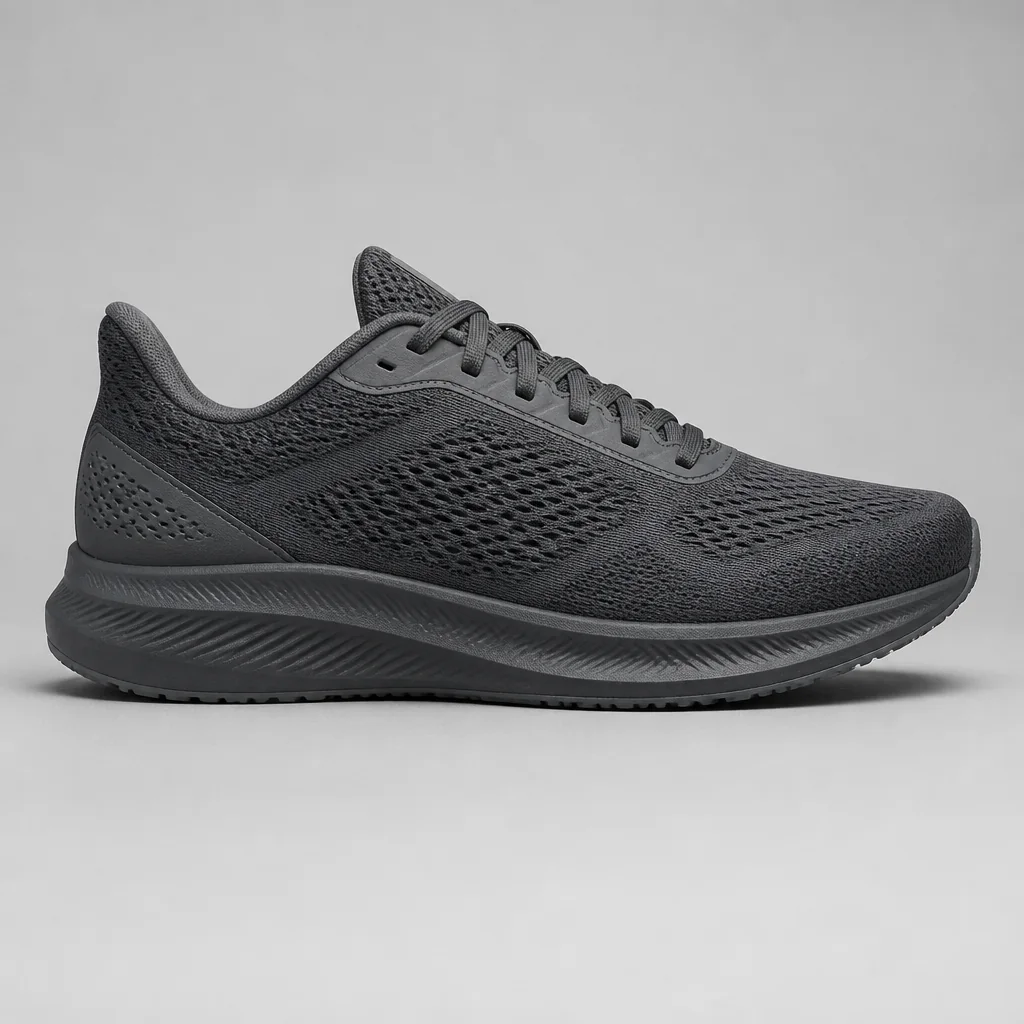
A private label running shoe mesh GSM specification can look complete when it includes a number, yet still leave the main upper decisions unclear. The buyer may know the published 90-250 GSM range but have no record of where ventilation, light stretch, or support is intended. The more useful starting point is an upper map: identify each relevant area, state its intended role, and make the GSM range a question for the material discussion.
That approach keeps a public material reference in its proper place. It gives the buyer a concise way to describe the design without presenting a zone-specific construction or finished-shoe result as already decided. For an engineered mesh running shoe upper, the zone map should come before a final weight selection.
Start With an Upper Map
A zone map is an editorially recommended briefing device, not a factory form documented by the supplied sources. Its purpose is to make the buyer's intent readable in a reference image, sketch, or written note. Each line can identify a location, an intended function, and any visual reference that explains the request.
- Ventilation: Mark the upper areas where ventilation is part of the proposed direction.
- Light stretch: Identify any areas where light stretch is part of the requested concept.
- Support: Flag the zones where support belongs in the material discussion.
- Eyestay: Give the eyestay its own note when it has a distinct visual or material role.
- Toe: Record the toe separately when it differs from the adjacent upper.
Keep the map focused on location and intent. A buyer can leave the exact construction and GSM value open, then ask which options may apply to the proposed zones. This makes private label mesh shoe development questions specific enough to evaluate without filling a brief with assumed details.
The eyestay and toe deserve separate lines even when the reference visual is simple. The engineered-mesh material entry specifically mentions denser knit at those locations, so they should not disappear inside a single all-over mesh note.
Published Engineered-Mesh Facts
The materials reference supplies a defined description of engineered mesh. The left column below preserves the published scope. The right column is an editorial recommendation for how a buyer can use that information in a project brief.
| Published material detail | Editorial use in the buyer brief |
|---|---|
| Knitted or warp-knit synthetic | Record this as the high-level construction context for the material direction under discussion. |
| Air mesh and sandwich mesh | List either format as a material topic only when it is relevant to the proposed upper or reference visual. |
| Zoned density for ventilation, light stretch, and support | Use these terms to describe intended zone functions without assigning a density to a particular area. |
| Typically 90-250 GSM depending on the zone, with denser knit at the eyestay and toe | Copy the range as published context, then ask which GSM and zoning options may apply to the mapped upper. |
| Best for running, training, and summer styles that need maximum airflow at a sensible cost | Use this full condition when assessing whether engineered mesh is worth raising for the proposed product family. |
| Takes screen print, heat-transfer film, and welded TPU overlays cleanly, so multi-colour branding is easy | Turn a desired treatment into a project-specific manufacturability question. |
The table does not turn any material description into an approved project construction. It gives the buyer accurate language for the first inquiry and preserves the conditions attached to the published best-fit statement.
Reading the 90-250 GSM Range
The numerical detail is qualified by the phrase depending on the zone. For a buyer, that wording should remain attached to the range wherever it appears in the brief. It is a reference point for the discussion, rather than a single weight to apply across an entire upper.
- Published context
- State that engineered mesh is described as typically run at 90-250 GSM depending on the zone.
- Proposed zone intent
- Provide the upper map, including ventilation, light stretch, support, eyestay, and toe wherever those labels apply to the design.
- Question for review
- Ask which GSM and zoning options may apply to the stated upper intent and reference visual.
A running shoe upper GSM specification becomes more useful when these fields remain separate. The source does not assign a GSM value to a buyer's particular toe, eyestay, or other upper panel. The buyer should therefore avoid turning the phrase denser knit into a fixed density callout.
Eyestay and Toe Notes
The material entry names the eyestay and toe as locations with denser knit. That is a general material characteristic, so the brief should retain the same general scope. An editorially sound request could flag both locations and ask which material and GSM options may apply to them in the proposed design.
Do not infer a finished benefit from that note. The published entry gives no zone-specific performance outcome, and it does not set a project value for either area. A clear location note gives the materials conversation a defined starting point without overstating the information already available.
Artwork Is a Separate Question
The materials entry says engineered mesh takes screen print, heat-transfer film, and welded TPU overlays cleanly, and connects those treatments with multi-colour branding. This supports naming the treatments as possible directions for the material entry. It is still appropriate for the buyer to ask whether a requested artwork treatment may apply to the particular upper, placement, and reference visual.
- For screen print, provide the artwork location and ask whether the treatment may be considered for the proposed mesh direction.
- For heat-transfer film, attach the intended graphic and placement, then ask which manufacturability considerations may apply.
- For welded TPU overlays, identify the proposed overlay area and request evaluation against the mapped mesh concept.
Keep artwork and GSM in separate fields. They can concern the same part of the shoe, but a mesh-weight question does not answer an artwork-treatment question.
Product-Family Context
The running-shoe range provides category context separate from the engineered-mesh material entry. It describes performance-inspired daily-training builds with breathable uppers and cushioned midsoles.
The range lists mesh, knit, and PU as upper options. It separately lists EVA and rubber as outsole options. These lists can help a buyer identify a running-shoe direction, but they do not define an engineered-mesh configuration or a specific upper-and-sole pairing for an individual project.
The Inquiry to Send
Our editorial recommendation is to use the project inquiry page to send a short brief that distinguishes the buyer's stated direction from the open questions. The objective is a focused request, not a claim that unresolved material choices have already been approved.
- State the intended product family and attach a reference visual or sketch.
- Map the relevant upper zones and the intended role of each zone.
- Say whether engineered mesh, air mesh, or sandwich mesh is being considered from the published material entry.
- Ask which GSM and zoning options may apply to the submitted upper direction.
- Describe any requested screen print, heat-transfer film, or welded TPU overlay as a treatment to assess.
- Ask which development, manufacturability, sampling, and quotation options may apply to the stated project.
Scope of This Inquiry
The materials excerpt does not provide a project-specific GSM recommendation, sample timing, pricing, order quantity, testing, certification, an inspection procedure, a quality-control procedure, or a guaranteed branding result. It also does not state that a selected weight will produce a particular airflow, durability, comfort, support, or performance outcome.
The running-shoe range excerpt does not identify a particular engineered-mesh construction, outsole pairing, or final design for an individual project. Within those limits, a buyer can submit a clear upper map, preserve the published 90-250 GSM wording, and ask which options may apply to the proposed shoe.
Sources and verification
- Shoe Soles, Uppers & Insole Materials | Footwear Specs First-party site source
- Athletic Shoe Manufacturer | Custom Product Range First-party site source
Share the current product definition and ask which development, manufacturability, sampling or quotation options may apply to the project.
Send your project brief