OEM Footwear Development
DFM Register: Private Label Running Shoe Manufacturability Review
A buyer-created DFM issue register separates product requirements, published OEM scope, project responses and buyer decisions.
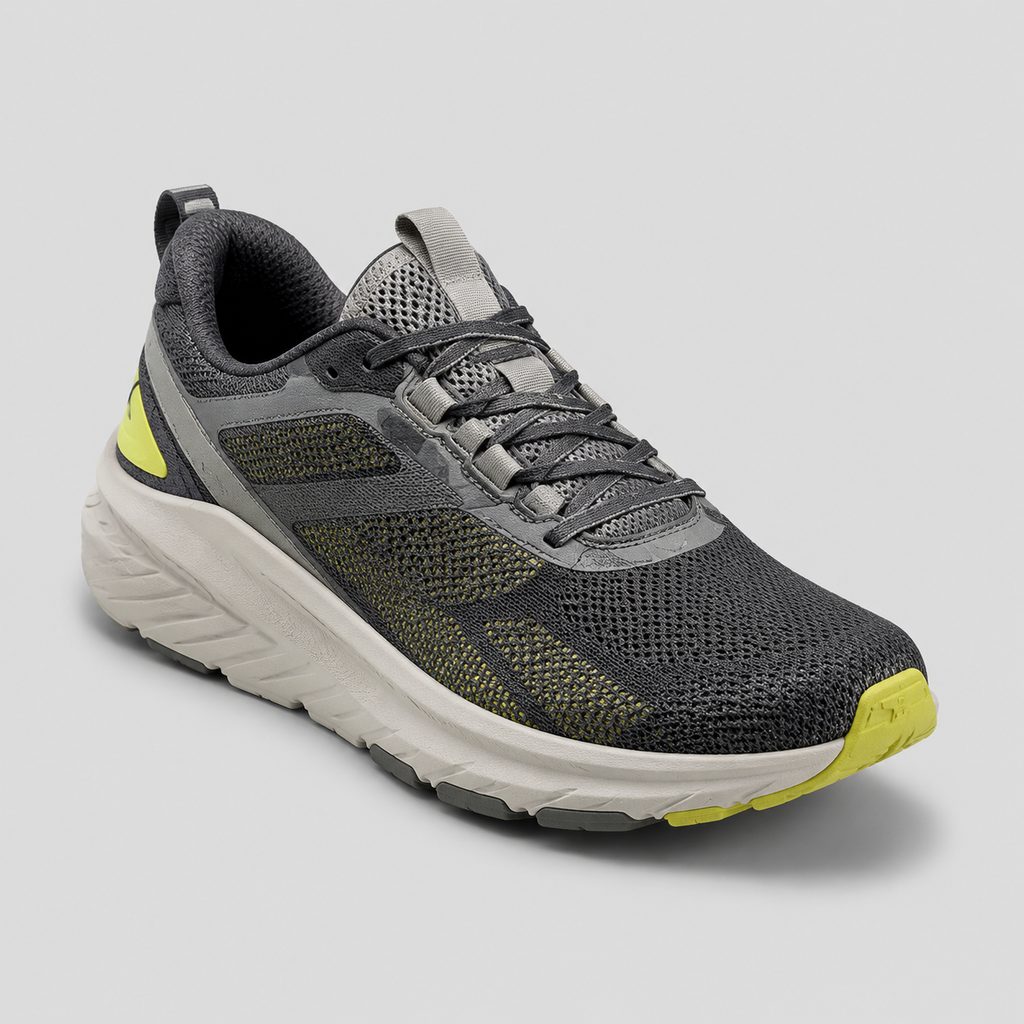
For a private label running shoe manufacturability review, our editorial recommendation is to create a DFM issue register that sits beside the current tech pack. The tech pack describes the intended product. The register tracks each manufacturability flag, the information behind it, the response received and the buyer's eventual decision.
Only the linked first-party excerpts are used here for statements about Custom Shoe Factory. The proposed register fields, ownership rules and closure controls are editorial recommendations for the buyer. They are not presented as a company template, portal, approval system or change-control service.
Register Fields and Statuses
A source classification and an issue disposition answer different questions. The first identifies where information came from. The second records whether the buyer considers the issue resolved. Our recommendation is to keep them in separate fields.
| Source classification | What to record | Boundary |
|---|---|---|
| Buyer specification | The requirement stated in the current tech pack, drawing, material specification or bill-of-materials line. | This classification does not indicate that a manufacturer has reviewed the requirement. |
| Documented manufacturer scope | A narrowly quoted statement from a relevant first-party source. | The statement describes published scope, not an action completed for the current project. |
| Open inquiry | A specific question for which the buyer does not yet have an attributable project response. | The question is not evidence that the company offers a particular process or commercial option. |
In the proposed register, a single issue may contain a buyer specification, a relevant statement about published OEM scope and an unresolved question. A separate project-response field can identify who replied, what the reply addressed and which product revision was under discussion. This keeps OEM running shoe DFM questions attached to individual requirements.
Published OEM Scope
The OEM and ODM page labels OEM as build to spec. Its excerpt documents three manufacturer actions. Recording them separately avoids turning a short scope statement into a broader project commitment.
| Published statement | Editorial recommendation for the register |
|---|---|
| Custom Shoe Factory states that it manufactures to the buyer's tech pack and design. | Record this as general OEM scope. Keep the buyer's controlling requirement and document revision in their own fields. |
| The company states that it flags manufacturability issues during DFM. | Cite the statement as published scope. Record a project flag only when an attributable response identifies one for the current product definition. |
| The company states that it holds the buyer's bill of materials and tooling across reorders. | Preserve that wording without inferring later availability, unchanged construction, consistent pricing or any other reorder outcome. |
The supplied OEM excerpt gives no DFM format or timing. It names no approval authority and describes no revision procedure. It also says nothing about the commercial effect of a proposed change. For the buyer's register, issue flagging should therefore be recorded separately from disposition, approval and commercial review.
A Complete Register Entry
For a shoe tech pack manufacturability review, our editorial recommendation is to give each entry enough context for a buyer to evaluate and close it. Useful fields are:
- A stable issue identifier.
- The affected tech-pack, drawing, material or bill-of-materials reference.
- The buyer's controlling requirement.
- The relevant source classification.
- The exact question or clarification requested.
- The attributable origin of any project response.
- The buyer's decision owner.
- The applicable product or document revision.
- The current disposition and the evidence required for closure.
The following register entry is explicitly hypothetical and illustrates the proposed fields; it does not describe a customer project or recommend an engineered-mesh construction.
Hypothetical buyer-created register entry
| Issue ID | Tech-pack reference | Buyer requirement | Source classification | Open question | Decision owner | Revision | Disposition |
|---|---|---|---|---|---|---|---|
| UPPER-ZONE-A | Upper drawing, eyestay callout | Engineered-mesh upper; zone construction to be defined | Buyer specification plus materials-page reference | What project information is needed to consider the proposed eyestay zone? | Buyer's footwear developer | Current draft tech pack | Open; no attributable project response recorded |
As a buyer-controlled closure rule, an entry should remain open until its stated decision requirement has been met and recorded. A category description cannot close a construction question. A general OEM statement cannot demonstrate that a review occurred for a particular revision. When a requirement changes, our recommendation is to retain the earlier entry and identify the replacement revision.
Category Reference
The product page describes running shoes as performance-inspired daily-training builds with breathable uppers and cushioned midsoles. It separately lists mesh, knit and PU uppers. The listed outsole materials are EVA and rubber.
For register purposes, our recommendation is to place those statements in a category-reference field. The supplied product excerpt does not evaluate a particular tech pack, component combination, construction method or performance requirement. It also provides no compatibility statement connecting every listed upper with every listed outsole.
An open entry can identify the upper, outsole and construction in the buyer's current product definition, then ask what information is needed to consider that combination. Until a project-specific response is attributable to the relevant revision, the category listing remains source information rather than a DFM disposition.
Material Source and Project Question
The engineered-mesh entry on the materials page contains several material statements. The buyer can preserve each statement in a source column while keeping project selection and suitability in question form.
| Published material statement | Open project question |
|---|---|
| Engineered mesh is described as a knitted or warp-knit synthetic with zoned density for ventilation, light stretch and support. | Which knit construction, zone map and buyer-defined requirements apply to the proposed upper? |
| The entry says the material takes screen print, heat-transfer film and welded TPU overlays cleanly. | Which branding method and artwork are proposed, and what criteria does the buyer want considered? |
| The entry gives a typical range of 90-250 GSM depending on the zone, with denser knit at the eyestay and toe. | What construction or mass does the current product definition assign to each zone? |
| The entry positions engineered mesh for running, training and summer styles that need maximum airflow at what the source calls a sensible cost. | What information is needed to consider the material against the current design and the buyer's stated requirements? |
The published GSM range is not an exact recommendation for the buyer's project. The branding statements do not demonstrate that any method will meet an unstated durability, appearance, performance or cost requirement. Our recommendation is to leave those decisions open until the buyer has an attributable response tied to the current specification.
Limits of the Process Preview
The case-studies page previews an example described as running from a reference pair to inspected first production. The supplied excerpt identifies those endpoints but does not provide the intervening process details.
- DFM and sampling
- The excerpt does not place DFM before, during or after sampling. It gives no number of sampling stages.
- Approval and revision
- No approval gates, decision authorities or revision procedure are identified.
- Inspection
- The excerpt defines no inspection scope, criteria, responsibility or result. The phrase inspected first production does not state that production passed, met a named standard or received independent inspection.
- Workflow status
- The excerpt does not describe the example as a standard workflow for every project.
These are evidence gaps, not assertions about what the company may or may not do. Our editorial recommendation is to enter the missing details as open inquiries instead of adding an assumed sequence to the register.
Inquiry From the Open Entries
A running shoe OEM development inquiry can carry unresolved entries forward while keeping company statements, buyer requirements and requested decisions separate. We recommend sending the current product definition together with a concise list of the entries that need a response.
- Identify the current tech-pack and issue-register revisions.
- List each open entry with its affected drawing, material or bill-of-materials reference.
- Quote the relevant OEM scope statement where one applies.
- Ask which entries fit that published scope, which need a buyer decision and which remain unconfirmed or outside the quoted scope.
- Ask what project information is needed and which development, manufacturability, sampling or quotation options may apply.
- Ask how the current product definition and register should be provided.
Suggested inquiry wording: We have a current product definition and a buyer-created DFM issue register. For each open entry, please indicate which points fit your published OEM scope, which require a buyer decision and which remain unconfirmed or outside that quoted scope. What project information do you need to consider these entries, and which development, manufacturability, sampling or quotation options may apply? Please tell us how to provide the current tech pack and register.
The buyer can send this scoped request through the request-a-quote page without assuming that the page supports attachments or a defined review workflow. Our recommendation is to record any attributable reply against the affected entry and evaluate it under the buyer's stated closure rule.
Sources and verification
- OEM / ODM Shoe Development | Custom Footwear Manufacturing First-party site source
- Athletic Shoe Manufacturer | Custom Product Range First-party site source
- Shoe Soles, Uppers & Insole Materials | Footwear Specs First-party site source
- Footwear Manufacturing Case Studies | Example Project Formats First-party site source
Share the current product definition and ask which development, manufacturability, sampling or quotation options may apply to the project.
Send your project brief