Footwear Development
Private Label Running Shoe DFM Review Questions
A buyer-led way to decide whether a running-shoe concept is defined enough to submit for manufacturability feedback.
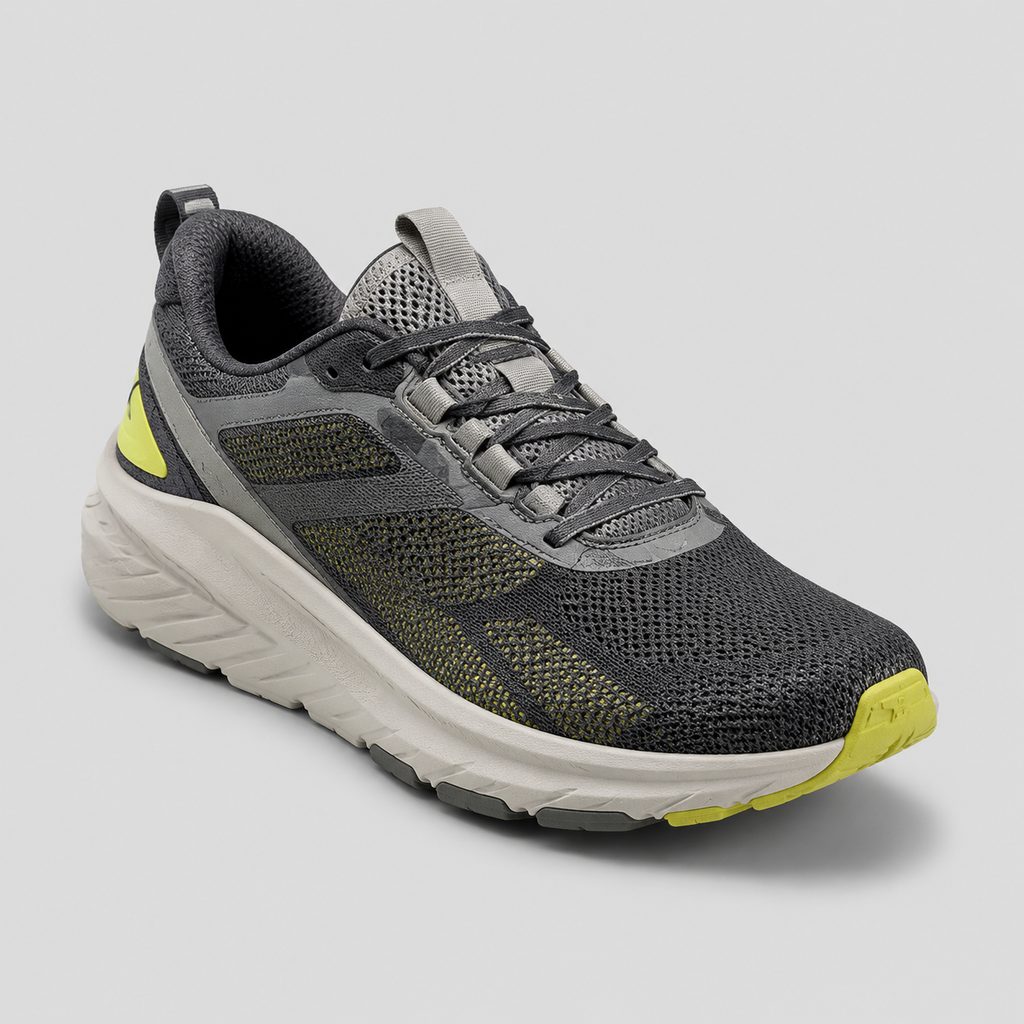
A private label running shoe DFM review is useful when a concept looks finished but the build is still incomplete. A render, reference pair, or partial tech pack can communicate silhouette well while leaving upper zones, sole direction, and branding treatment unresolved. The commercial risk is not that the manufacturer will refuse the conversation. It is that unresolved choices get treated as settled requirements.
Treat the review as a clarity gate for the product definition you control. Separate what you can define now from questions that need manufacturer feedback. The request itself is not proof that the design is approved, sampled, quoted, or ready for production. Guidance in this article that is not tied to a published company statement is planning advice for the buyer's side of the pack.
The buying decision behind a DFM request
Custom Shoe Factory states on its OEM/ODM page that it manufactures to a buyer's tech pack and design, flags manufacturability issues during DFM, and holds the bill of materials and tooling across reorders. That published scope helps frame an OEM shoe tech pack review. It does not establish a mandatory sequence, turnaround, approval decision, or project outcome.
The buyer's narrower question is practical: does the current definition support a useful discussion about the proposed build? A mood board can start a conversation, but it often leaves the reviewer guessing which features are central and which are placeholders. A short decision register reduces that ambiguity without pretending every open point is closed.
Establish the proposed running-shoe build
The published running-shoe range describes performance-inspired daily-training builds with breathable uppers and cushioned midsoles. It also identifies mesh, knit, and PU uppers, and EVA and rubber outsoles. Use those as documented example elements inside the product range, not as a fixed specification for every private label running shoe development project.
You can state construction direction without making unsupported performance promises. Use the checklist below when assembling the product-definition pack:
- Product use and category: State that the concept is a running shoe and whether the visual direction is closer to a daily-training build or another stated product position.
- Upper direction: Name the proposed material family (mesh, knit, or PU) and show where each material is intended to appear.
- Midsole and outsole direction: Record material direction where known, such as EVA for the midsole or rubber for outsole areas. Mark unspecified parts as open.
- Visual non-negotiables: Separate features that must remain recognizably present from details that may change after manufacturability discussion.
- Reference hierarchy: Name the primary reference and state whether other images cover color, silhouette, upper texture, sole shape, or branding only.
This is a buyer planning method, not a required factory submission format. Its job is to stop a category label such as "running shoe" from standing in for the construction information the concept actually depends on.
Mark what is defined, assumed, and still open
A three-status register is often clearer than a long unranked requirement list. It shows which items should be evaluated against the current concept and which still need a project-specific answer.
| Area | Defined | Assumed | Open question |
|---|---|---|---|
| Reference source | The lead image, reference pair, or tech pack is named. | Secondary references support the same intent. | Which reference controls when sources conflict? |
| Upper material | Material family and visible zones are identified. | The chosen material can reproduce every visual effect in the render. | Which material zones or treatments need review together? |
| Midsole and outsole | Intended visual and material direction are stated. | Upper and sole directions combine without further questions. | Which construction dependencies apply to this combination? |
| Branding and overlays | Artwork location and intended treatment are shown. | Branding can be applied without affecting nearby material choices. | Should the treatment be reviewed with the surrounding zone? |
Keep the register compact. It does not replace the tech pack or design file. It is a decision document that helps product, sourcing, and design teams avoid treating an assumption as a confirmed specification.
Review engineered mesh at the zone level
Material names hide construction detail. The materials page engineered-mesh entry is a concrete example: it describes air mesh and sandwich mesh as knitted or warp-knit synthetics with zoned density for ventilation, light stretch, and support. The same entry describes the material as suitable for running, training, and summer styles, and notes a typical 90-250 GSM range depending on the zone, with denser knit at the eyestay and toe.
That description does not set the correct zone map for a particular shoe. It does show why "engineered mesh upper" alone can be incomplete for a running shoe manufacturability review. Before asking whether the proposal is practical as drawn, identify the intended purpose of each visible zone in your concept.
- Mark zones intended for airflow, visual texture, structure, or brand visibility.
- Distinguish toe, eyestay, quarter, tongue, and collar areas when the concept assigns them different roles.
- Attach the artwork or overlay concept to the relevant zone rather than listing branding in isolation.
- State whether density is defined, a design preference, or an item on which manufacturer feedback is sought. Do not treat the materials-page GSM range or denser eyestay and toe wording as a required density map for your shoe.
The materials entry also names screen print, heat-transfer film, and welded TPU overlays as treatments that can be used with engineered mesh. Keep those options tied to that documented material entry. Whether a particular treatment, artwork layout, and zone density are practical together remains a project question for you to raise.
Turn construction uncertainty into DFM questions
Questions are stronger when they refer to a proposed combination rather than asking generally whether the shoe can be made. The prompts below are buyer inquiry topics, not statements of documented services or expected revisions:
- Given the stated upper material direction, which upper areas should be reviewed with the proposed overlay treatment?
- Are the visible material-zone boundaries defined enough for feedback, or should their intended roles be clarified first?
- Does the current reference show which details are visual priorities and which may be reconsidered?
- Which unresolved upper, midsole, and outsole choices should be answered before they move into the next project document?
- Where branding is proposed on engineered mesh, what additional zone or treatment information would frame the question accurately?
- Which development, manufacturability, sampling, or quotation information may apply to the current product definition?
Give each question an owner on the buyer's side. Design can own visual priority, product development the intended build, and sourcing the commercial or sampling information to request. That yields a defined inquiry instead of competing internal assumptions.
Use the reference pair without letting it replace the specification
A reference pair anchors the discussion. It should not silently become the specification. State what it is meant to inform (silhouette, upper composition, outsole direction, material texture, or another limited feature) and what is not intended to carry forward.
Custom Shoe Factory's case-studies page describes an example format titled "Running Shoe Launch for a New Brand" as a first running-shoe order structured from a reference pair to inspected first production. That is the framing of the published example. It does not verify a customer outcome or establish a universal workflow for reference-pair projects.
Pair the reference with a short variance list. For example, keep the forefoot visual direction, do not copy the logo treatment, and seek feedback on the proposed mesh-zone layout. That gives the reference a defined role while preserving your design intent.
Separate published scope from project questions
Keep the factory's published statement separate from the decision work that remains with the buyer.
| Published scope | Buyer question for the current project |
|---|---|
| Custom Shoe Factory states that it manufactures to a buyer's tech pack and design and flags manufacturability issues during DFM. | Which design files, construction choices, and open assumptions should be included so the concept can be discussed precisely? |
| Custom Shoe Factory states that it holds the bill of materials and tooling across reorders. | Which bill-of-material and tooling details matter to the buyer's own future reorder planning? |
Holding a bill of materials and tooling across reorders is not a statement about ownership, exclusivity, control, or a particular reorder result. Those are separate commercial questions. Ask for the project-specific information needed to understand current options rather than inferring terms from a general capability statement.
Submit a review-ready product definition
When the pack is ready to share, surface the decisions instead of burying them. Package the current files and open items so a manufacturability conversation can start from the definition as it exists today:
- Current design files or named reference pair
- Defined running-shoe construction direction
- Material-zone intent for the upper where relevant
- Decisions that remain open
- A request to identify which development, manufacturability, sampling, or quotation options may apply
Use the quote request to ask which of those options may apply to the project. A clear request does not assume approval or that any option will apply. It gives both sides a more precise starting point for discussing the product as it exists today.
Sources and verification
- OEM / ODM Shoe Development | Custom Footwear Manufacturing First-party site source
- Athletic Shoe Manufacturer | Custom Product Range First-party site source
- Shoe Soles, Uppers & Insole Materials | Footwear Specs First-party site source
- Footwear Manufacturing Case Studies | Example Project Formats First-party site source
Share the current product definition and ask which development, manufacturability, sampling or quotation options may apply to the project.
Send your project brief