Insights
Private Label Casual Sneakers Materials Brief
Separate published upper and outsole vocabulary from channel labels so a private-label casual program can be assessed as a materials decision, not a mixed route-to-market note.
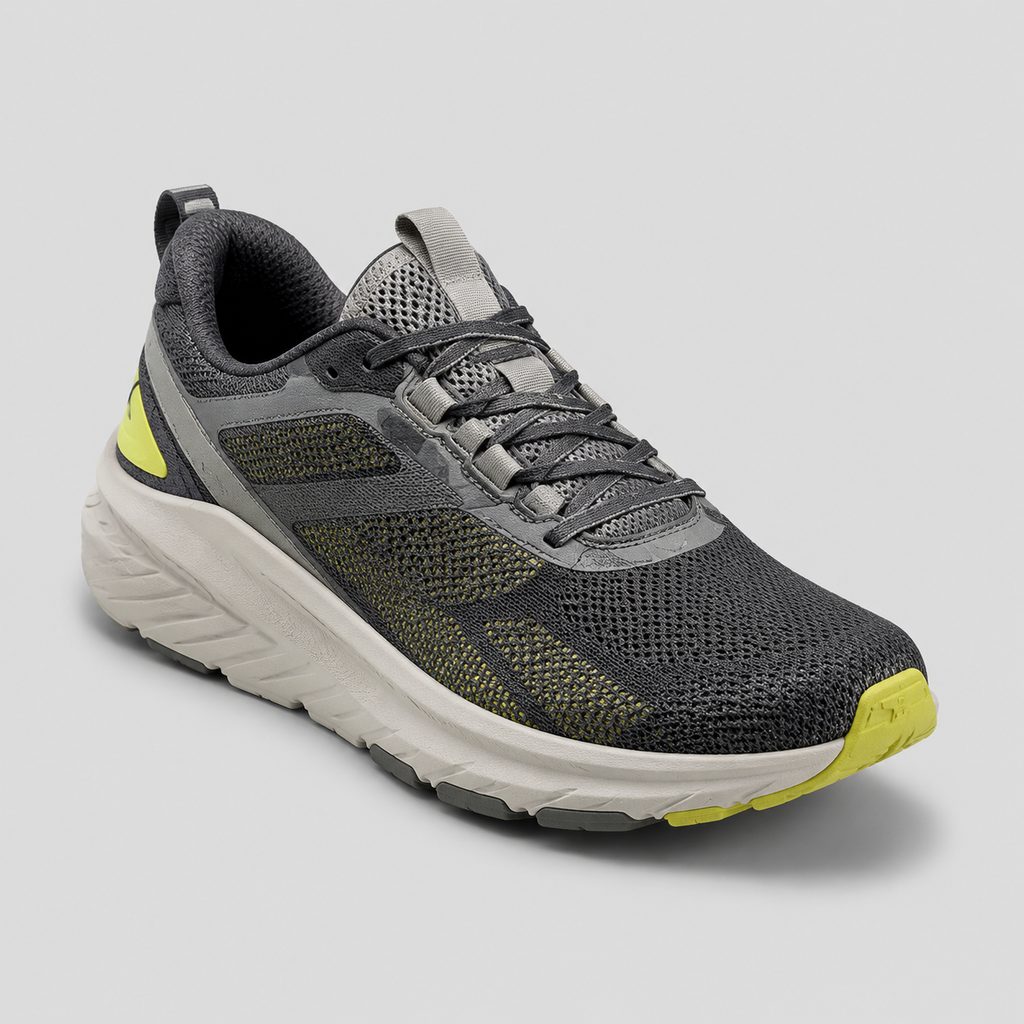
A private label casual sneakers materials brief starts to work when construction words and route-to-market words no longer share a single cell. Product developers defining custom casual shoes often paste mesh, knit, or PU beside EVA and rubber, then tag retail, ecommerce, or private label in the same field. That line looks complete and still leaves the factory guessing which tokens are build decisions. Put upper and outsole phrases on one side of the brief first. Park distribution labels in a commercial block so each half can be assessed on its own.
The rest of this piece inventories only the published materials and channel strings buyers actually see on the athletic range, then forces that two-column split before any inquiry. Casual membership in a wider sport family, a running-launch sequence, and golden-sample sizing each stay outside this construction pass unless you deliberately reopen them later.
When materials and channel share one field
Write the construction block so a reader can name upper direction and outsole construction without decoding how the pair will be sold. When those jobs share one cell, mesh or knit may still be a real upper choice, while private label is only ownership language. EVA and rubber may still name outsoles; retail and ecommerce never do.
Teams feel the mix differently. Engineering sees an incomplete build. Commercial stakeholders see a channel note that never became a locked specification. Clarification loops start because the same string is being asked to prove both manufacturability and go-to-market intent. Split the field before you ask a factory to respond. That structure lets materials questions stand alone and keeps channel intent honest as distribution preference rather than a substitute for compounds, panel maps, or tooling.
Published strings for the construction side
On the athletic product range, running-shoe cards publish construction language you may reuse when you define custom casual shoes. Mesh, knit, or PU appear as upper options on those cards. The same cards describe performance-inspired daily-training builds with breathable uppers. Treat the listed strings as product-page vocabulary you can put on the construction side of a brief. They are not a casual-only validated set, and they are not a finished casual bill of materials.
- Upper strings published on the range: mesh, knit, and PU uppers.
- Outsole strings published on the range: EVA and rubber outsoles.
- Adjacent product language on those builds: cushioned midsoles (cue only; keep off the locked outsole pair).
If your silhouette needs a different upper system, state that as project definition and ask which manufacturability options may apply. Do not stretch the published range strings into a recommended casual recipe or a complete materials matrix they were never written to carry.
Outsole pair or cushioning cue: which field owns it?
Name EVA and rubber as the outsole construction pair taken from the published range. That is the OEM casual sneaker outsole language buyers can reuse without inventing a bottom-unit package. Cushioned midsoles appear in adjacent product copy for the same daily-training builds. That adjacency is a useful comfort cue; it is still a separate field.
| Language on the brief | How to read it on this brief | Limit of the phrase alone |
|---|---|---|
| EVA and rubber outsoles | Outsole construction pair on the athletic range | Not a full bottom unit, hardness map, or tread package |
| Cushioned midsoles | Product language that opens midsole-intent questions | Not a locked peer already equal to EVA and rubber outsoles |
| Breathable uppers | Descriptor tied to the same range cards as mesh, knit, and PU | Not a materials grade, GSM set, or panel map |
Put EVA and rubber on the outsole line when that is the construction language you own. Put cushioning intent on its own line, or hold it as a development question, so comfort copy does not silently replace outsole naming.
Channel labels that never specify the build
Place retail, ecommerce, and private label in a commercial section of the brief. The same product range lists those words next to construction strings, and their valid job is distribution intent. They do not replace upper, outsole, or other construction fields on a private label casual sneakers materials brief.
| Label | Valid commercial use | Misuse that blocks assessment |
|---|---|---|
| Retail | Store or wholesale-to-retail distribution intent | Read as a materials, tooling, or quality package |
| Ecommerce | Direct or marketplace selling intent | Used in place of upper or outsole naming |
| Private label | Brand-owned labeling and program ownership intent | Taken as proof that mesh, knit, or PU and EVA and rubber are already locked |
If two submissions differ only by “private label” versus “ecommerce,” materials still have not been submitted. You have restated route-to-market preference twice.
Sport-family membership without a casual kit
Use family membership as a scope boundary when you shortlist suppliers, not as a materials package. About-page positioning describes sport-footwear specialists working one product family consistently: running, training, walking, and casual sneakers. That statement is not a catch-all factory claim. It fixes category focus. It does not publish a casual-only materials kit, a casual BOM template, or a default upper and outsole stack for lifestyle programs.
Casual sneakers sit inside the same athletic family as running and walking. Private label casual sneakers materials still depend on explicit upper and outsole naming. Membership alone does not authorize every running-card string as proven for your silhouette, and it does not let you leave materials blank because casual appears next to other sport categories on the about page.
How far can a running-launch example stretch?
Keep published case studies in a sequence column when the page is a running-shoe launch for a new brand. That example describes how a first running-shoe order is structured from reference pair to inspected first production. The useful boundary is that single arc for a running program.
As buyer guidance only: treat the example as sequence context, not as a casual materials template or proof of casual construction choices. If your program is casual, cite it when stakeholders need a reminder that first production follows the published order structure from reference pair to inspected first production. Do not cite it when they need mesh, knit, PU, EVA, or rubber named on the construction side of the brief.
Why size control stays off this brief
Attach golden-sample length and width checks to a sizing annex after the build is named. Importer-facing copy states that size grading is locked to the golden sample and verified by measured length and width at final inspection, container after container. That is a sizing-control statement for wholesale and bulk supply. It answers neither upper nor outsole questions.
This construction pass should not reopen golden-sample ownership as if length and width verification completed the private label casual sneakers materials work. For importers and wholesalers reviewing program readiness, keep the importer and wholesaler page sizing language where it belongs: after materials and channel are already split, not as a stand-in for either field.
Split first, then ask what may apply
Split the document so a reader can assess materials without decoding channel intent, and can read channel intent without hunting through construction jargon. Do that before sampling talk or quotation talk.
- Write construction phrases first. Own upper language you intend (for example mesh, knit, or PU when those are your chosen published strings) and outsole language you intend (EVA and rubber when that is the pair). Hold cushioned midsoles as a separate product cue or open question.
- Move channel intent to a commercial block. Retail, ecommerce, and private label live with distribution and brand ownership. Adjacency on a product card does not complete a construction block.
- Note family scope without inventing a kit. Casual sneakers sit with running, training, and walking if that scope matters to shortlisting. The note is not a materials package.
- Label external sequence examples. A first running-shoe order structured from reference pair to inspected first production is sequence context only.
- Park size verification. Golden-sample length and width checks belong in a sizing annex, not in the construction paragraph.
When that split is clean, share the current product definition and ask which development, manufacturability, sampling, or quotation options may apply to the project. That invitation is an inquiry posture, not a documented service catalog. Use the request a quote path to put the split brief in front of a supplier.
Midsole detail beyond product cues, full bottom-unit design, and which sampling or quotation path fits the project remain open questions the published pages do not fix for casual programs. The split is enough structure for a private label casual sneakers materials brief to be read as a materials brief.
Sources and verification
- Athletic Shoe Manufacturer | Custom Product Range First-party site source
- About Custom Shoe Factory | OEM/ODM Athletic Shoes First-party site source
- Footwear Manufacturing Case Studies | Example Project Formats First-party site source
- Wholesale Shoes & Bulk Footwear Supply | Importers First-party site source
Share the current product definition and ask which development, manufacturability, sampling or quotation options may apply to the project.
Send your project brief