OEM Footwear Development
Buyer Handoff: OEM running shoe brief for retail and ecommerce
Define the running-shoe program, record the intended sales channel, and keep undocumented channel requirements visible as questions for confirmation.
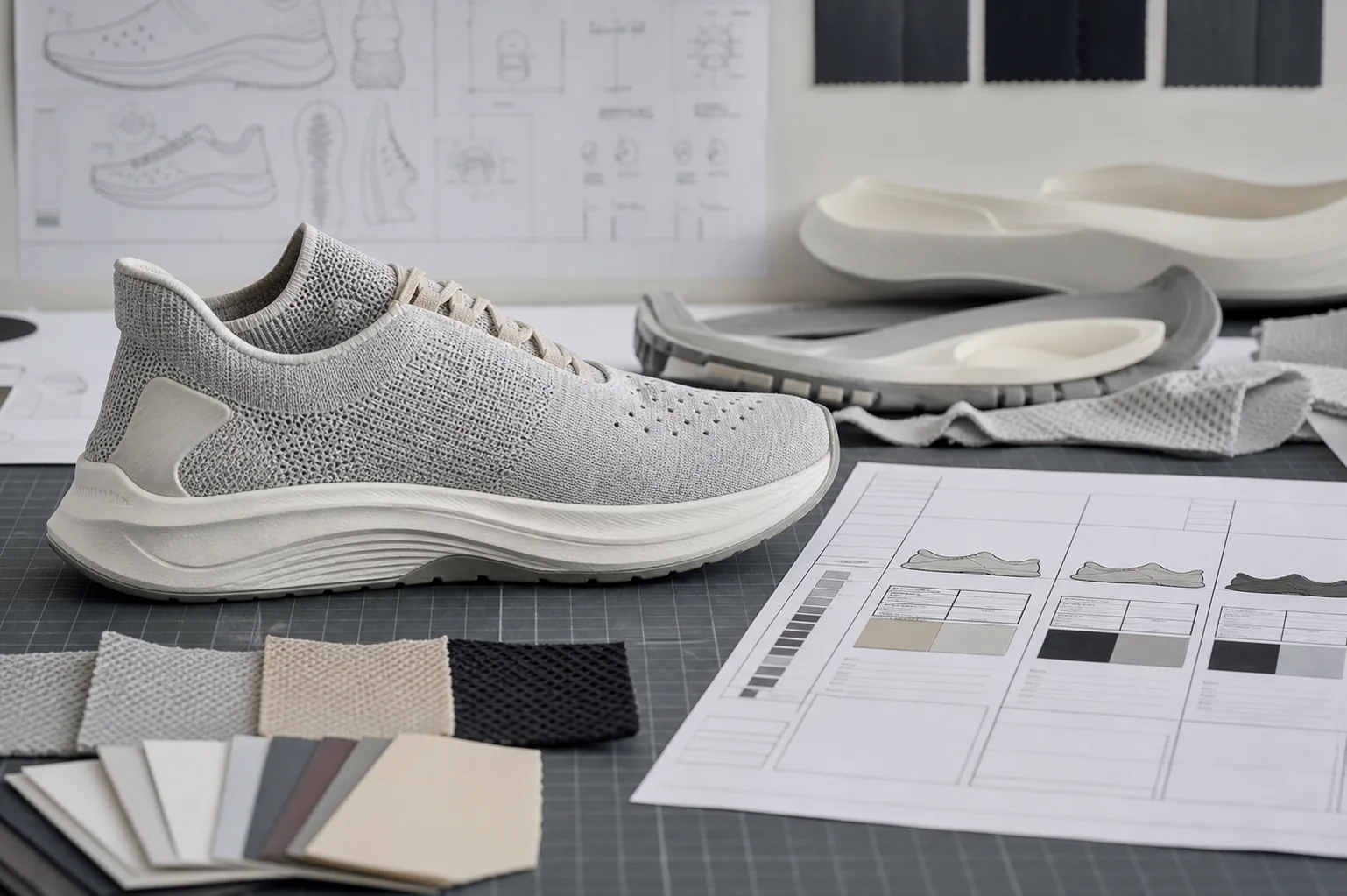
A sales channel belongs in a sourcing brief, but it is not evidence of everything a factory can do for that channel. An OEM running shoe brief for retail and ecommerce should name the intended route to market, define the product in factory-readable terms, and separate confirmed buyer requirements from questions that still need an answer.
Custom Shoe Factory’s running-shoe entry associates the category with retail, ecommerce, and private label. The same entry describes performance-inspired daily-training builds with breathable uppers and cushioned midsoles. The supplied excerpt does not establish channel-specific packaging, labeling, testing, documentation, logistics, approval, or compliance arrangements. The recommendations below are an editorial framework for the buyer, not a description of undocumented factory procedures.
Channel Context Without Capability Assumptions
For the buyer, the opening block of the brief should function as a status record. It identifies how the product is expected to reach the market without treating the channel name as a substitute for specifications or confirmed services.
- Sales route
- Record physical retail, ecommerce, or both according to the buyer’s current plan.
- Selling market
- Add the intended market when it is known. If it has not been decided, mark it as open.
- Private-label status
- Record private label separately from the sales route. Add the brand owner or approval contact if the buyer has identified them.
- Known requirements
- List only channel conditions already supplied to the buyer, such as defined presentation, labeling, documentation, or approval instructions.
- Questions for confirmation
- Keep unresolved packaging, testing, delivery, documentation, and other channel matters in a distinct question list.
Retail, ecommerce, and private label are useful commercial descriptors in the published product entry. In the brief, their role is to provide context while leaving unconfirmed requirements visibly open.
A Product Definition Separate From the Route
The company description calls Custom Shoe Factory a sport-footwear specialist. It identifies running, training, walking, and casual sneakers, and says the company is not a catch-all factory. For this inquiry, the buyer should keep the definition within the running-shoe category before adding channel details.
- Identify the product. State that the program is a running shoe and add the buyer’s intended-use, silhouette, or design description.
- Mark the design status. Label the definition as final, preliminary, or reference-only so undecided elements are not mistaken for approved specifications.
- Inventory the available inputs. List the current tech pack, design files, reference images, component notes, and revision identifier.
- Distinguish OEM from an ODM question. The published OEM excerpt defines OEM as build-to-spec manufacturing. If the buyer wants to discuss ODM, that request should remain an open question because the supplied evidence does not describe a specific ODM workflow.
The buyer can use sketches and reference images to show design direction, but should identify which elements are visual references and which are intended construction choices.
Construction Fields for the Handoff
The running-shoe entry names mesh, knit, and PU uppers. It separately names EVA and rubber outsoles. Its reference to cushioned midsoles provides category-level context rather than a selected construction for an individual project.
| Brief field | What the buyer should record | Published anchor or evidence boundary |
|---|---|---|
| Upper | Current material direction, intended zones, color direction, and choices that remain open. | The running-shoe entry names mesh, knit, and PU uppers. |
| Midsole | The current cushioning or midsole direction as a separate line item. | The entry describes cushioned midsoles but does not select one for the submitted program. |
| Outsole | The buyer’s current outsole definition, drawing, reference, or material question. | The entry names EVA and rubber outsoles. |
| Branding and decoration | Available artwork, proposed locations, colors, and decisions that still require approval. | The supplied product excerpt does not specify a branding placement or approval process. |
| Design inputs | Each attached file, its revision, and whether it is final, preliminary, or reference-only. | The OEM description addresses manufacturing to the buyer’s tech pack and design. |
The editorial purpose of these separate fields is to prevent broad phrases such as breathable upper or cushioned midsole from being treated as a complete specification. Each component can carry its own confirmed details and unresolved questions.
Engineered Mesh: Detail Without Premature Approval
The materials page describes engineered mesh as a knitted or warp-knit synthetic and calls it the workhorse athletic upper. It describes zoned density for ventilation, light stretch, and support. These are published material details, not confirmation that engineered mesh or a particular zone layout applies to every submitted running-shoe design.
| Published material detail | Editorial use in the buyer’s brief |
|---|---|
| Engineered mesh is described as a knitted or warp-knit synthetic. | Identify whether engineered mesh is actually under consideration rather than using the general word mesh as a final specification. |
| The entry describes zoned density for ventilation, light stretch, and support. | Mark the upper zones where the buyer is considering those functions and identify any zone decisions that remain open. |
| The entry lists screen print, heat-transfer film, and welded TPU overlays. | Record any of these as proposed decoration directions, with artwork and placement notes, and ask whether they may apply to the current design. |
| The entry gives a typical range of 90-250 GSM depending on the zone and notes denser knit at the eyestay and toe. | Treat the range as published background information unless the buyer has defined a project-specific weight or zone question. |
Neither the listed range nor the decoration methods should be converted into a universal requirement or approval. Their practical value is to help the buyer ask a more precise material question.
The Published OEM Responsibility Boundary
The OEM description contains three specific statements that can shape the handoff.
| Documented OEM responsibility | Corresponding buyer action |
|---|---|
| Manufacture to the buyer’s tech pack and design. | Provide the latest available tech pack and design, or state clearly which parts of the definition are incomplete. |
| Flag manufacturability issues during DFM. | Ask what manufacturability issues, if any, the current submission raises for discussion. |
| Hold the buyer’s bill of materials and tooling across reorders. | For an existing program or reorder inquiry, identify the relevant BOM, tooling, and revision references available to the buyer. |
The DFM statement supports a request for manufacturability feedback; it is not a guarantee that every proposed construction is manufacturable. The build-to-spec statement also should not be expanded into a claim of factory design authorship. Testing management, certification scope, and other unlisted responsibilities are not defined by the supplied OEM excerpt.
Channel Requirements Become Confirmation Questions
After the product definition is assembled, the buyer can convert channel-dependent gaps into direct questions. The following prompts are editorial recommendations, not documented company services.
| Recorded context | Questions the buyer can add |
|---|---|
| Retail | Which presentation, packaging, labeling, documentation, or approval conditions has the buyer or retailer already supplied? Which points still require confirmation? |
| Ecommerce | Which presentation, labeling, documentation, or delivery expectations has the buyer already defined? Which remain undecided? |
| Private label | Which brand assets, logo placements, color references, naming details, and approval responsibilities are available from the buyer? |
The inquiry should also state any quantity, cost, timing, or delivery constraints the buyer wants considered in the discussion. It can then ask which development, manufacturability, sampling, or quotation options may apply to the submitted project. None of those options should be presented as confirmed before the supplier responds.
A Copy-Ready Handoff for the Quote Request
An OEM sneaker quote request does not need to hide incomplete information. It should show what is defined, what is attached, and what the buyer still needs to confirm.
- Program
- Running shoe, with the buyer’s intended-use and silhouette description.
- Channel
- Retail, ecommerce, or both; private-label status recorded separately; intended market added if known.
- Design status
- Final, preliminary, or reference-only, with a revision identifier.
- Construction
- Separate upper, midsole, and outsole definitions, including open material or zone questions.
- Branding
- Available artwork, proposed placement, colors, decoration direction, and approval status.
- Attachments
- Current tech pack, design files, reference images, component notes, and any buyer-provided channel requirements.
- Buyer-supplied constraints
- Known commercial, quantity, timing, cost, or delivery conditions the buyer wants discussed.
- Open questions
- Channel requirements that need confirmation and a request for the development, manufacturability, sampling, or quotation options that may apply.
Share the current definition through the quote request page. Keeping the product record, channel context, and confirmation questions distinct gives the inquiry a defined scope without extending the published product or OEM statements.
Sources and verification
- About Custom Shoe Factory | OEM/ODM Athletic Shoes First-party site source
- OEM / ODM Shoe Development | Custom Footwear Manufacturing First-party site source
- Athletic Shoe Manufacturer | Custom Product Range First-party site source
- Shoe Soles, Uppers & Insole Materials | Footwear Specs First-party site source
Share the current product definition and ask which development, manufacturability, sampling or quotation options may apply to the project.
Send your project brief