Sourcing and Procurement
How to Normalize Wholesale Sports Shoes Quotes
A buyer-owned method for classifying matched, different and unresolved specifications across athletic footwear supplier quotations.
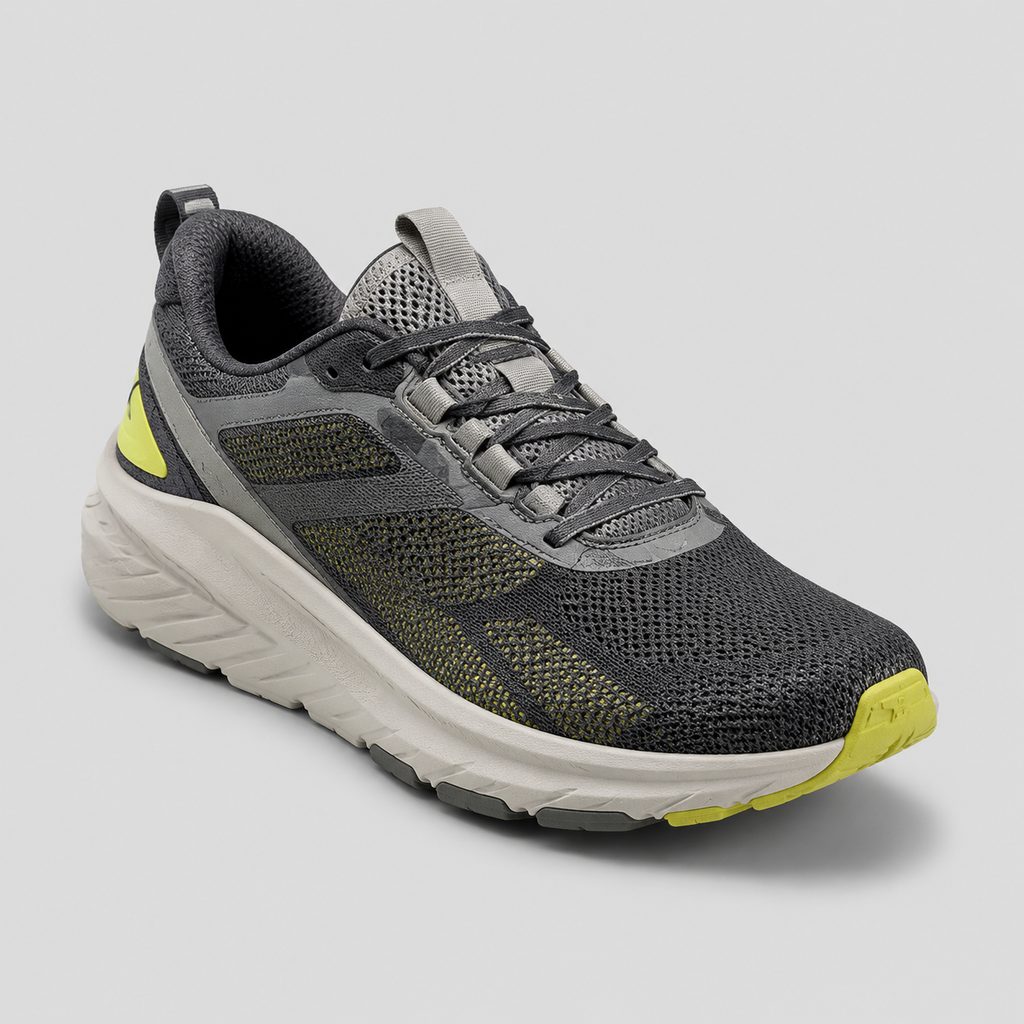
Prices for wholesale sports shoes are only directly comparable when the quotations refer to the same product definition. A response based on a running shoe should not be evaluated as though it automatically matches one based on a training, walking or casual style. Custom Shoe Factory lists running, training, walking and casual sneakers within its sport-footwear focus, so the category named in each quotation is a useful first checkpoint.
The practical issue is specification variance. One response may say only "mesh upper," another may identify a particular mesh construction, and a third may leave the outsole material open. Comparing their totals before resolving those differences can give the buyer an unclear basis for a purchasing decision.
The matrix, status labels and decision rules below are editorial recommendations for buyers. They are not documented Custom Shoe Factory deliverables or representations of its quotation workflow. Company-specific facts are limited to the linked product, material and example-project excerpts.
Start with the matrix, not the price ranking
Create one column for the requested baseline and one for each supplier response. Preserve the wording from every quotation rather than translating it immediately into a general label. Beside each quoted entry, assign one of three statuses:
- Matched
- The response states the requested specification or explicitly confirms an equivalent definition.
- Different
- The response identifies an alternative category, material, component or application.
- Unresolved
- The relevant detail is absent, ambiguous or based on an assumption that has not been confirmed.
This is a buyer-owned sports shoe quote comparison method. A status records what the available documents establish; it should not be used to guess what a supplier probably intended.
| Matrix row | What to transcribe | Buyer review |
|---|---|---|
| Product category | The category named in the request and response | Check for matched, alternative or omitted definitions |
| Upper construction | The supplier's exact material wording | Flag broad descriptions that hide construction details |
| Upper zones | Any material or density definition by area | Keep unstated zoning unresolved |
| Midsole | The quoted midsole description | Do not infer properties from a short material label |
| Outsole | The quoted outsole description | Check whether the component and material are identified |
| Branding | Method, receiving material and application zone | Confirm that all three refer to the same proposed build |
| Open commercial points | Questions, exclusions and dependencies | Keep questions separate from confirmed terms |
Decide whether each quotation can enter the comparison
Apply a decision gate after completing the material and construction rows. If the important rows match, the buyer can compare the stated commercial terms on that common definition. If an important row is unresolved, request a focused clarification tied to that cell.
When a response prices a materially different definition, ask for revised pricing against the baseline if that baseline is still required. Keep an intentional alternative in a separate column so its different construction remains visible.
This method does not rank one category or construction above another. Its purpose is to prevent a specification difference from being treated as a price advantage. For example, if one quotation says "mesh" and another identifies engineered mesh with zoned density, the buyer should mark the upper row unresolved or different until the intended definitions are confirmed. This is a hypothetical comparison, not a description of an actual order.
Resolve the category before reviewing components
The category row establishes which product each supplier understood it was quoting. The site's company overview names running, training, walking and casual sneakers as categories within its sport-footwear focus. It does not establish that products from those categories have equivalent specifications.
As a buyer method, record the category from the original definition and then copy the category stated in each response. Mark an omitted category unresolved. Mark a different category as different, even when the proposed shoe appears visually similar.
If the original definition itself is incomplete, the earlier guide to preparing a quote-ready wholesale sports shoe brief can help establish the baseline. At the post-quotation stage, preserve that baseline while recording supplier alternatives separately.
Replace broad upper labels with quoted detail
The materials excerpt demonstrates why "mesh" may be too broad for normalization. Its engineered-mesh entry references air mesh and sandwich mesh. The same entry describes knitted or warp-knit synthetic construction with density varied by zone. Buyers should not assume that these terms are interchangeable unless the quotation or a subsequent response confirms the intended construction.
That engineered-mesh description gives a typical density range of 90-250 GSM depending on the zone. It also refers to denser knit at the eyestay and toe. The range belongs only to the cited engineered-mesh description; it does not define every mesh, knit or athletic-shoe upper.
For each athletic footwear supplier quotation, the buyer should record the exact upper term first. Then check whether the response identifies the construction, defines relevant zones, states any requested zone-specific density and discloses substitutions. A proposed substitute can remain a valid option, but it should not receive a matched status merely because both descriptions contain the word "mesh."
Give the midsole and outsole separate rows
The running-shoe product excerpt describes daily-training builds with cushioned midsoles. It separately lists EVA and rubber outsoles. Based on that limited source language, buyers can use distinct matrix rows for the quoted midsole description and the quoted outsole description.
This separation is an editorial comparison recommendation, not a source claim that every quotation must follow a particular component format. If a response uses a broad phrase such as "EVA sole" or "rubber sole," the buyer should ask which component the phrase describes and leave any omitted component unresolved.
A short material label does not, by itself, document formulation, hardness, durability, traction or cushioning performance. Do not add those properties to the evidence column unless the supplier response or another project document actually states them. The immediate comparison question is whether the suppliers priced the same described component package.
Compare branding with its substrate
The engineered-mesh entry on the materials page states that the material described there takes screen print, heat-transfer film and welded TPU overlays cleanly. It also states that the described material can support multicolour branding. Those statements apply to that engineered-mesh entry and should not be extended to every upper material.
For quotation review, use separate fields for the branding method, receiving material and application zone. Mark the row unresolved when a logo method is named but its substrate or location is omitted. If the proposed upper changes while the branding description remains the same, ask whether the branding basis also changed.
Artwork dimensions, colour references and placement files can remain in the underlying specification records. The matrix only needs enough detail to show whether each supplier response is based on the same branded construction.
Separate source-supported terms from open questions
Use distinct columns labelled "quoted specification," "status," "source or document" and "question to supplier." The source column should contain only information established by the quotation or another identified project record. A question belongs in the question column until an answer is received and recorded.
Depending on the project, buyers may ask about the applicable development route, manufacturability, sampling information, quotation basis, packaging, timing, minimum order information or quality-control documentation. These are possible inquiry topics. The supplied excerpts do not confirm particular answers, thresholds, inclusions or service procedures for them.
The same distinction applies to exclusions and optional items. Record what the response actually says. Do not convert silence into a supplier commitment or complete an empty cell from expectation.
Use project formats only within their stated scope
The case-studies excerpt presents an example running-shoe project format extending from a reference pair to inspected first production. It does not verify a named customer order, establish a mandatory workflow, promise timing or document a general inspection result.
For comparison purposes, the example supports a narrow reminder: label the project stage represented by each record. As an editorial recommendation, buyers should distinguish a reference, proposed specification, sample-related record and production-stage record instead of assuming that wording at one stage confirms another.
Send the discrepancies with the current definition
After reviewing the matrix, consolidate the current product definition and the rows marked different or unresolved. State which definition remains the buying baseline and identify any alternatives that require separate consideration.
Share that information through the project inquiry and ask which development, manufacturability, sampling or quotation options may apply. A discrepancy-focused inquiry gives the recipient specific points to address without presenting open technical or commercial questions as settled facts.
Sources and verification
- About Custom Shoe Factory | OEM/ODM Athletic Shoes First-party site source
- Athletic Shoe Manufacturer | Custom Product Range First-party site source
- Shoe Soles, Uppers & Insole Materials | Footwear Specs First-party site source
- Footwear Manufacturing Case Studies | Example Project Formats First-party site source
Share the current product definition and ask which development, manufacturability, sampling or quotation options may apply to the project.
Send your project brief