Footwear Product Development
A mesh upper specification for custom running sneakers
Organize an engineered-mesh upper by zone, decision status, material reference, density, color, decoration, and the questions that require project-specific assessment.
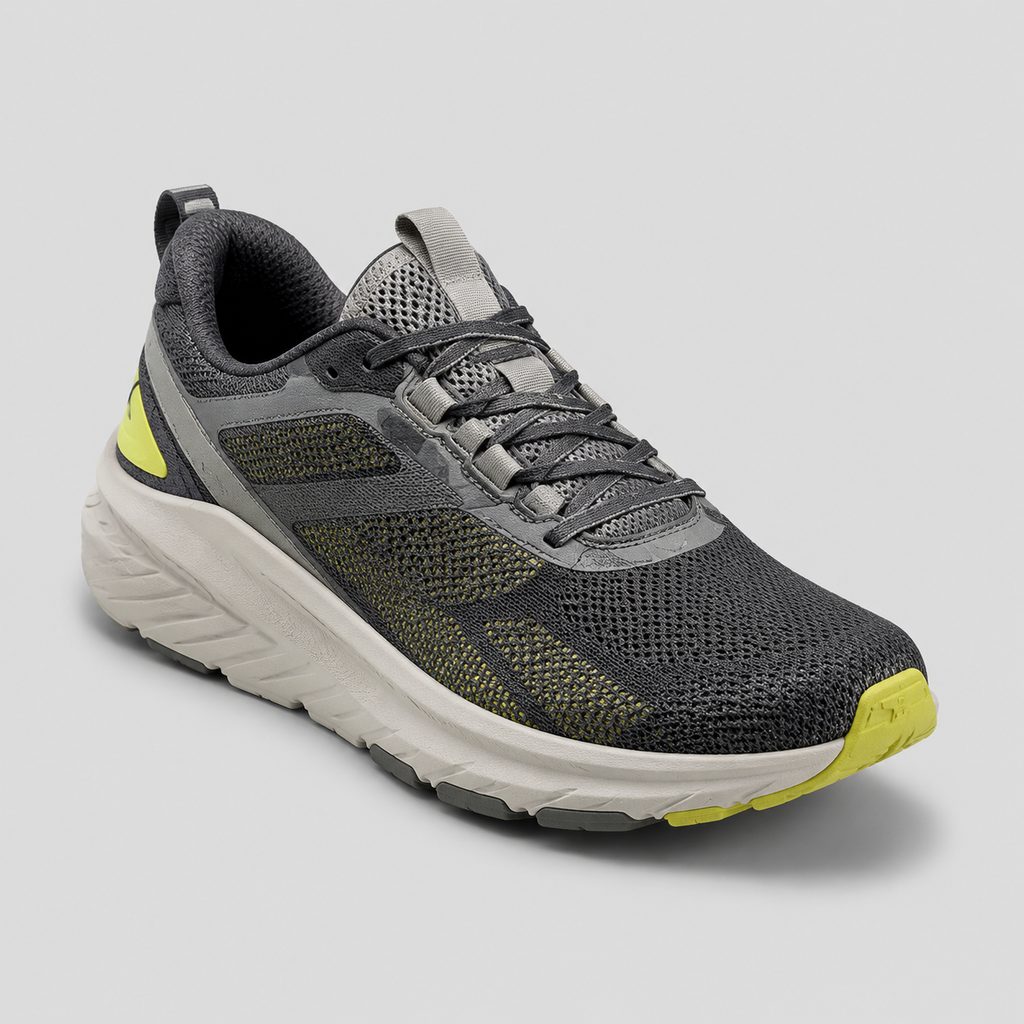
A mesh upper specification for custom running sneakers needs to define more than “breathable mesh.” A workable buyer handoff identifies the separate areas of the upper, states what each area is intended to do, and records whether its construction, density, color, and decoration are confirmed, proposed, or still open.
Custom Shoe Factory’s running-shoe product entry describes performance-inspired daily-training builds with breathable uppers and cushioned midsoles. It lists mesh, knit, and PU as upper categories. Those category descriptions provide product context, but they do not select the mesh or define its arrangement for an individual design.
The worksheet structure and handoff steps below are editorial recommendations for buyers. Published first-party information is identified separately from questions about material availability, project applicability, development, manufacturability, sampling, and quotation options.
Set up the control sheet first
Before entering material values, establish a status system that applies to the drawing, matrix, artwork notes, and open-question list. The buyer can use three labels throughout the handoff:
- Buyer-confirmed
- A decision already established in the buyer’s current product definition or supporting project files.
- Proposed
- A construction, material, value, or decoration method submitted for project-specific assessment.
- To confirm
- An unresolved item that requires an answer before the product definition can be treated as complete.
Use these labels consistently instead of allowing a blank field to carry an unclear meaning. A compact control sheet can then hold the product category, intended use, annotated upper views, zone matrix, artwork references, material references, reference-pair notes, and consolidated project questions.
Number the upper by functional zone
For the buyer’s running shoe upper zone map, prepare lateral, medial, front, and top views. Draw a boundary around every area that needs its own instruction and assign a short zone ID. Repeat that ID in the matrix and in any artwork or reference notes.
- Name the zone. Use one anatomical or pattern-based name on every project document.
- State the intended function. Record the buyer’s ventilation, light-stretch, support, or visual intention without presenting it as a measured result.
- Add the proposed construction. Enter a documented material reference when one exists. Otherwise, use “to confirm.”
- Mark relevant interfaces. Show where the zone meets a seam, eyestay component, overlay, lining edge, or decoration so the related question points to a precise location.
- Apply a decision status. Mark the instruction as buyer-confirmed, proposed, or to confirm.
The materials page describes engineered mesh as a knitted or warp-knit synthetic with zoned density for ventilation, light stretch, and support. Use those documented characteristics as possible zone intentions where they match the design brief. The resulting drawing defines the buyer’s intended engineered mesh running shoe upper; it does not prescribe one zoning pattern for every shoe.
Use a reusable zone matrix
Give each mapped area its own row. The following blank template keeps the material description, density status, decoration, and unresolved decision separate rather than compressing them into one general mesh note.
Reusable mesh-upper zone matrix
| Zone ID | Intended function | Proposed construction | GSM value or status | Color or reference | Decoration | Open question |
|---|---|---|---|---|---|---|
| [Z-__] | [Buyer intent] | [Material description, reference, or to confirm] | [Referenced value or to confirm] | [Color code, swatch, file, or to confirm] | [Artwork ID, location, proposed method, or none] | [One unresolved project decision] |
Copy the blank row for each zone on the drawing. Keep visually separate areas in different rows when their density, color, construction, decoration, or decision status differs. Where one instruction genuinely covers several zones, list every applicable zone ID instead of relying on proximity in the drawing.
Treat GSM as a zone-level decision
The materials page gives a typical engineered-mesh range of 90-250 GSM depending on the zone. It also identifies the eyestay and toe as locations with denser knit. These are published material details, not a default GSM or mandatory zoning plan for a proposed shoe.
For the buyer’s running shoe mesh GSM field, enter a value only when the project has a corresponding material or specification reference. Include that reference in the same row. If no supported value is available, enter “to confirm” and ask whether a proposed density is applicable to the zone and construction.
Keep density separate from function. A ventilation intention, for example, does not by itself establish a GSM, construction, test result, or airflow outcome. The matrix should preserve each item as its own decision.
Connect decoration to its mesh zone
The engineered-mesh description says that the material takes screen print, heat-transfer film, and welded TPU overlays cleanly. It also says the material can support multicolor branding. These statements describe the material in the published excerpt; project availability and method selection belong in the inquiry.
For each decorated zone, the buyer should record the artwork file and revision, intended color, exact placement, coverage boundary, and proposed method. Connect the note to a zone ID and show its relationship to seams or neighboring components. When several methods are under consideration, list each as a separate proposal rather than writing a combined instruction that leaves the intended construction unclear.
Use the open-question field to ask which proposed method, if any, may apply to the selected mesh, location, and artwork. This keeps the branding requirement visible while leaving the technical and commercial assessment open.
Keep source facts and project questions apart
The left column below stays within the supplied first-party excerpts. The right column converts the missing project details into buyer questions. Those questions are inquiry topics and do not document that a particular option or service is available.
| Published information | Buyer question for this project |
|---|---|
| The company profile presents a product-family focus on running, training, walking, and casual sneakers. | Does the current product definition fit the scope that can be assessed? |
| The running-shoe product entry describes performance-inspired daily-training builds with breathable uppers and cushioned midsoles. | How should the buyer’s intended category and use be reflected in the project definition? |
| The product entry lists mesh, knit, and PU as upper categories. | Which exact material and zone construction, if any, may apply to the proposed upper? |
| The product entry separately lists EVA and rubber outsole categories. | Which parts of the wider shoe definition need to be provided outside this mesh-upper handoff? |
| The materials page describes engineered mesh as knitted or warp-knit synthetic with zoned density for ventilation, light stretch, and support. | Which proposed construction and zone intentions are applicable to the current design? |
| The materials page gives a typical range of 90-250 GSM depending on the zone. | Which zone values should remain open, and which can be assessed against a documented material reference? |
| The materials page says engineered mesh takes screen print, heat-transfer film, and welded TPU overlays cleanly. | Which proposed decoration method, if any, may apply to each specified zone? |
| The case-studies page describes an example running-shoe format from a reference pair to inspected first production. | Which development, manufacturability, sampling, and quotation options may apply to this inquiry? |
Keep the right-hand questions in an open-items block until project-specific information is available. Do not silently convert a listed material characteristic, broad product category, or example project format into a confirmed project decision.
Constrain the role of a reference pair
The published case-studies excerpt describes an example format for a first running-shoe order, from a reference pair to inspected first production. It does not provide a universal workflow, customer result, or inspection standard.
As an editorial recommendation, use a reference pair alongside the zone matrix rather than in place of it. Attach each observation to a zone ID and classify the observation under one of three headings:
- Retain
- Identify the specific visual or construction cue that the buyer wants represented in the new design.
- Change
- State how the proposed design should differ, using the drawing, artwork, or material reference as the controlling instruction.
- Unknown
- Mark construction, density, fiber content, reinforcement, or production details that are not documented by the reference information.
A note such as “use reference mesh” leaves the scope unclear. A narrower buyer instruction can identify the relevant zone and visual cue while marking construction and density as items to confirm.
Release the mesh-upper handoff
Before submitting the inquiry, the buyer should review the handoff as one controlled product definition. Include:
- Product category and intended use without unsupported performance claims
- Annotated lateral, medial, front, and top upper views
- A unique ID for every defined mesh zone
- The completed zone matrix with decision statuses
- Material codes, swatches, photographs, or other references with clear labels
- Artwork files and revisions linked to exact zone IDs
- Reference-pair notes divided into retain, change, and unknown items
- A consolidated list of material, decoration, manufacturability, development, sampling, and quotation questions
Check that no zone has inherited a color, GSM, construction, or decoration instruction from a neighboring area unless the matrix says so explicitly. Then share the current definition through the project inquiry page and ask which development, manufacturability, sampling, or quotation options may apply to the project.
Sources and verification
- About Custom Shoe Factory | OEM/ODM Athletic Shoes First-party site source
- Athletic Shoe Manufacturer | Custom Product Range First-party site source
- Footwear Manufacturing Case Studies | Example Project Formats First-party site source
- Shoe Soles, Uppers & Insole Materials | Footwear Specs First-party site source
Share the current product definition and ask which development, manufacturability, sampling or quotation options may apply to the project.
Send your project brief