Sourcing Guides
Make a Private Label Sneakers Sample Request Readable
Sampling is a stage, not a production brief. Place the athletic program, state what the pair must prove, and hand off only the fields a private-label sample can validate.
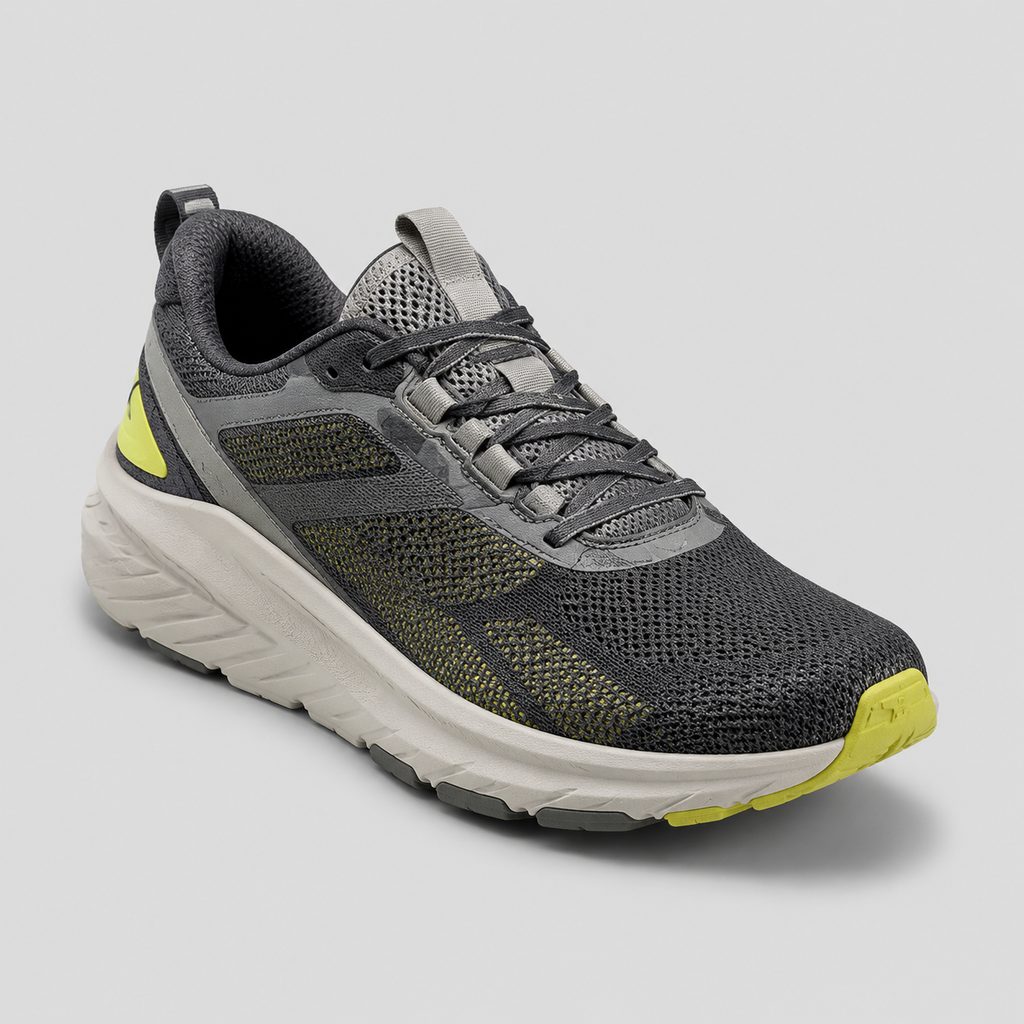
Buyers often send a private label sneakers sample request while the athletic program is still incomplete. The commercial path is clear; the sample-stage definition is not. Without program type, sample purpose, and upper direction, a manufacturer cannot tell which development, manufacturability, sampling, or quotation options may apply. This article treats sampling as a distinct procurement stage: define only what a private-label sample can validate against the published athletic range, then hand off a compact packet rather than a production, logo, or price brief.
Private label names a channel, not a sample-ready build
Private label names a commercial path. It does not by itself specify construction, end use, or what a physical sample is meant to prove. When a buyer asks for “private label sneakers” without stating whether the build is running-, training-, walking-, or casual-oriented, the request still lacks a product family placement.
On the published running product card, private label appears as one channel alongside retail and ecommerce for those performance-inspired daily-training builds. That is factory-stated channel language for running, not a free-standing construction system and not a documented channel label for every other program type on the site.
Teams often rush to sample so they can see a pair, but they send a channel label instead of a sample-stage definition. Finish the definition that sampling can test before asking which sampling path may apply. The sample then validates a bounded build against a stated program rather than guessing at brand intent.
Where sampling sits on the published path
One published example frames a first running-shoe order as a path from a reference pair through to inspected first production. That framing is enough to locate sampling without inventing gates, lead times, or approval rituals. Sampling sits after the buyer can point at a reference or a clearly stated target build, and before first production is inspected as a commercial lot.
What the sample can lock is therefore narrower than a full launch package. It can show whether an upper direction, sole pairing, and overall silhouette read as the intended athletic program. It cannot, on its own, stand in for size-run control systems, full packaging trees, or artwork-approval workflows that belong later. Keep the sample packet aligned with that middle position: prove the build the factory must assess, then ask which development, manufacturability, sampling, or quotation options may apply to the project.
Program type must precede the sample ask
Custom Shoe Factory describes itself as a sport-footwear specialist focused on one product family done consistently: running, training, walking, and casual sneakers. That list is the placement grid for any private-label sample. Private label is not a fifth construction system; it is a commercial route that still has to sit inside one of those program types.
Choose one primary program type before any sample language is written so upper and sole cues stay coherent. The comparison below separates factory-stated placement from buyer-side sample language.
| Program type | Factory-stated placement | Buyer note for sample language |
|---|---|---|
| Running | Performance-inspired daily-training builds with breathable uppers and cushioned midsoles; mesh, knit, or PU uppers; EVA and rubber outsoles; private label listed as a channel on the running product card | Use those range-visible cues when the sample must read as a running build |
| Training | Listed in the sport-footwear family | State training as primary type so upper language stays coherent; do not invent performance attributes the excerpts do not state |
| Walking | Listed in the sport-footwear family | State walking as primary type; keep sample language inside that placement without undocumented posture or materials claims |
| Casual sneakers | Listed in the sport-footwear family | State casual as primary type; avoid turning channel labels or price targets into product definition |
If the team cannot choose a primary type, the request is still a commercial wish list. Resolve type first, then open upper and sole language that matches that type.
Range-visible cues a sample can show
For running programs in the published athletic range, the product page surfaces a limited set of sample-visible cues: breathable or cushioned intent; mesh, knit, or PU upper direction; and EVA with rubber outsole pairing. Private label appears as a channel on that running card. Treat those cues as the ceiling for what this sample brief should claim, not as a license to invent sole chemistry grades, proprietary cushioning systems, or fit architectures that the excerpts do not state.
| Cue family | Sample-facing language buyers can use | Boundary for this brief |
|---|---|---|
| Performance intent | Breathable upper intent and/or cushioned midsole intent for daily-training running builds | Do not invent lab metrics or cushioning grades |
| Upper direction | Mesh, knit, or PU as the top-level family choice | Detail engineered mesh only when that path is chosen |
| Outsole pairing | EVA midsole language with rubber outsole pairing | Do not expand into undocumented compounds |
| Commercial path | Private label as channel on the running product card, alongside retail or ecommerce context if relevant | Channel is not a construction system |
Keep each cue family separate when you write the packet. Combining every option into one sentence overstates what any single source supports and muddies what the sample is supposed to show.
Upper direction that changes what a sample shows
Generic “mesh upper” language rarely exposes a build a factory can assess. When the program needs a breathable athletic upper, the materials guidance for engineered mesh is more useful: air mesh or sandwich mesh; knitted or warp-knit synthetic with zoned density for ventilation, light stretch, and support; typical 90–250 GSM depending on zone; denser knit at the eyestay and toe. That material path is described as a workhorse athletic upper for running, training, and summer styles that need airflow at a sensible cost, and as a surface that takes screen print, heat-transfer film, and welded TPU overlays cleanly.
For an athletic private label sample brief, convert that into buyer-owned choices rather than factory promises:
- State the program type first (for example, running or training).
- Choose the top-level upper family visible on the athletic range: mesh, knit, or PU.
- If engineered mesh is the path, name the mesh style direction (air mesh, sandwich mesh, knitted or warp-knit) and whether zoned density matters for ventilation versus support zones.
- Call out denser eyestay and toe only when those zones are part of what the sample must demonstrate.
- Note branding method interest (screen print, heat-transfer film, welded TPU overlays) as an open question for later assessment, not as a completed decoration route assignment.
The sample then shows a build direction the factory can evaluate for manufacturability. It does not need a full artwork tree at this stage. Decorations belong after the upper construction is legible enough to sample.
Fields that stay out of the sample packet
Sampling stays distinct from production, branding, and consistency work only if the packet refuses to absorb every later-stage topic. Leave the following out of a sample-stage private label sneakers brief:
- Full size-run control systems and grading rules meant for bulk consistency programs.
- Complete first-production packaging hierarchies, carton marks, and retail-ready assortments.
- Artwork-approval trees, logo placement matrices, and multi-route decoration sign-offs better handled after the base upper is readable.
- Unit prices, MOQs, tooling fees, or calendar commitments that the published excerpts do not state; ask what applies rather than inventing numbers.
- Sole chemistry expansions, cushioning grades, or fit-system claims beyond range-visible EVA and rubber pairing language.
Those topics matter later. Packing them into the sample request recreates an unreadable ask: a production-shaped brief that still cannot support a clean sample assessment.
Minimum private label sneakers sample packet
Assemble only buyer-owned fields that make private label sneakers sampling assessable.
- Program type: running, training, walking, or casual sneakers as the primary placement.
- Sample purpose: what this physical pair must prove (silhouette read, breathable or cushioned intent, upper hand-feel, outsole pairing visibility, or another stated validation goal).
- Reference basis: a reference pair, clear photos, or a short written target build, consistent with a path that starts from a reference and later moves toward inspected first production.
- Upper direction: mesh, knit, or PU at range level; engineered-mesh detail (air mesh, sandwich mesh, knitted or warp-knit; zoned density; denser eyestay/toe if relevant) when mesh is the path.
- Sole cues visible on the range: EVA with rubber outsole pairing language for running-oriented builds, without undocumented chemistry claims.
- Channel note: private label as the commercial path on the running product card when the build is running-oriented, without treating the channel as construction.
- Open questions: which development, manufacturability, sampling, or quotation options may apply to this project.
If a field is still undecided, mark it undecided. An honest gap is more usable than a polished guess that pretends the sample already locks production.
Hand off the definition without assuming a path
Close the sample stage by sharing the current product definition, not by assuming a fixed service sequence. The published running-launch example shows structure from reference pair to inspected first production; it does not authorize invented sample SLAs or a mandatory quote-before-sample order. Stay open-ended on process and strict on definition quality.
- Confirm program type and sample purpose in one short paragraph.
- Attach range-visible upper and sole cues, plus engineered-mesh detail only when that upper path is active.
- State what the sample is not meant to decide (size systems, full packaging, complete artwork trees).
- Send the packet and ask which development, manufacturability, sampling, or quotation options may apply to the project.
That handoff keeps private-label sampling readable without overstating factory control or inventing commercial terms. For a current athletic program, share the definition through the request a quote path, or review the athletic product range, materials notes, OEM/ODM focus, and example project formats first so the packet stays aligned with what is actually published.
Sources and verification
- Athletic Shoe Manufacturer | Custom Product Range First-party site source
- About Custom Shoe Factory | OEM/ODM Athletic Shoes First-party site source
- Shoe Soles, Uppers & Insole Materials | Footwear Specs First-party site source
- Footwear Manufacturing Case Studies | Example Project Formats First-party site source
Share the current product definition and ask which development, manufacturability, sampling or quotation options may apply to the project.
Send your project brief