Footwear Product Development
EVA and rubber outsole questions for wholesale running shoes
Keep the published outsole phrase intact, separate it from upper information, and ask which project-specific options may apply.
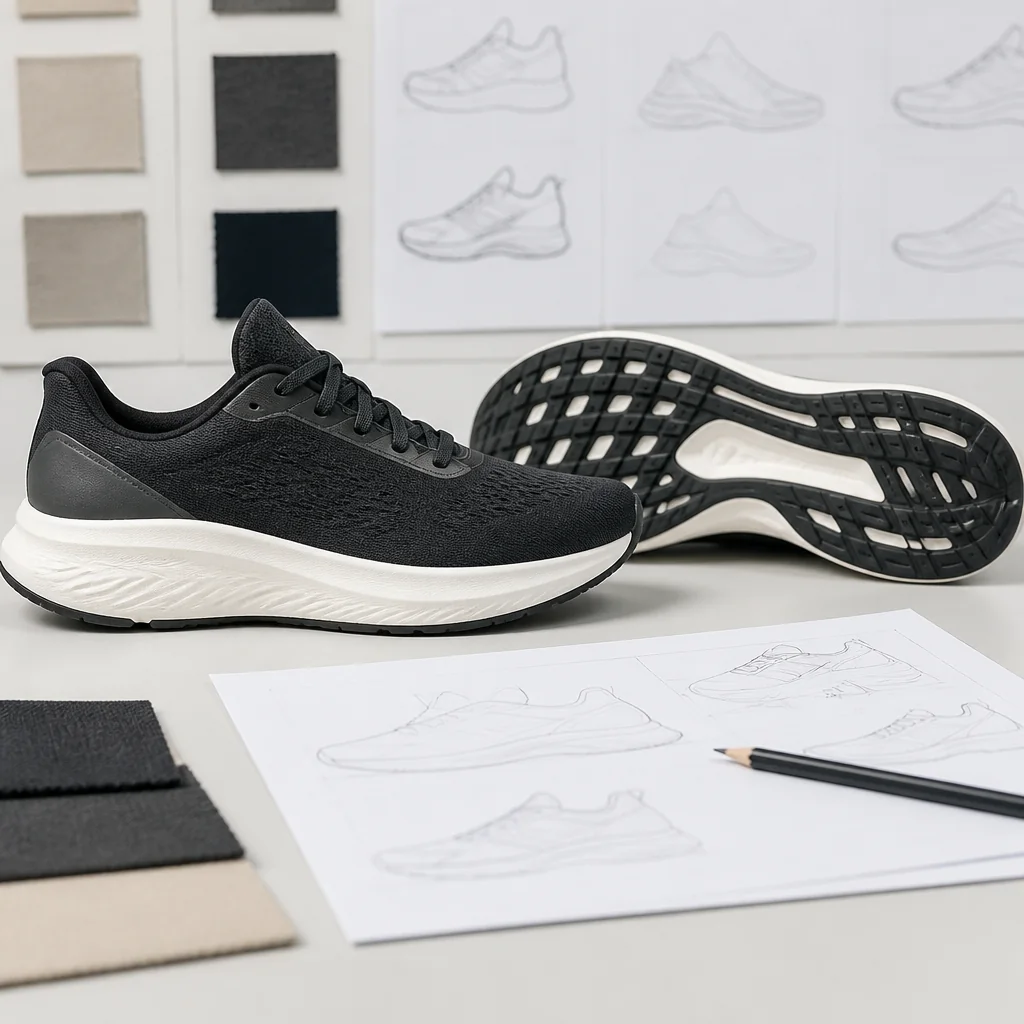
A catalogue phrase can take on more authority than it deserves when it is copied into a development brief. On a product-range page, the wording helps identify a family of shoes. In an internal specification, those same words can be mistaken for settled information about component placement, shape, material allocation, or expected behavior. For EVA and rubber outsole questions for wholesale running shoes, the practical first step is to preserve the published wording and list the remaining decisions as questions.
This is an editorial recommendation for the buyer, not a description of a standard factory workflow or a commitment that a particular build, sampling route, manufacturing route, or commercial term will be available. The aim is to give product, sourcing, and commercial teams a brief that is precise about what it knows without presenting an unfinished outsole discussion as a completed specification.
The Published Line and the Missing Fields
The running-shoe range describes performance-inspired daily-training builds. It describes breathable uppers. It also refers to cushioned midsoles. The entry names mesh, knit, and PU uppers, and it uses the phrase "EVA & rubber outsoles." It identifies retail, ecommerce, and private-label contexts.
Those statements are useful for framing a product direction. They do not need to carry every field of a wholesale running shoe outsole specification. The table separates the published reference from the buyer-owned questions that should remain in the brief.
| Published running-shoe reference | Buyer-owned item to define or ask about |
|---|---|
| Performance-inspired daily-training builds. | State whether daily training is the intended direction for this product, a comparison point, or neither. |
| Breathable uppers, with mesh, knit, and PU named as upper materials. | Keep the proposed upper direction in its own section of the brief. |
| Cushioned midsoles. | Describe any buyer-set product requirements without treating the midsole wording as an outsole construction detail. |
| "EVA & rubber outsoles." | Ask about material selection, allocation, geometry, component interfaces, and any other outsole subjects the buyer needs to resolve. |
| Retail, ecommerce, and private-label contexts. | Provide the sales context only where it helps explain the buyer's own product definition. |
This table is the evidence boundary for the article. Its left column retains the published product-range statements. Its right column contains editorial recommendations for the buyer's inquiry, not claims about a documented construction or available company option.
Define the Shoe Before Asking About the Sole
The company overview calls Custom Shoe Factory a sport-footwear specialist. It lists running, training, walking, and casual sneakers as its product family. That category context can help a buyer describe a project, but the buyer should still write the intended running-shoe direction in project-specific terms before asking a detailed outsole question.
A useful brief can be assembled in this order:
State the product direction. Describe the proposed running-shoe concept in the buyer's own language. Where it is accurate, the published daily-training wording can be included as a range reference rather than adopted as a complete product definition.
Set the status of any reference. Identify whether an image, pair, or other material is being supplied for visual direction, use-context direction, or technical discussion. Do not let an unlabeled reference stand in for a specification.
List requirements that are already fixed. Record non-negotiable visual requirements and intended-use requirements that belong to the buyer's brief. Keep exploratory subjects separate from those requirements.
Write the outsole questions directly. Ask which details about the outsole need discussion before they are entered as requirements. The questions may concern materials, their allocation, visual form, or other construction topics relevant to the buyer's concept.
Request a project review. Ask which development, manufacturability, sampling, and quotation options may apply to the project, and what further information would be needed to consider them.
This sequence gives the recipient context without converting a range-level phrase into a material formula. It also lets the buyer distinguish a requirement that has been approved internally from an item that still needs a response.
Upper Detail Belongs Elsewhere
The materials page identifies air mesh and sandwich mesh under engineered mesh. It describes engineered mesh as a knitted or warp-knit synthetic with zoned density for ventilation, light stretch, and support. That is upper-material information with its own potential relevance to a running-shoe brief.
For an editorially disciplined running shoe material inquiry, place those details in the upper section when they matter to the buyer's direction. Do not use a detailed upper-material description to complete the outsole row. The two components can appear in the same product brief while retaining separate evidence and separate unanswered questions.
This division protects the quality of the request. A well-developed upper paragraph can look technical enough to imply that the whole shoe has been specified. Keeping upper and outsole information apart makes it easier to see which component still needs a project-specific discussion.
A Reference Pair Needs a Job Description
The published case-study example is titled "Running Shoe Launch for a New Brand." Its description says a first running-shoe order is structured from a reference pair to inspected first production. That supports the stated format of that example.
As an editorial recommendation, give any reference pair a limited role in the current inquiry. It can be marked as a visual cue, a use-context cue, or an item for technical discussion. The buyer can then name the visible features that matter to the concept and distinguish them from details that are still open for review.
That label matters because a reference can communicate intent without becoming an assumed bill of materials, an approved construction, or a guarantee of reproducibility. The brief remains clearer when the reference is an input with a stated purpose rather than a substitute for unresolved outsole questions.
A Short Inquiry That Does Not Prejudge the Outsole
For buyers preparing EVA rubber outsole supplier questions, a concise request can carry the necessary context without supplying unsupported technical answers. The following fields are buyer-owned prompts, not a list of documented services or promises.
- Product direction
Describe the proposed running-shoe direction and note whether the published daily-training wording is relevant as a range reference.
- Reference status
State the role of each attached pair, image, sketch, or other reference material.
- Requirements to retain
List the visual and intended-use requirements that the buyer has already fixed internally.
- Outsole questions
Identify the questions that remain about material selection, material allocation, visual geometry, component interfaces, or other construction details.
- Project request
Ask which development, manufacturability, sampling, and quotation options may apply to the project, and ask what information is needed before those options can be considered.
These fields seek a project-specific response; they do not declare that a particular allocation, construction, sample arrangement, or commercial term applies. They also keep the published phrase useful: it remains a traceable starting point instead of becoming an unsupported conclusion.
Send the Detail That Is Known
Use the quote-request path to send the current product definition, the limited status of any reference material, and the unanswered outsole questions together. The request is stronger when it distinguishes buyer-set requirements from questions that need review.
Before submitting, check that the brief retains the exact product-range phrase where it is being used as a reference, keeps engineered-mesh information in the upper section, and identifies the role of any reference pair. Then ask the company which development, manufacturability, sampling, and quotation options may apply to the project. That keeps the conversation focused on the actual definition at hand rather than an assumed outsole construction.
Sources and verification
- Athletic Shoe Manufacturer | Custom Product Range First-party site source
- Footwear Manufacturing Case Studies | Example Project Formats First-party site source
- About Custom Shoe Factory | OEM/ODM Athletic Shoes First-party site source
- Shoe Soles, Uppers & Insole Materials | Footwear Specs First-party site source
Share the current product definition and ask which development, manufacturability, sampling or quotation options may apply to the project.
Send your project brief