Footwear Materials
Zone Worksheet: Engineered Mesh GSM for Private Label Running Shoes
Organize mesh evidence, upper-zone priorities, branding inputs and unresolved GSM questions without turning a material range into a finished specification.
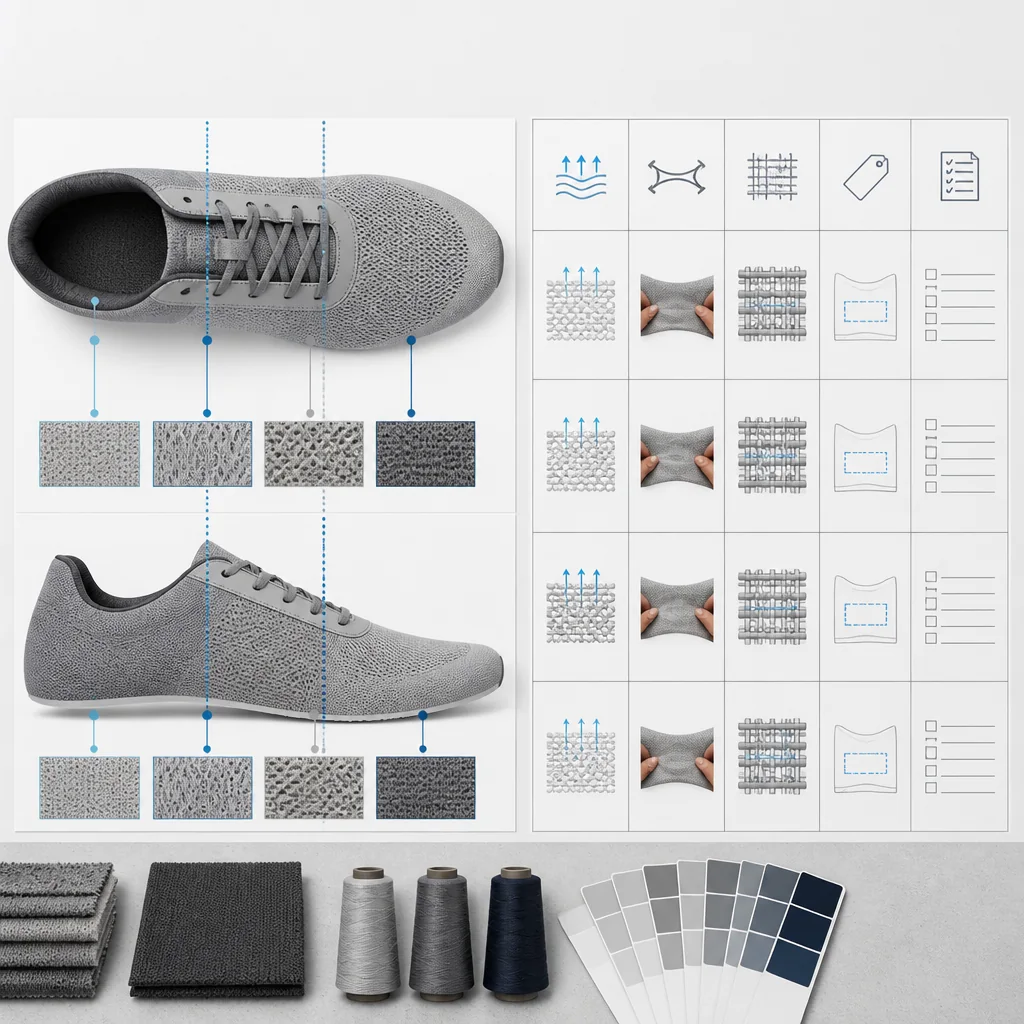
A specification sheet with one GSM field for the entire upper leaves a central decision unresolved: whether every marked area should follow one fabric direction or whether some zones are intended to differ. In a request about engineered mesh GSM for private label running shoes, the practical starting point is a map of the areas under discussion, not an endpoint copied from a material range. Each area can then carry its own function note, fixed design inputs and question about the applicable construction or fabric GSM.
The worksheet and submission steps below are editorial recommendations for buyers. They are not presented as a documented factory procedure. The cited material information establishes a qualified GSM range, named upper areas and general material attributes. It does not supply project-specific zone values, textile tolerances, test results or a guaranteed development path.
Three Records, Not One GSM Field
Organize each zone row around three different types of information. Keeping them separate prevents a source statement, a design preference and a request for assessment from appearing to be the same kind of specification.
- Documented context
- Enter only the relevant wording from the product or material information, including all qualifiers attached to a numerical range.
- Buyer decision
- Record the zone boundary, intended function, visual reference, branding input and any constraint already established in the current product definition.
- Open project question
- Ask what construction, density or GSM direction may apply and which development, manufacturability, sampling or quotation options may be relevant to the submitted concept.
This structure gives the manufacturer a bounded question without presenting an unresolved fabric decision as approved or complete.
The Range Belongs in the Evidence Column
The materials page describes engineered mesh as a knitted or warp-knit synthetic with zoned density for ventilation, light stretch and support. It says the material typically runs at 90-250 GSM depending on the zone, with denser knit at the eyestay and toe.
| Material wording | Valid worksheet use | Boundary |
|---|---|---|
| Typically 90-250 GSM | Use it as a qualified reference range for the material inquiry. | It is not stated as a universal minimum, maximum, target or tolerance. |
| Depending on the zone | Create separate rows for the identified areas of the upper. | The wording provides no exact GSM for an individual zone. |
| Denser knit at the eyestay and toe | Record a relative density reference for the two areas named in the source. | The source gives no density ratio or numerical value for either area. |
Keep the complete phrase typically 90-250 GSM depending on the zone together wherever it appears in the inquiry. If the current product definition already contains a numerical constraint, place that number in the buyer-decision column and identify its origin. Do not present 90 GSM or 250 GSM as a source-derived value for the toe, eyestay or any other part of the upper.
Running-Shoe Context Around the Mesh Question
The running-shoe range describes performance-inspired daily-training builds with breathable uppers and cushioned midsoles. It lists mesh, knit and PU uppers. EVA and rubber outsoles are also listed. These details establish the published product-family context, but they do not select the construction for a submitted design.
As part of the worksheet, the buyer should provide:
- Intended placement: Describe the proposed use and product position in the buyer's own language.
- Upper direction under review: State whether engineered mesh is being considered and whether another listed upper direction remains open.
- Current underfoot definition: Include any midsole or outsole decisions already fixed in the project instead of deriving a combination from the product-page list.
- Reference version: Identify the drawing, technical file, image or physical reference that represents the current concept.
The purpose of this context is to show where the mesh inquiry sits within the shoe. The running-shoe range remains source information; material selection and component decisions remain project-specific.
A Zone Matrix for the Current Upper
Use one marked visual reference for the entire worksheet. Retain toe and eyestay rows because those areas are named in the material description. Add another row only when the area appears in the current design, and give it the same identifier on both the reference and the matrix.
| Zone identifier | Boundary on the reference | Function priority | Branding and visual inputs | Question for assessment |
|---|---|---|---|---|
| Toe | Outline the relevant toe area rather than relying on the zone name alone. | State whether ventilation, light stretch or support is relevant and identify the buyer's priority. | Show artwork, film, overlays and adjacent components included in the current design. | How may the published denser-knit direction apply to this toe design? |
| Eyestay | Mark the eyestay and its relationship to the lace area and neighboring components. | Record the intended function without assigning a measured result. | Identify any branding or overlay that enters or crosses the marked area. | Which construction and GSM direction may apply to this zone? |
| Additional design zone | Name the area and mark where its boundary begins and ends. | Choose the relevant function and describe its importance to the concept. | Attach the applicable color, artwork and component references. | What must be assessed before a construction or fabric GSM is selected? |
This matrix turns a running shoe upper GSM specification into an area-by-area inquiry. It does not require the zones to differ, prescribe an upper layout or assign numerical values. It records whether and how the buyer wants each marked area considered.
From Function to a GSM Question
Build every row from design intent before asking about fabric GSM:
- Locate the area. Give the zone a short identifier and match it to a clearly marked boundary.
- Select the relevant function. Use ventilation, light stretch or support when those terms describe the intent being submitted.
- State the priority. Editorial labels such as primary, secondary and not requested can express emphasis without resembling a test grade.
- Add fixed inputs. Include established color references, nearby components, artwork placement and other design details that affect the question.
- Request an assessment. Ask which construction, density or GSM direction may apply and what information still needs confirmation.
The material description names ventilation, light stretch and support, but it provides no test method, measured value or guaranteed performance result. Keep the worksheet at the level of intended function unless the buyer has separate, documented requirements to submit.
Branding Is a Separate Compatibility Line
The engineered mesh description says the material takes screen print, heat-transfer film and welded TPU overlays cleanly. It also says multi-colour branding is easy. Those are general statements about the material. The excerpt does not evaluate a submitted artwork, color, placement or specific mesh construction, so compatibility remains an open project question.
For every proposed branding location, the worksheet should identify:
- The exact position on the marked upper reference.
- Whether the application stays within one zone or crosses a boundary.
- The screen print, heat-transfer film or welded TPU method under consideration.
- The available artwork, dimensions, color references and finish direction.
- Nearby seams, overlays and visible components already shown in the design.
- The question of whether the proposed combination may suit the construction being assessed.
Keeping branding on the zone map makes it part of the current design record without treating the application method or artwork as approved.
The Submission Control
Before submitting the private label running shoe material inquiry, review each line according to who owns the information.
| Topic | Documented information | Buyer input | Question requiring a project response |
|---|---|---|---|
| Running-shoe context | Performance-inspired daily-training builds, breathable uppers, cushioned midsoles and the listed material directions. | Intended placement, selected reference version and decisions already fixed in the concept. | Does the submitted definition fit the product direction under consideration? |
| Engineered mesh | Knitted or warp-knit synthetic with zoned density for ventilation, light stretch and support. | Marked areas and the function priority assigned to each one. | Which construction may apply to the identified zones? |
| Fabric GSM | Typically 90-250 GSM depending on the zone, with denser knit at the eyestay and toe. | Any numerical constraint already established by the buyer and labeled as such. | What GSM or relative density direction may apply to each zone? |
| Branding | Screen print, heat-transfer film and welded TPU overlays are named in the material description. | Proposed method, location, artwork and available visual references. | May the submitted combination suit the mesh construction being considered? |
| Project route | The cited excerpts do not set a project-specific construction, sampling or quotation path. | Known constraints and the information currently available. | Which development, manufacturability, sampling or quotation options may apply? |
The handoff package should contain the current product definition, the identified running-shoe context, a marked upper image, matching zone names, function priorities, branding locations, known constraints and unresolved questions. Check that every use of 90-250 GSM remains attached to the published qualifiers and that no endpoint has been assigned to a zone without a separate buyer source.
When those records are aligned, share the current project definition and ask which development, manufacturability, sampling or quotation options may apply. The resulting inquiry defines the decision to be assessed without presenting the qualified material range as a completed zoned engineered mesh upper specification.
Sources and verification
- Athletic Shoe Manufacturer | Custom Product Range First-party site source
- Shoe Soles, Uppers & Insole Materials | Footwear Specs First-party site source
Share the current product definition and ask which development, manufacturability, sampling or quotation options may apply to the project.
Send your project brief