Private Label Footwear Sourcing
Custom sports shoes for ecommerce private label: what to confirm
A running-shoe entry can support a focused private-label ecommerce inquiry. It cannot replace the product, commercial, and storefront decisions that must be confirmed for a proposed SKU.
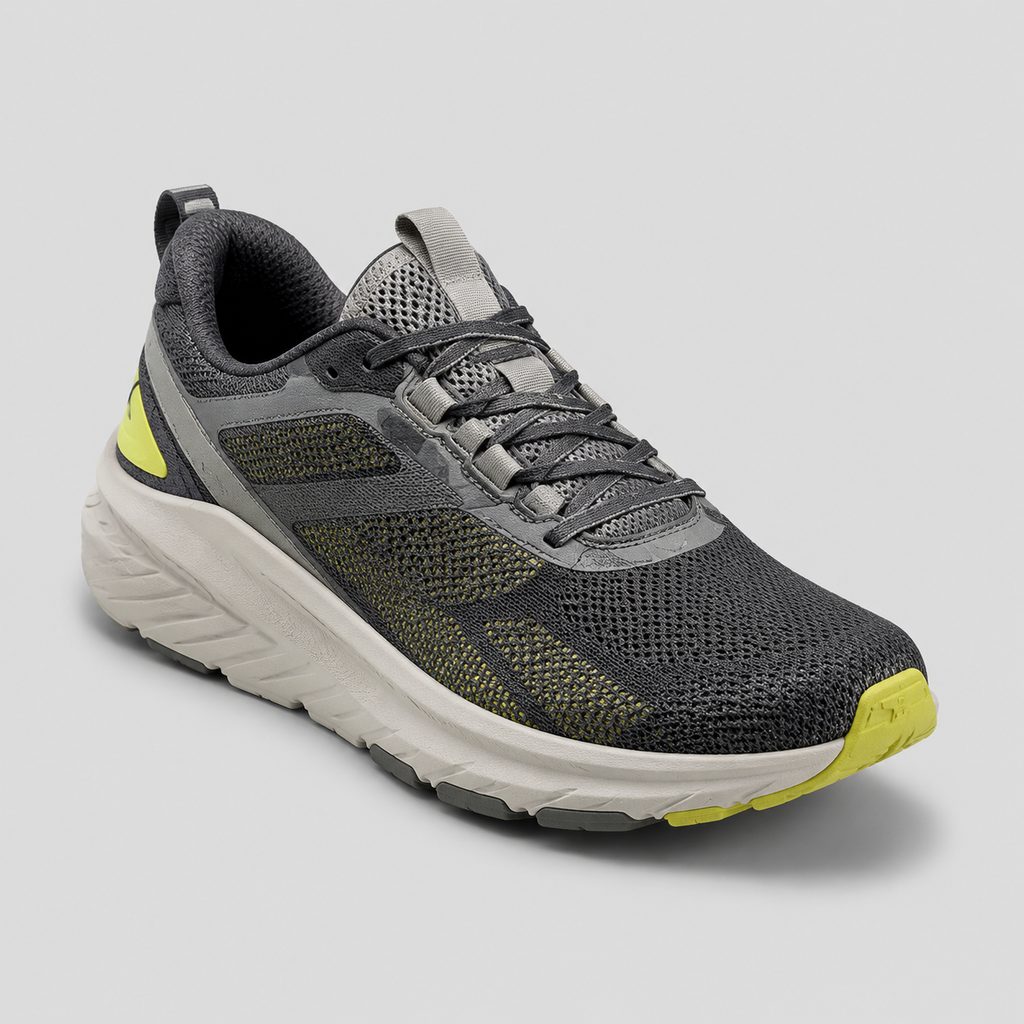
For custom sports shoes for ecommerce private label, a public product entry can answer one early question: is there enough product relevance to begin a focused inquiry? It cannot answer whether a proposed shoe is ready for a storefront, a quotation, or production. The useful distinction is between wording attached to a published range and the inputs needed to evaluate one proposed SKU.
The running-shoe entry describes performance-inspired daily-training builds with breathable uppers and cushioned midsoles. Alongside that description, it displays the terms “Retail, ecommerce, private label.” For an ecommerce buyer, the editorial recommendation is to treat that combination as a reason to raise a running-shoe concept for discussion, while keeping the proposed construction and commercial requirements open for confirmation.
Is the Running-Shoe Entry Enough to Proceed?
It is enough to frame a narrow first conversation when the proposed product is a running style. The entry supplies a product direction and publicly displayed wording that includes ecommerce and private label. It does not turn a broad request for sports shoes into a defined product.
The company profile identifies running, training, walking, and casual sneakers as its product family. That broader family description is useful for keeping the inquiry in scope. It should not be used to expand a running-shoe concept into an assumption about another footwear type.
Start with the buyer decision at hand: whether the proposed style merits an inquiry about a running shoe. Leave the later decision, whether the supplier can apply particular development, sampling, commercial, or quality-control options to that style, for the project discussion.
Range Wording and Storefront Claims
A product page is a poor substitute for SKU-level copy approval. The supplied running-shoe excerpt supports procurement notes such as “performance-inspired daily-training build,” “breathable uppers,” and “cushioned midsoles” when those phrases accurately describe the concept under review. It does not supply evidence for consumer-facing claims about performance results, testing, certification, durability, fit, comfort, sustainability, or delivery.
The excerpt also contains no description of fulfillment, marketplace onboarding, listing creation, direct-to-consumer shipping, or returns handling. Keep those ecommerce requirements in the buyer brief instead of reading them into the three terms displayed on the product entry.
| Published wording | How to use it in the inquiry | Buyer input or confirmation still needed |
|---|---|---|
| Performance-inspired daily-training builds | Use it to identify the broad running-shoe direction. | The intended-use wording and support for any storefront claim. |
| Breathable uppers | Record it as language used for the published range. | The selected upper construction and any consumer-facing benefit claim. |
| Cushioned midsoles | Keep it as range-level wording. | The final midsole specification and product-copy support. |
| “Retail, ecommerce, private label” | Note the exact terms displayed with the entry. | Packaging, labeling, marketplace, fulfillment, shipping, and returns requirements. |
This is an editorial screening worksheet, not a description of factory workflow. It prevents a short range description from being copied into a product listing before the actual shoe and its required evidence have been defined.
The Proposed SKU Record
Build the inquiry around a short record for one running style. Name the reference product or visual direction, intended customer, brand marks, and any buyer-set packaging or ecommerce requirements. Those are buyer inputs. They are not specifications supplied by the published range.
- Upper direction
- The running-shoe entry includes mesh in its upper wording. It also includes knit. It separately includes PU. Record a preferred direction if the buyer has one, or mark the upper as open for discussion.
- Outsole direction
- EVA appears in the running-shoe entry’s outsole wording. Rubber appears in the same wording. Record the buyer’s intended direction without treating either material as selected for the proposed shoe.
- Branding and presentation
- List logo placement, colors, labeling, packaging, and the intended ecommerce requirements as buyer-defined fields. Ask which of those fields are needed before the project can be evaluated.
- Open fields
- Keep sizing, component detail, construction choices, sampling path, quotation basis, and timing marked as confirmation-required until the project discussion addresses them.
That separation matters for private label running shoes for ecommerce. Two conversations may appear to concern the same concept while actually relying on different assumptions about material direction, branding, packaging, or sales-channel requirements.
Engineered Mesh at Its Stated Scope
The general running-shoe entry mentions mesh, but the materials page has a separate engineered-mesh description. Under that heading, it names air mesh. It also names sandwich mesh. Do not treat those material details as if they apply automatically to every mesh upper or every running style.
The materials description calls engineered mesh a knitted or warp-knit synthetic with zoned density for ventilation, light stretch, and support. It gives a typical range of 90 to 250 GSM depending on the zone. It also says denser knit can be used at the eyestay and toe.
Screen print is listed as a compatible decoration method for engineered mesh. Heat-transfer film is listed separately. Welded TPU overlays are also listed. The same material entry names running styles under its best-fit uses. It separately names training styles and summer styles.
For a proposed running concept, ask whether engineered mesh is relevant to the design, whether a zoned structure is suitable for the concept, and whether the proposed branding treatment can be considered for that material. Those are project questions. They do not confirm an upper selection or a branding outcome.
What the Case Example Can Actually Show
The case-study excerpt presents “Running Shoe Launch for a New Brand” as an example first running-shoe order structured from a reference pair to inspected first production. This gives a buyer with a reference product a concrete process point to raise during an inquiry.
Its scope ends there. The excerpt does not state inspection criteria or a universal workflow, and it does not describe an ecommerce-readiness or marketplace process. Ask how the current reference material may relate to the proposed project instead of assuming the example determines the process for another order.
Questions That Make a Quote Comparable
Use the product record as the basis for an ecommerce athletic shoe supplier inquiry. The following are questions for the buyer to ask, not statements about confirmed services or project outcomes.
- Does the submitted concept appear relevant to the published running-shoe direction?
- Which development and manufacturability options may apply to the proposed construction and branding?
- Which information is needed before upper and outsole directions can be discussed for the reference design?
- What buyer inputs are needed before sampling options can be considered?
- What information is needed to discuss labeling, packaging, and a quotation basis?
- What ecommerce requirements should the buyer provide for the intended sales route?
- Which export-ready quality-control options, if any, may be relevant once the project definition is available?
- What information is needed before project timing can be assessed?
The value of these custom running shoes quotation questions is precision. They keep an item shown on a range page from being mistaken for a confirmed construction, and they keep a buyer requirement from being mistaken for a documented supplier promise.
The Next Decision
Send a project-specific inquiry with the current running-style definition, reference images or draft material where available, and the fields that remain open. Separate the buyer’s branding, packaging, and ecommerce requirements from the wording used on the published running-shoe entry.
Then ask which development, manufacturability, sampling, export-ready quality-control, and quotation options may apply to that definition. The public entry has served its purpose when it helps the buyer decide to begin that focused verification conversation.
Sources and verification
- Athletic Shoe Manufacturer | Custom Product Range First-party site source
- About Custom Shoe Factory | OEM/ODM Athletic Shoes First-party site source
- Footwear Manufacturing Case Studies | Example Project Formats First-party site source
- Shoe Soles, Uppers & Insole Materials | Footwear Specs First-party site source
Share the current product definition and ask which development, manufacturability, sampling or quotation options may apply to the project.
Send your project brief