Sourcing Guides
Custom Sneakers Logo Placement Mesh Upper Zones
Artwork without a zone map stalls mesh programs. Build custom sneakers logo placement mesh upper briefs from category and engineered-mesh density roles, then name methods and keep sizing on its own track.
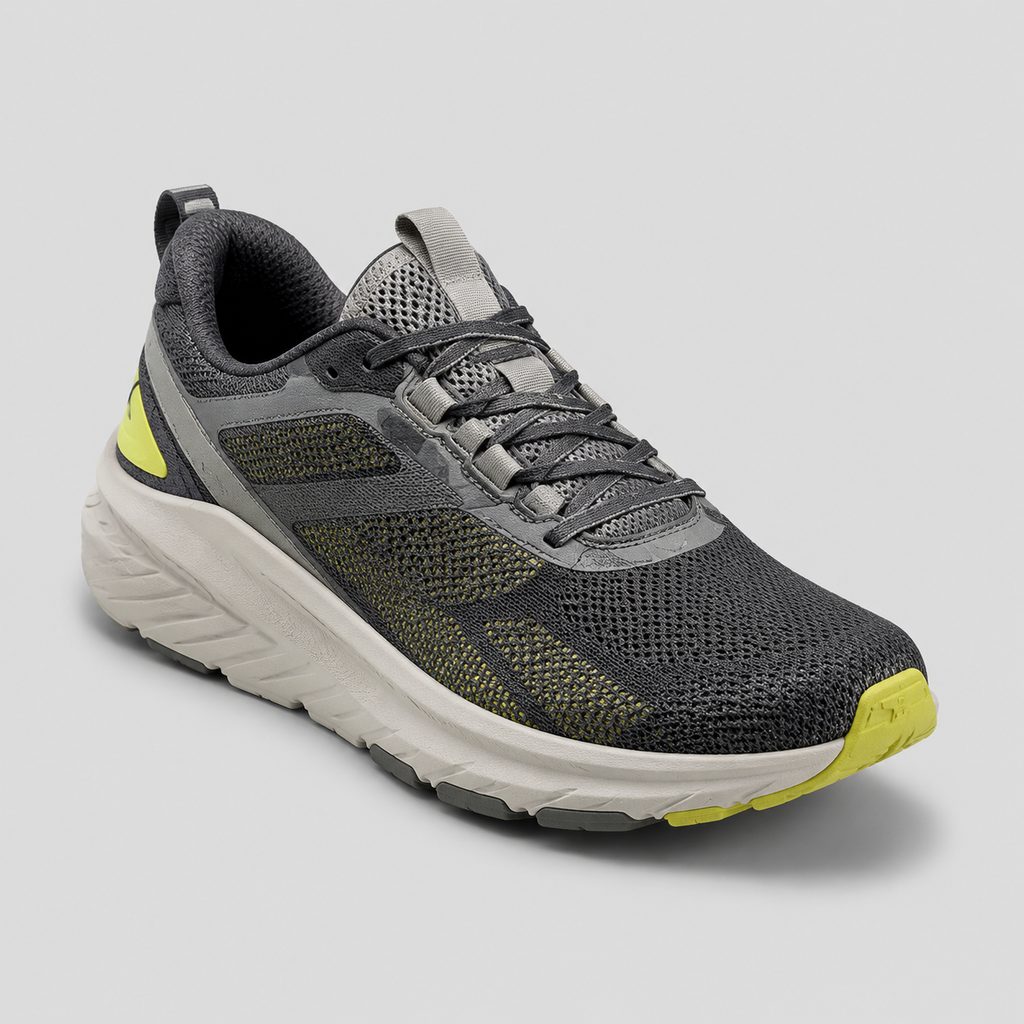
Brand and import teams often send logo artwork with a mesh-upper request, then ask for sampling or quotation direction before the brief states which panels must stay open for airflow and which panels are denser support construction. That gap is the usual stall for custom sneakers logo placement mesh upper work: placement feasibility cannot be judged against published engineered-mesh behavior until zone roles sit in the intake. The path below starts from that incomplete package, gates the shoe to the published sport family, turns mesh density into placement inputs, and only then brings in decoration vocabulary—while product language and dimensional control stay on separate lines.
Why mesh logo briefs stall when artwork arrives first
Engineered mesh is not one uniform sheet. The materials record describes air mesh and sandwich mesh as knitted or warp-knit synthetic with zoned density for ventilation, light stretch, and support. It typically runs at 90–250 GSM depending on the zone, with denser knit at the eyestay and toe. The same record states that engineered mesh takes screen print, heat-transfer film, and welded TPU overlays cleanly, so multi-colour branding is easy. None of those facts tell a factory where your mark may sit if the brief only holds a logo file and the words “mesh upper.”
Without zone roles written down, three decisions arrive as one attachment: shoe category, which mesh panels serve airflow versus structural support, and which decoration method name is even worth discussing. Feasibility against zone density, manufacturability of mark size, and what to sample next cannot be answered from artwork alone. Write zone intent into the brief before debating colour separations or film types.
Confirm the shoe stays inside the published sport family
Category comes before any logo map. The published one-product-family boundary is running, training, walking, and casual sneakers—not a catch-all factory remit. If the concept sits outside that family, logo-on-mesh discussion is premature because the published upper and branding notes are framed for that sport-footwear set.
- Name the intended category: running, training, walking, or casual sneakers.
- Avoid briefs that only say “sneaker” without choosing one of those four roles.
- Hold logo artwork secondary until category and upper construction intent appear in the same intake.
- Use the category line to filter later product language (breathable uppers, cushioned midsoles, outsole type), not as decoration theatre.
The about page frames the business as sport-footwear specialists working that family consistently. Treat that as a scope ceiling for this guide, not as a claim that every mesh build is automatically in range.
Read engineered mesh as zone density, not one upper label
The materials specification is the placement constraint sheet. Engineered mesh is the workhorse athletic upper for ventilation, light stretch, and support, and is positioned as best for running, training, and summer styles that need maximum airflow at a sensible cost. GSM is not a single number for the whole upper: the published range is 90–250 GSM by zone, with denser knit at the eyestay and toe. Upper construction language sits on the materials page; keep hard claims inside that excerpt.
| Published mesh fact | What the source states | Buyer guidance (not factory placement rules) |
|---|---|---|
| Construction and role | Air mesh and sandwich mesh; knitted or warp-knit synthetic with zoned density for ventilation, light stretch, and support | State which panels must remain primarily ventilated and which you treat as denser support panels |
| GSM by zone | Typically 90–250 GSM depending on the zone | Note approximate mark size intent per panel so density role and decoration load can be discussed together |
| Denser knit locations | Denser knit at the eyestay and toe | Say whether eyestay or toe should carry a mark, max footprint, and lace-path clearance if known; denser knit is a construction fact, not a published decoration preference |
| Multi-colour branding vocabulary | Screen print, heat-transfer film, and welded TPU overlays take cleanly on engineered mesh | List intended method names only after locations and zone roles are written |
The source does not assign a preferred method per zone, does not publish pass/fail criteria for branded areas, and does not sequence sampling for logo-on-mesh. Those gaps remain open manufacturer questions.
Placement zones first; method names second
Location decisions and application vocabulary are different fields. For an engineered mesh multi-colour branding brief, set zones before method labels. Buyer-brief panel vocabulary (not a published factory zone taxonomy) can include lateral quarter, medial quarter, tongue, heel counter cover, eyestay, and toe, each with a role note such as must stay open, may carry a mark, or denser support panel—where “denser” restates construction, not a preference for multi-colour work.
Writing “heat transfer logo on mesh” without saying whether the mark sits on a high-ventilation panel or a denser eyestay panel does not give manufacturability enough to react. Naming three zones without method intent still allows a technical conversation, but leaves the preferred custom athletic sneakers logo method unset. Zone map and logo locations are inputs the buyer can complete; method names are intended vocabulary from the documented trio, not a proven outcome for every panel.
If heat transfer is part of the plan, keep it inside a mesh upper heat transfer logo brief that still lists zone density intent. Do not read “takes cleanly” as wash durability, adhesion scores, or guaranteed multi-colour performance beyond the materials line.
When running- or training-led product language meets logo load
Performance-flavoured catalogue copy makes product definition and decoration easy to mix. Running-shoe product language describes performance-inspired daily-training builds with breathable uppers and cushioned midsoles. Uppers are listed as mesh, knit, or PU. Outsoles are EVA and rubber. Channel paths named there include retail, ecommerce, and private label. That language frames a product system. Logo load is only a decoration layer on the upper subsystem.
Keep breathable-upper intent from being cancelled by oversized marks on ventilation zones. For a training- or running-led program, write cushioning and outsole notes as product definition fields and logo locations as a separate decoration map. Private-label intent, when present, still does not excuse an artwork-first package: category, upper type, zone map, and method names remain distinct lines. Browse the product range for how running builds are described, then return to the mesh materials facts before locking placement.
Dimensional control is not a logo field
Size control sits on another line of work. For importers and wholesale programs, size grading is locked to the golden sample and verified by measured length and width at final inspection, container after container. That statement is about dimensional continuity under bulk supply. It is not a logo approval process, not a branding checklist, and not permission to treat artwork sign-off as fit lock.
Teams that fold fit QC into logo-zone mapping create a second stall: graphic registration debates while length/width ownership and golden-sample grade stay unstated. Keep measured length/width and golden-sample size grading on the dimensional line. Keep zone maps and decoration method names on the branding line. Importer-facing sizing language is summarised on the importers and wholesalers page; use it only to separate those lines, not to invent a full grading tutorial.
Intake package versus questions for the manufacturer
Complete the product definition far enough that a manufacturer can react without guessing ventilation priority. The buyer can fill these lines:
- Category inside the published family: running, training, walking, or casual sneakers.
- Upper intent: engineered mesh (air mesh or sandwich mesh language as applicable) with a simple zone map for ventilation versus denser support panels.
- Logo locations by panel, with max footprint notes where known, using buyer panel names rather than inventing a factory zone taxonomy.
- Intended application names from the documented set: screen print, heat-transfer film, and/or welded TPU, only after locations are set.
- Product language that is not decoration: breathable upper priority, midsole cushioning intent, outsole family if already decided.
For one hypothetical training-led mesh sneaker brief only: mark the lateral quarter as “ventilation primary, small monochrome acceptable,” denser eyestay as “two-colour heat-transfer candidate,” and toe as “no graphic.” That package is far easier to evaluate than a full-colour file dropped on “mesh upper” with no zone notes. It is not a customer case and not an approved outcome template.
When category and zone map are ready, share the current product definition and ask which development, manufacturability, sampling, or quotation options may apply. Feasibility of mark size and method on the named zones, process path, sampling sequence, MOQ, packing, and quotation detail stay open manufacturer questions, not packaged services for every logo configuration. Use the request a quote path with those intake lines completed.
Evidence boundary for logo-on-mesh briefs
Hard claims map only to four first-party excerpts. The about page supports one product family: running, training, walking, and casual sneakers. The products page supports running-shoe language for breathable uppers, cushioned midsoles, mesh/knit/PU uppers, EVA and rubber outsoles, and retail, ecommerce, and private label paths. The materials page supports engineered-mesh construction, 90–250 GSM by zone, denser eyestay and toe knit, and the screen print / heat-transfer film / welded TPU multi-colour branding line. The importers page supports golden-sample size grading with measured length/width at final inspection. No pass/fail brand-area criteria, no preferred method per mesh zone, and no sampling sequence for logo-on-mesh appear in those excerpts. Anything beyond that boundary is buyer guidance or an open manufacturer question.
Sources and verification
- About Custom Shoe Factory | OEM/ODM Athletic Shoes First-party site source
- Athletic Shoe Manufacturer | Custom Product Range First-party site source
- Shoe Soles, Uppers & Insole Materials | Footwear Specs First-party site source
- Wholesale Shoes & Bulk Footwear Supply | Importers First-party site source
Share the current product definition and ask which development, manufacturability, sampling or quotation options may apply to the project.
Send your project brief