Running Footwear Sourcing
Writing a Custom Running Sneakers Upper Mesh Brief
Own the mesh construction, zone density, GSM, decoration method, and sole class fields before you ask whether a running program is ready to score.
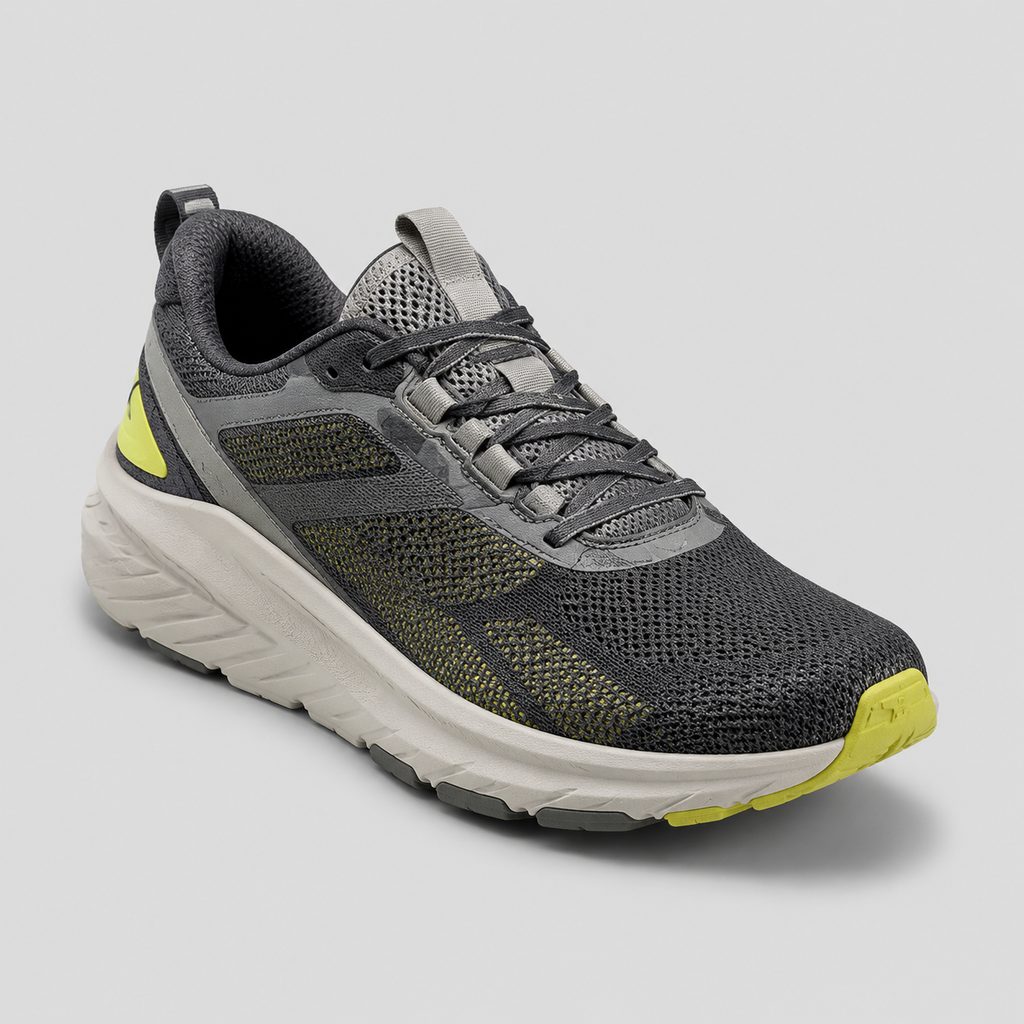
When a tech pack only says the upper should breathe and the midsole should cushion, construction decisions still have no owner. Product developers and importers then pass adjectives instead of fields. A custom running sneakers upper mesh brief is where those decisions land: engineered-mesh construction type, zone density, GSM band, decoration method, and sole classes already named on the product range. Until those buyer-owned fields exist, scoring readiness for samples or quotes stays blocked by guesswork rather than by materials fit.
This article is a materials-scope brief for sourcing and product-development teams. Materials and product-range wording is the outer bound for claims here. The piece does not assert process guarantees, commercial terms, or lab outcomes. Remaining unknowns should be written as questions, not as factory commitments.
What unfinished mesh fields actually block
Procurement stalls when the brief describes consumer benefits instead of construction. “Breathable” does not choose air mesh, sandwich mesh, or a knitted field. “Cushioned” does not name a midsole class or outsole pairing. Mood boards then travel without an owner for zone density, GSM, decoration method, or sole class.
Without those fields, no one can judge whether the style sits in a daily-training running build, whether the upper can take the planned graphics, or which open questions still need a reference pair. The failure mode is incomplete ownership of the inputs a materials conversation requires.
Keep the brief plain on purpose. Name constructions, zones, and sole classes the range already states. Leave stack height, drop, foam chemistry, plates, and energy return off this page unless you already hold lab data and a separate engineering attachment. As a buyer-side rule, treat any metric absent from the first-party materials or product pages as out of scope for this document.
Does the style sit in the sport-footwear family?
Custom Shoe Factory presents itself as a sport-footwear specialist with one product family done consistently: running, training, walking, and casual sneakers, not a catch-all factory. That scope is a fit filter. Mesh work aimed at the wrong category burns sample energy and pulls the wrong product language.
- Confirm the program is athletic footwear in that family, not dress, safety, or fashion-only constructions outside the stated range.
- Place the style as a running shoe, or clearly adjacent training or walking use, so the next fields come from the running product page rather than a generic sneakers wish list.
- Record whether you are aiming at a performance-inspired daily-training build versus a lifestyle silhouette that only borrows running cues; the product range describes running shoes in daily-training terms.
If the brief cannot clear this checklist, redefine the category before filling mesh columns.
Construction, zone density, and GSM as buyer fields
The materials page describes engineered mesh as air mesh, sandwich mesh, and knitted or warp-knit synthetic with zoned density for ventilation, light stretch, and support. It notes a typical 90–250 GSM band depending on zone, with denser knit at the eyestay and toe. It positions the material as a workhorse athletic upper for running, training, and summer styles that need airflow at a sensible cost. Turn that wording into buyer-owned fields. Do not invent performance claims beyond it.
| Brief field | What you decide | Scope limit |
|---|---|---|
| Construction type | Air mesh, sandwich mesh, or knitted/warp-knit field (or a stated mix by panel) | Do not invent unlisted knit systems or unstated waterproof membranes |
| Zone density map | Open zones for ventilation versus denser support at eyestay and toe | Denser knit at eyestay and toe is stated; do not invent lab scores for “support” |
| GSM band by zone | Target within 90–250 GSM per zone intent | Treat the band as a materials range, not a guaranteed outcome per colourway |
| Panel layout note | Where mesh meets PU or other upper materials if you use a hybrid | Product range also lists mesh / knit / PU uppers for running shoes; keep hybrids explicit |
An engineered mesh running shoe specification is useful only when each zone has an intent (vent, hold, protect) and a construction note. One global “mesh upper” line on a tech pack is still a nickname. Write the map so a developer can question manufacturability of the named constructions without guessing priorities.
If construction type is still open, list the two options you will accept and the decision date. Do not hand the plant an open “suggest mesh” request and treat the reply as brand standard without recording the choice.
Sole pairing with cushioned midsole and EVA and rubber
Running shoes on the product range are described as performance-inspired daily-training builds with breathable uppers and cushioned midsoles. The same product language lists mesh / knit / PU uppers and EVA and rubber outsoles. Pair the upper map to “cushioned midsole” and “EVA & rubber outsoles” unless you hold separate engineering data for something else.
Do not invent stack heights, heel-to-toe drop, plate systems, or foam chemistry in the materials brief. When those fields are required, put them in an engineering attachment with test references you actually own. For a first OEM running sneakers materials brief, midsole and outsole classes already named on the range are enough to start the conversation.
A breathable cushioned running shoe tech pack still needs the upper zones filled. Sole class without upper zones is half a definition. Upper zones without sole class leave cost and fit questions equally vague.
Decoration methods before multi-colour assumptions
Engineered mesh, on the materials page, is described as taking screen print, heat-transfer film, and welded TPU overlays cleanly, so multi-colour branding is presented as easy in that materials context. Treat that as a materials-compatibility note. It is not a logo-approval workflow, and it is not proof that every artwork will clear production without iteration.
- Name the intended method (or methods) per logo and graphic block: screen print, heat-transfer film, welded TPU overlay, or a combination with placement callouts.
- Mark high-flex or high-abrasion zones where a method may need a backup plan; do not invent abrasion ratings if you do not have them.
- Separate “method on mesh” from “artwork locked.” Colour count, pantones, and logo files belong on a branding pack; the upper mesh brief only records what the field can accept.
Name the method early so decoration-fit questions attach to real processes rather than to an assumption that multi-colour branding has no materials constraints.
Reference pairs as structure, not proof
Case-study framing on the site describes a running-shoe launch for a new brand as how a first running-shoe order is structured, from reference pair to inspected first production. Use that only as process structure: reference object, then inspected first production. Do not treat it as a customer success story, volume claim, or outcome metric.
On your brief, record whether a physical or digital reference pair exists, what is locked on that pair (shape, graphic placement, sole feel as observed), and what remains open for mesh GSM and decoration method. The reference pair is a control object for discussion. It is not a substitute for the zone map.
Hypothetical illustration: a brand holds one retail runner as a silhouette reference and still leaves construction type blank. The plant can discuss shape, but cannot score mesh cost, decoration fit, or zone density. Label that gap on the brief before you ask about sampling paths.
When channel labels replace materials decisions
The running-shoes product view lists retail, ecommerce, and private label as channel contexts. Those labels describe how product is viewed or sold. They are not mesh constructions, midsole classes, or QC programs by themselves.
| Label type | What it may record | What it must not replace |
|---|---|---|
| Channel context | Retail, ecommerce, or private label as go-to-market context | Upper construction, GSM zones, decoration method |
| Materials fields | Mesh type, zone density, midsole/outsole class as named on the range | Assumptions that channel equals tooling or audit depth |
Write channel on a commercial line of the brief if you need it for packaging or assortment talk later. Keep it off the materials decision columns so a go-to-market tag is not confused with an engineered mesh specification.
Open items left as questions
After the zone map, decoration methods, and sole classes are filled, list what is still unknown as questions, not as factory commitments. You may ask which development, manufacturability, sampling, or quotation options may apply to the project. That invitation is a buyer action. It is not documentation that any specific service, MOQ, or lead time is promised here.
- Which construction type among air mesh, sandwich mesh, and knitted/warp-knit is manufacturable for your panel map at the GSM bands you listed?
- Which decoration methods among screen print, heat-transfer film, and welded TPU overlays fit the planned colour count on those zones?
- How should a reference pair (if you have one) feed into inspected first production structure for a first running-shoe order, without treating case-study framing as a guaranteed timeline?
- Which of those options may apply once upper and sole fields are complete enough to score?
Share the current product definition with the zone table filled, sole class limited to product-range wording, and open items written as questions. The request a quote path is the place to attach that definition when you are ready to ask which options may apply.
While you draft, the about page states the sport-footwear family scope, the products range holds running-shoe product language, the materials page holds engineered-mesh detail, and the case studies page frames example project structure for a running-shoe launch. Use them as outer bounds for claims, not as templates to paste into a tech pack.
A finished custom running sneakers upper mesh brief is short, zone-specific, and free of retail adjectives. It gives a plant fields the buyer already owns so the next conversation can stay on construction fit, decoration fit, and scoring readiness.
Sources and verification
- About Custom Shoe Factory | OEM/ODM Athletic Shoes First-party site source
- Athletic Shoe Manufacturer | Custom Product Range First-party site source
- Footwear Manufacturing Case Studies | Example Project Formats First-party site source
- Shoe Soles, Uppers & Insole Materials | Footwear Specs First-party site source
Share the current product definition and ask which development, manufacturability, sampling or quotation options may apply to the project.
Send your project brief