Footwear Product Development
Custom Running Shoe Sample Requirements: Decision Ledger
Prepare a first running-shoe sample brief by separating published product context, buyer requests, and questions for manufacturer assessment.
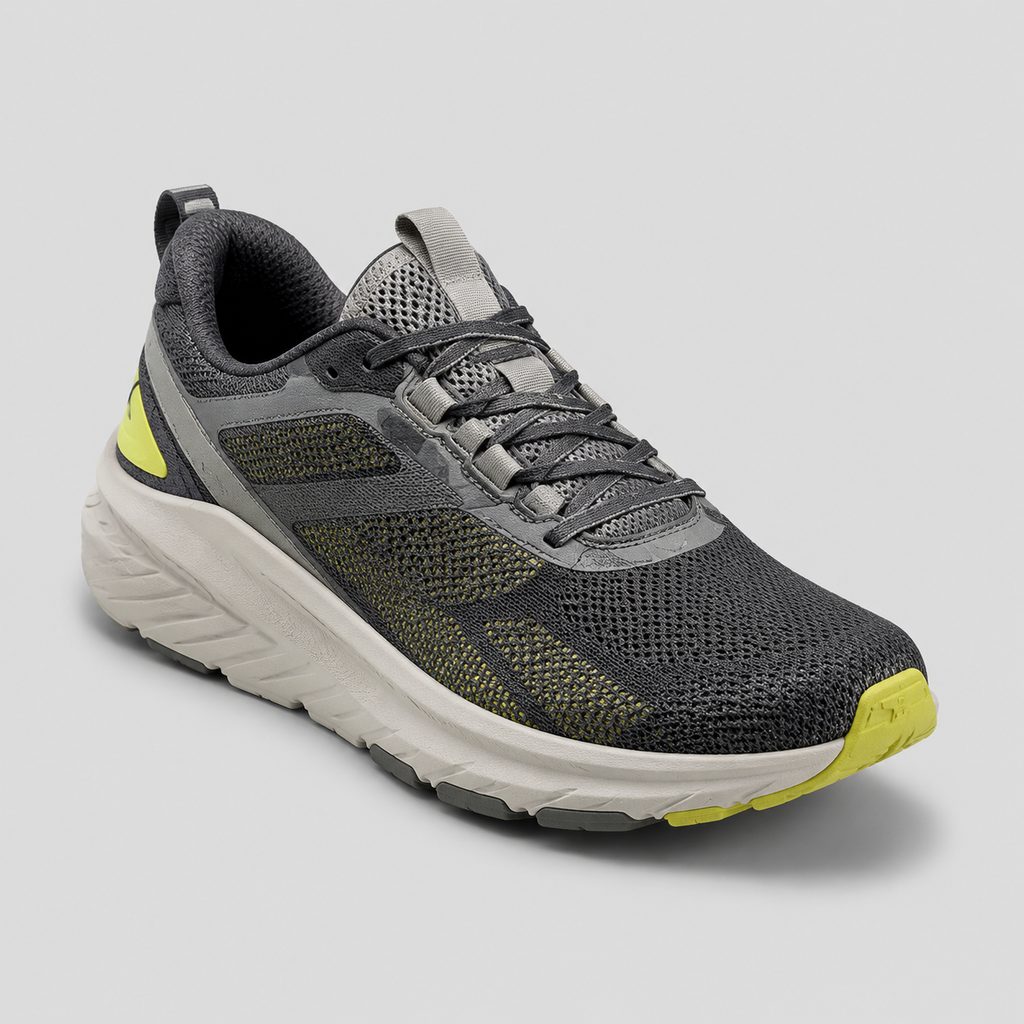
Custom running shoe sample requirements are clearer when a buyer separates visual references, product intent, and decisions that still need assessment. A reference pair can guide a discussion, but it is not evidence of final construction, fit, material selection, durability, or performance for a proposed sample.
This is a buyer-side editorial worksheet, not a documented factory workflow or service promise. Its purpose is to help a product-development team show what is known from published material, what it wants to request, and what it needs to ask about before treating a direction as settled.
Start With a Three-Status Ledger
Build the brief around the status of each entry before adding more detail. The format keeps published descriptions separate from buyer preferences and project-specific questions.
| Status | Use in the brief | Example entry |
|---|---|---|
| Known | Record a published fact in its stated scope. | The running-shoe product page describes performance-inspired daily-training builds with breathable uppers and cushioned midsoles. |
| Requested | State a buyer-owned product direction or constraint. | The buyer requests a daily-training direction with a more open-looking forefoot. |
| Confirm with manufacturer | Write questions that the current information cannot answer. | Ask which upper construction and component directions may apply to the defined product. |
The labels matter because a known item is not an approval, and a requested item is not a confirmed construction. The third column is useful: it makes uncertainty visible instead of allowing an assumption to pass as a specification.
Put the Reference Pair in the Right Column
The running-shoe launch example on the case-studies page is described as a first running-shoe order structured from a reference pair to inspected first production. That establishes the reference pair as part of the published example's starting point. It does not make a reference pair a complete sample brief or an approval standard.
As an editorial recommendation, record visible observations separately from requested changes. A hypothetical note might say that the forefoot appears open in a photograph. The buyer's corresponding request could be a visibly open forefoot, while the material, density, and construction remain questions for assessment.
Use annotated images to identify the parts of the reference that matter: silhouette, panel boundaries, color blocking, lace-path appearance, or outsole coverage. Then describe every intended departure in plain language. This gives the inquiry a record of buyer intent without assigning technical properties that the image cannot establish.
Set Product Intent Before Naming a Material
The published running-shoe description supplies a limited category frame: performance-inspired daily-training builds with breathable uppers and cushioned midsoles. That wording describes the product page's range. For a proposed shoe, the buyer should state its own intended direction rather than present those descriptors as measured outcomes.
| Decision | Buyer-side prompt | Brief boundary |
|---|---|---|
| Product position | State whether the request is for a performance-inspired daily-training direction. | This is the buyer's target, not a verified attribute of the sample. |
| Upper intent | Identify where a breathable direction or more covered appearance matters. | Describe the desired role by zone. |
| Midsole intent | Record the desired cushioning direction and visible profile constraints. | Keep the final construction open for discussion. |
| Use boundary | Name the intended wearer, planned activity, channel, and setting where relevant. | Do not rely on the category label alone to supply those details. |
A request for "mesh" is incomplete when it lacks this frame. It leaves unanswered where ventilation matters, how much visible structure the upper should have, and whether the buyer is describing appearance, material direction, or a performance expectation. The running shoe sample brief should establish those distinctions before material labels carry too much meaning.
Turn an Upper Direction Into Zone Inputs
The materials page describes engineered mesh as knitted or warp-knit synthetic material with zoned density for ventilation, light stretch, and support. It names air mesh and sandwich mesh. The same page notes a typical 90-250 GSM range depending on the zone, with denser knit at the eyestay and toe.
These are published material-context details, not a running shoe material specification for every project. The stated GSM range should not be copied into a request as a universal target. Instead, use zone descriptions to make the buyer's intention assessable.
- Forefoot
- Describe the desired level of open appearance and identify areas that should look more covered.
- Toe
- Record the intended visual density, reinforcement direction, and branding constraints without assuming a final treatment.
- Eyestay
- State the intended lace-path appearance and visible structure. The published material context mentions denser knit at the eyestay; ask whether that direction suits the proposed build.
- Midfoot and heel
- Specify the intended balance between flexibility, visual support, and color blocking. Any functional support expectation remains a buyer requirement to be assessed.
The materials page also states that engineered mesh takes screen print, heat-transfer film, and welded TPU overlays cleanly. Record the desired graphic effect, placement, and color treatment in the brief, then ask which applications may apply to the current upper direction. The material description alone is not a project-specific commitment to an application method.
Keep Component Directions Separate
The product page lists mesh, knit, and PU uppers. It separately lists EVA and rubber outsoles. It also describes cushioned midsoles. These are published product descriptors and option families; they are not a compatibility chart for a proposed running shoe.
| Component record | Published context | Buyer input and open question |
|---|---|---|
| Upper | Mesh, knit, or PU uppers | Record one provisional upper direction, zone priorities, and visual treatments. Ask which material and construction direction may suit them. |
| Midsole | Cushioned midsoles | Record cushioning preference and visible profile constraints. Ask what construction details need discussion. |
| Outsole | EVA and rubber outsoles | Record one provisional outsole direction and visual coverage preference. Ask which direction may apply to the product definition. |
This separation is editorial organization for the buyer. It prevents a mixed label such as "mesh EVA shoe" from obscuring whether a term refers to the upper, the outsole, or an assumption about the full underfoot construction. It also makes each unresolved decision easier to identify during a quotation discussion.
Prepare an Assessment-Focused Inquiry
For custom athletic footwear sampling, provide enough information to bound the request while leaving unconfirmed matters as questions. The inquiry need not predict a sampling sequence, timing, quantity, price, or final outcome.
Include with the inquiry
- Reference-pair images from relevant angles, annotated with intended deviations.
- A concise product frame covering the intended category, wearer, use setting, channel, and non-negotiable priorities.
- An upper-zone sketch or marked image that distinguishes ventilation, stretch, visual-support, branding, and density intentions.
- Separate provisional records for the upper, midsole, and outsole.
- A list that distinguishes preferences, firm buyer requirements, and open questions.
Ask about the unresolved decisions
- Which development and manufacturability options may apply to the current product definition?
- Which material and construction directions may suit the requested upper zones?
- Which sampling options may apply after the definition is reviewed?
- Which quotation options may apply to the stated product direction?
- Which missing inputs need clarification before the buyer compares directions or quotation options?
That question set keeps a reference pair, a material name, and a product-page descriptor in their proper roles. They provide context for the discussion; they do not settle project-specific decisions by themselves.
Request Assessment Against the Current Definition
Before requesting a quotation, make the document readable in three fields: published context, buyer requirements, and questions for manufacturer assessment. The resulting ledger preserves the value of the reference pair without assigning it technical authority it does not have.
Share the current definition through the quote request page and ask which development, manufacturability, sampling, and quotation options may apply to the project.
Sources and verification
- About Custom Shoe Factory | OEM/ODM Athletic Shoes First-party site source
- Athletic Shoe Manufacturer | Custom Product Range First-party site source
- Footwear Manufacturing Case Studies | Example Project Formats First-party site source
- Shoe Soles, Uppers & Insole Materials | Footwear Specs First-party site source
Share the current product definition and ask which development, manufacturability, sampling or quotation options may apply to the project.
Send your project brief