Footwear Sourcing
Sneakers Supplier Quotes: Compare Like With Like
A construction-based worksheet for comparing sneaker proposals without assuming that similar category, material or cushioning labels describe the same product.
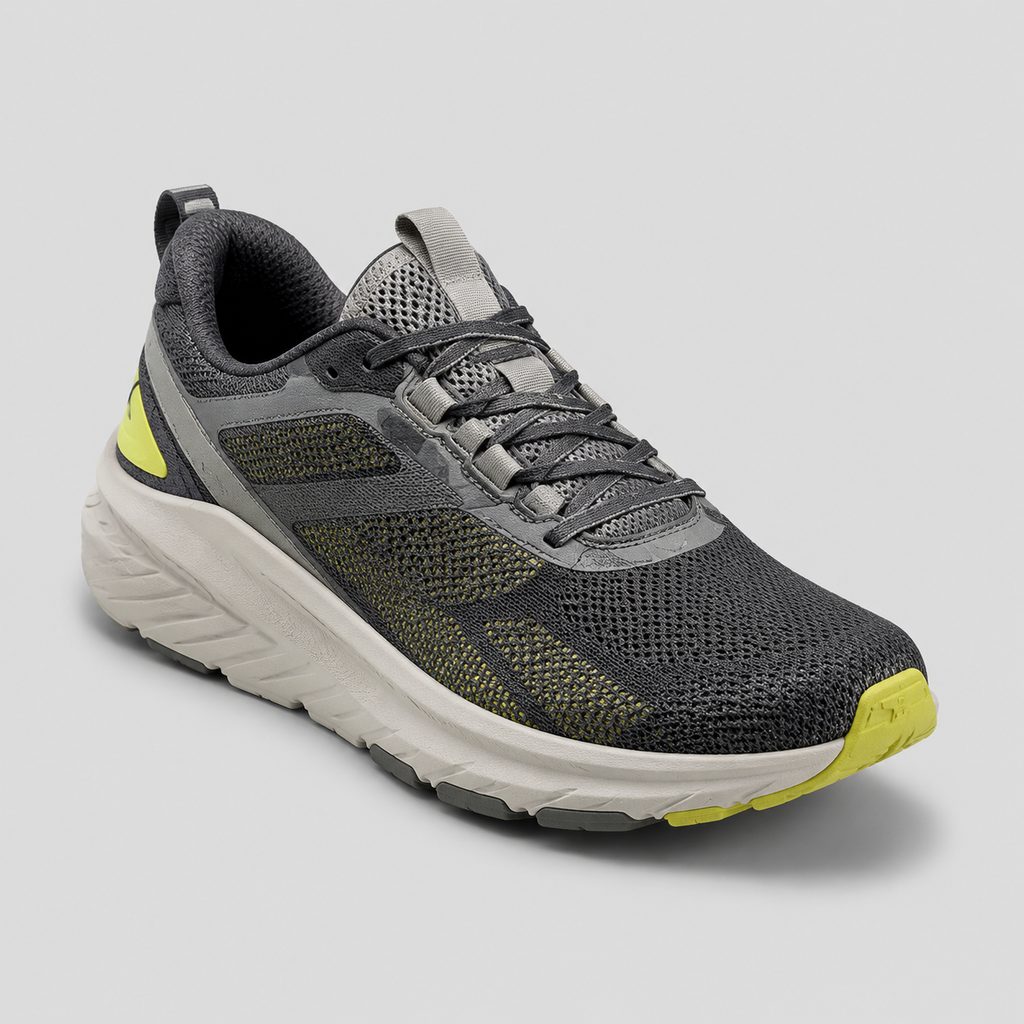
Two proposals can use familiar labels and still describe different shoes. Terms such as “running shoe,” “mesh upper” and “cushioned sole” identify broad directions, but they do not define the same upper construction, sole package, intended use or dimensional reference.
To compare sneaker supplier quotes, first establish a buyer-controlled product baseline. Then place each offered construction beside that baseline without translating substitutions into apparent matches. The price can be assessed after the differences and unanswered fields are visible.
The published company pages cited here support a limited set of facts: product-family labels, attributes of a documented engineered mesh, one running-shoe example and a statement about size grading. The worksheet structure, comparison method and supplier questions are editorial recommendations for buyers. They are not descriptions of services or project terms already confirmed by Custom Shoe Factory.
Begin with category and intended use
Custom Shoe Factory's company overview describes its product family as running, training, walking and casual sneakers. Those labels provide a useful first comparison field, but they do not make the categories equivalent or define the construction required for a particular project.
Record one category in the buyer baseline. In a separate field, describe the intended use closely enough for a supplier to identify what its proposed construction addresses. Where wearer, activity or use environment matters to the project, treat that information as a buyer requirement rather than an assumed feature of the category label.
- Set the baseline category. Use the category requested for the current product.
- State the intended use separately. Ask the supplier to identify the use addressed by its proposal.
- Expose category changes. Record a different offered category as a deviation, even when the alternative remains under consideration.
- Leave construction fields open. A category match does not settle the upper, midsole or outsole specification.
This first gate prevents a broad product name from standing in for a complete sneaker construction specification.
Break each proposal into comparable rows
An athletic footwear supplier proposal becomes easier to review when each component has its own row. The buyer baseline stays fixed in the first column; supplier wording is entered separately in the next. Status and commercial impact should be recorded only after the response has been compared with the baseline.
| Comparison field | Buyer baseline | Supplier response | Status | Deviation or unresolved question | Commercial impact |
|---|---|---|---|---|---|
| Category | Requested product family | Offered category | Match, deviation or unresolved | Record any category change | Buyer assessment |
| Intended use | Buyer-defined use | Use addressed by the offer | Match, deviation or unresolved | Identify changed or unanswered conditions | Buyer assessment |
| Upper construction | Required material and structure | Proposed upper | Match, substitution or unresolved | Record material, layer or construction changes | Buyer assessment |
| Material zones | Required zones and objectives | Proposal by zone | Match, deviation or unresolved | Clarify zone purpose and proposed GSM | Buyer assessment |
| Brand application | Required method and location | Proposed application | Match, substitution or unresolved | Record method or placement changes | Buyer assessment |
| Midsole | Required construction | Proposed component | Match, deviation or unresolved | List open material or geometry points | Buyer assessment |
| Outsole | Required construction | Proposed component | Match, deviation or unresolved | List open material or traction points | Buyer assessment |
| Route to market | Intended channel | Channel discussed | Match, deviation or unresolved | Separate channel requirements from construction | Buyer assessment |
| Dimensional reference | Buyer-approved reference | Proposed reference and controls | Match, deviation or unresolved | Clarify method and acceptance basis | Buyer assessment |
Keep the supplier's original response intact where possible. If the proposed upper differs from the baseline, for example, enter the offered construction and classify the difference. Do not revise both descriptions to a generic term such as “mesh” merely to make the rows align.
Level the upper by construction and zone
The materials overview identifies engineered mesh. It also names air mesh and sandwich mesh. The documented material is described as knitted or warp-knit synthetic construction with zoned density for ventilation, light stretch and support.
These details belong in separate comparison fields. For each relevant area of the upper, the buyer can request the proposed material direction, construction, zone and objective. A response that names only “breathable mesh” leaves those fields open.
- Material direction
- Record the exact material wording used in the baseline and in the proposal.
- Construction
- Identify knitted or warp-knit construction when either is actually specified.
- Zone and objective
- State the area under discussion, then record whether ventilation, light stretch or support is the stated objective.
- Material weight
- Ask for proposed GSM by relevant zone instead of treating one number as a complete upper definition.
- Brand application
- Compare the proposed method and location with the buyer's artwork requirement.
The materials page says the documented mesh takes screen print, heat-transfer film and welded TPU overlays cleanly. That statement applies to the material described on the page; the applicable method for a particular mesh, artwork and shoe remains a project question.
The same source gives a typical range of 90-250 GSM depending on the zone and describes denser knit at the eyestay and toe. Use that range only as published context for the documented material. It is not a required project range, a selected specification or confirmation that every value applies to every construction.
Separate upper, midsole and outsole scope
The published running-shoe example describes breathable uppers. It separately describes cushioned midsoles. The example lists mesh, knit and PU upper options, while its construction line lists EVA and rubber outsoles.
Preserving those distinctions prevents general cushioning language from concealing an incomplete sole description. An outsole material label does not define the midsole, and a cushioned midsole description does not resolve the outsole.
| Component | Published example | Editorial questions for the buyer |
|---|---|---|
| Upper | Mesh, knit and PU upper options are listed. | What exact construction, zones, layers and application method are proposed? |
| Midsole | Cushioned midsoles are described. | What material, geometry and buyer-defined evaluation criteria apply? |
| Outsole | EVA and rubber outsoles are listed. | What material or combination, compound, hardness, geometry, traction and color are proposed? |
| Performance basis | No project-specific criteria are stated in the cited excerpt. | Which buyer requirements will be used to assess the proposed sole package? |
Compound, hardness, geometry, traction, color and project performance criteria are inquiry topics in this comparison. The cited running-shoe excerpt does not document them as included specifications or services.
Record channel scope without adding services
The running-shoe example lists retail, ecommerce and private label as routes to market. Enter the relevant route in the worksheet so the proposal can be reviewed against the buyer's intended channel.
Keep packaging, labeling, testing, compliance and logistics requirements in separate scope fields. A route-to-market label alone does not confirm that any of those items are included. The buyer's task is to state the applicable requirements and ask what the proposal covers.
Read the dimensional statement literally
On the importers and wholesalers page, Custom Shoe Factory states that size grading is locked to the golden sample and verified through measured length and width at final inspection, container after container.
The supported relationship is specific: size grading is the object being verified, and measured length and width are the documented means of verification at final inspection. The excerpt does not provide a measurement method, units, covered sizes, tolerance, sampling plan, nonconformance process or end-user fit outcome.
For proposal comparison, record the golden sample as the stated grading reference and place the remaining dimensional details in the question column:
- Which physical or approved reference will serve as the golden sample?
- Which sizes will the grading reference cover?
- How will length and width be defined and measured?
- Which units and project tolerances will apply?
- What inspection coverage is proposed?
- How will a result outside the agreed requirement be recorded and addressed?
Until those points are answered for the project, do not convert the published statement into a numerical tolerance, an end-user fit guarantee or a broader quality-system conclusion.
Resolve the rows before selecting a proposal
Complete the review by assigning each material field one of three outcomes. Use documented match when the response addresses the baseline without a visible difference. Use disclosed substitution when the offered material, construction, category or reference changes the baseline. Use unresolved question when the response lacks enough information for comparison.
A substitution can remain under consideration, but its commercial effect should be assessed separately from the quoted total. Likewise, an unanswered field should remain visible rather than being absorbed into a general statement that the proposal meets the specification.
Share the current product definition through the project inquiry. Ask which development, manufacturability, sampling or quotation options may apply, and keep each option open until its scope is confirmed in the applicable response.
Sources and verification
- About Custom Shoe Factory | OEM/ODM Athletic Shoes First-party site source
- Shoe Soles, Uppers & Insole Materials | Footwear Specs First-party site source
- Athletic Shoe Manufacturer | Custom Product Range First-party site source
- Wholesale Shoes & Bulk Footwear Supply | Importers First-party site source
Share the current product definition and ask which development, manufacturability, sampling or quotation options may apply to the project.
Send your project brief