Sourcing & Procurement
Casual Shoes Supplier Quote Comparison: Scope Before Price
A buyer-side method for separating quoted scope, published product information, buyer requirements and unresolved questions before comparing commercial figures.
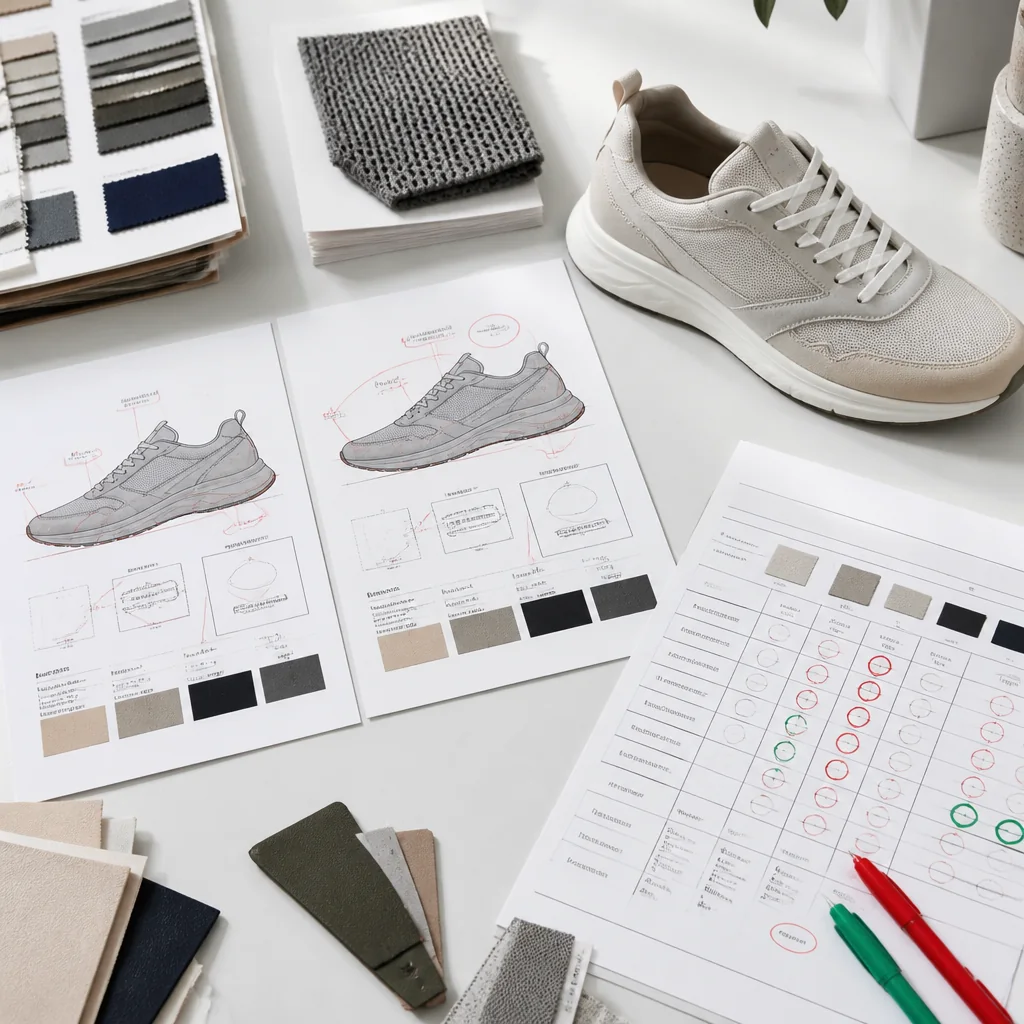
For a casual shoes supplier quote comparison, keep quoted figures unranked until the underlying product and service scope can be compared. The buyer-side method recommended here is to preserve each quotation's wording, translate that wording into common fields and leave every difference or omission visible. A shared label such as “casual sneaker” or “mesh upper” is not, by itself, evidence that two entries cover the same specification.
The resulting comparison record should show what each supplier document states, what the buyer requested, what published information says and what still requires a project-specific answer. It should not fill gaps with assumptions.
Fix the comparison boundary first
Begin with the product definition that accompanied each quotation. As an editorial recommendation, buyers should identify the relevant drawing, reference product, specification sheet or other project document and record its version. If the quotation cannot be connected to the current definition, mark that connection as unresolved. Do not assume that a later revision was included.
Product-family relevance is a separate field. Custom Shoe Factory's company overview describes a focus on running, training, walking and casual sneakers and says the company is not a catch-all factory. This supports relevance to a casual sneaker inquiry. It does not confirm the manufacturability of a particular design, material or construction.
The published running-shoe range also has a limited evidentiary role. It describes daily-training builds with breathable uppers and cushioned midsoles. The listing names mesh, knit and PU upper options, then identifies EVA and rubber outsoles for that running range.
Keep those running-shoe details out of a casual quotation unless the project document itself states them. Buyers may use “upper material,” “midsole” and “outsole” as clarification fields, but the published running range cannot supply a missing casual-shoe specification.
Label the source before comparing the value
Use four source labels in the comparison record. This is an editorial framework for preventing information from changing status as it moves between product development, sourcing and commercial review.
- Published company information
Apply this label to relevant statements on the company website, including product-family descriptions and general material information. Keep such statements separate from the project quotation.
- Quotation statement
Apply this label only to wording in the quotation or an associated project document. Retain alternatives, conditions and undecided selections instead of rewriting them as confirmed inclusions.
- Buyer requirement
Use this for the requested specification, construction, artwork or other project condition. A requested feature should not be relabeled as supplier-confirmed scope.
- Open question
Use this when the available documents do not establish an answer. Keep the field open until a project-specific response addresses it.
Each normalized entry needs both a value and a source. “Heat-transfer film” labeled as a buyer requirement has a different status from the same words in a quotation statement. Neither should be merged with a general material-page description.
Break a mesh upper into comparable fields
The materials overview shows why a broad upper label can conceal material decisions. For engineered mesh, the page names air mesh and sandwich mesh. It separately describes knitted or warp-knit synthetic construction with zoned density.
The same page gives a typical range of 90–250 GSM depending on the zone and identifies denser knit at the eyestay and toe. That range describes engineered mesh generally; it is not a project value or a statement that every weight and zone arrangement applies to every casual sneaker.
For a mesh upper specification comparison, buyers should create one entry for each field below and copy only the scope established by the quotation or related project response.
| Comparison field | Buyer-side entry rule | Treatment when unresolved |
|---|---|---|
| Upper material family | Record the exact quoted material term | Do not expand “textile” or “mesh” into engineered mesh |
| Mesh description | Record air mesh, sandwich mesh or another term only when stated | Mark the description as missing |
| Construction | Record the stated knitted, warp-knit or other construction | Leave the construction open |
| Density by zone | List the named zones and stated density differences | Do not import zoned density from the general material page |
| Weight specification | Record the stated GSM for each applicable zone | Do not use 90–250 GSM as the project specification |
| Decoration method | Record the proposed method for the selected material and artwork | Request project-specific compatibility confirmation |
This field structure allows buyers to compare custom sneaker quotes without making a broad material label appear more precise than the underlying document.
Turn differences into an exception record
After assigning sources, apply one of four editorial review statuses to every field:
- Aligned: the documents define the field at a level that permits direct comparison.
- Different: the documents state different materials, constructions, methods or responsibilities.
- Missing: one or more documents do not address the field.
- Awaiting confirmation: the buyer has raised a question, but no project-specific answer has established the result.
Do not use “missing” and “awaiting confirmation” interchangeably. The first describes the current documents; the second records an active inquiry. Neither status means that the item is included, excluded or equivalent.
A footwear quotation scope checklist should therefore function as an exception record, not as a completed specification assembled from unrelated sources. Buyers can add questions about quantity conditions, sampling, packaging, tooling, timing, testing or quality responsibilities when those subjects matter to the project. These remain inquiry topics unless the project documents provide answers.
Keep branding compatibility conditional
The materials page states that the described engineered mesh takes screen print, heat-transfer film and welded TPU overlays cleanly. This is published information about that material description, not confirmation of a result for every casual upper, mesh construction, artwork or placement.
Separate the proposed upper material, proposed decoration method and compatibility status into distinct fields. Matching decoration names should not override differences in material or construction.
For the project inquiry, buyers should identify the selected or proposed material, artwork requirements, placement and application method. Ask which combination may apply and whether any part remains subject to development or manufacturability assessment. This preserves the source's material-level scope without turning it into a project guarantee.
Keep example project stages out of quote scope
The case-studies page presents an example running-shoe launch spanning a reference pair through inspected first production. Its documented scope is an example running-shoe project format.
Do not treat those example stages as a universal casual-footwear workflow, a fixed inspection plan, a quotation inclusion or a standard timeline. The buyer may ask which development stages, sampling activities or quality responsibilities apply to the current project, then record the project-specific response under the appropriate source label.
Send unresolved scope for assessment
The comparison is ready for follow-up when it exposes the differences rather than concealing them. Prepare a compact project package containing the current product definition, the original quotation wording, the normalized fields, the source assigned to each entry and the unresolved questions.
- Identify the product document and version connected to each quotation.
- Preserve quoted material, construction and branding terms at their stated level of detail.
- Mark each field as aligned, different, missing or awaiting confirmation.
- Keep published information separate from buyer requirements and project responses.
- List the development, manufacturability, sampling and quotation questions that still need project-specific answers.
Teams preparing an initial inquiry can use the quote-ready brief guide to organize their product information. For quotations already received, share the current definition and normalized comparison through the project inquiry form. Ask which development, manufacturability, sampling or quotation options may apply before ranking entries that still carry different or unknown scope.
Sources and verification
- About Custom Shoe Factory | OEM/ODM Athletic Shoes First-party site source
- Athletic Shoe Manufacturer | Custom Product Range First-party site source
- Shoe Soles, Uppers & Insole Materials | Footwear Specs First-party site source
- Footwear Manufacturing Case Studies | Example Project Formats First-party site source
Share the current product definition and ask which development, manufacturability, sampling or quotation options may apply to the project.
Send your project brief