Footwear Sourcing
How to audit a casual shoes supplier outsole specification
Casual sneakers appear in the published product family, but the EVA and rubber reference comes from a running-shoe entry. This audit separates that source fact from the outsole decisions still open for a casual project.
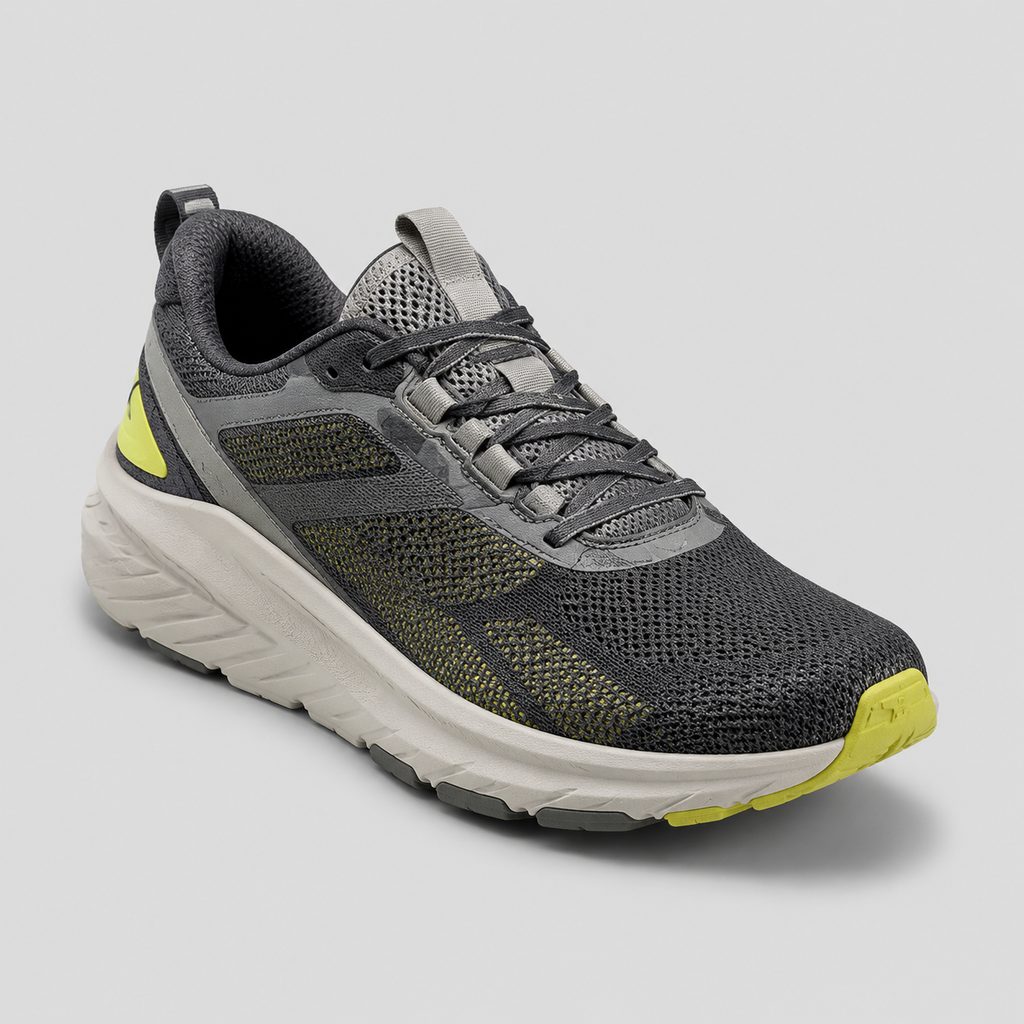
A casual shoes supplier outsole specification should not be built from the phrase “EVA & rubber outsoles” alone. The About page includes casual sneakers in the published product family. In the supplied Products page excerpt, however, EVA and rubber appear in a running-shoe entry. That evidence supports asking about a casual sneaker program. It does not identify the sole construction, material arrangement or project-specific applicability for one.
The procurement decision is therefore about information status, not material preference. Our editorial recommendation is to retain the running-shoe wording as a source note, define the buyer’s current requirements separately and carry every unresolved sole question into the project inquiry.
Separate product-range fit from component evidence
The About and Products pages provide different types of evidence. Reading each statement within its original scope prevents a running-shoe material line from becoming an undocumented casual-shoe specification.
| Published statement | What the buyer may record | Evidence boundary |
|---|---|---|
| The About page states that the product family covers running, training, walking and casual sneakers. | Casual sneakers are within the stated product family. | The excerpt does not assign a sole material or construction to casual sneakers. |
| The Products page describes performance-inspired daily-training running shoes with breathable uppers and cushioned midsoles. | Those descriptions apply to the running-shoe entry. | The wording does not attribute cushioning or breathability to EVA, rubber or a casual-shoe sole. |
| The running entry names mesh, knit and PU as upper materials. | These are published upper-material references for that entry. | The upper list does not define an outsole or a casual sneaker upper. |
| The running entry names EVA and rubber outsoles. | Both material names may be retained as a running-page reference. | The excerpt does not explain their relationship, location or relevance to a casual project. |
The mistake is a change of status: wording published for running shoes is copied into a casual brief as though it were already project-specific. A buyer may bring the phrase into the discussion, but it should remain labeled as a source reference unless the buyer independently defines it as a requirement or receives project-specific information.
Read the EVA and rubber line without filling its gaps
The ampersand between EVA and rubber is not a construction diagram. A buyer might wonder whether the materials are alternatives, parts of one proposed sole or references to another arrangement. The supplied excerpt does not settle those possibilities, and it does not assign either material to a particular sole area.
| Inquiry topic | Question for the project inquiry |
|---|---|
| Relevance | Does the running-page EVA and rubber reference have any relevance to the proposed casual sneaker? |
| Material relationship | If either material may be relevant, would the materials be considered separately, together or in another relationship? |
| Component location | If more than one material is proposed, where would each material be located? |
| Information required | What drawings, references or buyer-defined requirements would be needed to discuss possible construction and manufacturability? |
| Next project stage | Which development, sampling or quotation options, if any, may apply after the current product definition is reviewed? |
These are questions for the buyer to submit, not documented company services or confirmed construction options. If EVA or rubber is already a buyer requirement, label it as buyer-defined. Otherwise, retain the wording as a published running-shoe reference while the relationship and applicability remain open.
Use the mesh entry as a benchmark for evidence depth
The Materials page provides a more detailed component description, although it concerns an upper material rather than a sole. It describes engineered mesh as a knitted or warp-knit synthetic with zoned density for ventilation, light stretch and support. The page says it typically runs at 90–250 GSM depending on the zone, with denser knit at the eyestay and toe.
The same entry states that engineered mesh takes screen print, heat-transfer film and welded TPU overlays cleanly. It identifies running, training and summer styles needing maximum airflow at a sensible cost as its best uses. Those statements remain limited to the engineered-mesh entry and do not establish outsole capabilities or a universal casual-shoe upper specification.
| Evidence field | Engineered-mesh entry | Running outsole line |
|---|---|---|
| Material description | Identifies a knitted or warp-knit synthetic with zoned density. | Names EVA and rubber without a construction description. |
| Measurement and zoning | Provides a typical zone-dependent GSM range and names denser locations. | Provides no comparable measurement or location detail in the supplied excerpt. |
| Processing statement | Names screen print, heat-transfer film and welded TPU overlays. | Provides no processing statement in the supplied excerpt. |
| Stated applications | Names running, training and summer styles within a specific airflow-and-cost context. | Does not connect the outsole materials to a casual sneaker. |
The purpose of the comparison is evidence granularity, not material transfer. A casual sneaker outsole specification does not need to imitate mesh fields. For this inquiry, the buyer should instead record whether each sole material is a source reference or requirement, how multiple materials would relate, where they would appear and whether the decision remains open.
Create a buyer-owned outsole decision record
Our editorial recommendation is to use a two-part working document. One side records the current product definition supplied by the buyer. The other preserves questions that still require a project-specific response. This is a buyer control document, not a claim about the factory’s standard workflow.
| Record in the current definition | Keep open in the inquiry |
|---|---|
| Program identity: State that the proposed category is a casual sneaker and describe the intended design direction. | Ask whether the definition contains enough information to discuss relevant development or manufacturability options. |
| Reference inputs: List any reference pair, sketches, photographs or specifications supplied by the buyer. State what each item is intended to communicate. | Ask how those inputs may be considered and what additional information would be needed for the sole discussion. |
| Material status: Record EVA and rubber as a published running-shoe reference unless either has been independently specified by the buyer. | Ask whether either material may be relevant and how any proposed materials would relate. |
| Construction status: Identify sole features the buyer wants retained, changed or assessed. Mark unknowns rather than completing them by assumption. | Ask which construction options, if any, may apply to the current definition. |
| Requested discussion: State whether the buyer wants to discuss development, manufacturability, sampling or quotation. | Ask which paths may apply without recording any of them as promised outcomes. |
Use status labels that preserve the source
- Published source note: Wording retained from one of the cited pages.
- Buyer-defined: A requirement or preference supplied by the buying team.
- Open inquiry: A question awaiting a project-specific answer.
- Project response: Information received for the current definition but not yet approved by the buyer.
- Buyer-approved: A decision accepted through the buyer’s chosen review process.
These labels prevent a website reference from drifting through project documents until it looks like an approved build. They also show which party supplied each requirement and which decisions remain open.
Keep a reference pair within its documented role
The Case Studies page presents an example running-shoe project format described as extending from a reference pair to inspected first production. That excerpt identifies the beginning and ending language of one example. It does not document how a reference pair would affect sole materials, construction decisions, approvals or inspection criteria for the current casual project.
If a reference pair is available, our recommendation is to annotate its purpose. Mark which features communicate the intended design direction, which features the buyer wants changed and which sole details remain unknown. The corresponding inquiry can then ask how, if at all, that reference may inform the project. The pair remains a buyer-supplied input rather than proof that a construction has been accepted.
Set the threshold at inquiry, not approval
The published range supports a scoped casual sneaker inquiry. The supplied excerpts do not support selecting an EVA-and-rubber construction, confirming project manufacturability or approving a sole specification.
For a casual footwear sampling inquiry, the working record is ready when:
- the casual sneaker category and intended design direction are stated;
- the running-shoe outsole wording is identified as a source reference;
- the purpose of each reference file or reference pair is clear;
- buyer-defined requirements are separated from published statements;
- material relationship and location questions remain visible; and
- the buyer has identified which development, manufacturability, sampling or quotation topics it wants to discuss.
Share the current product definition through the request page and ask which options may apply. Carry the unresolved outsole questions forward explicitly. The available evidence supports starting that conversation, not approving the sole before it takes place.
Sources and verification
- About Custom Shoe Factory | OEM/ODM Athletic Shoes First-party site source
- Athletic Shoe Manufacturer | Custom Product Range First-party site source
- Shoe Soles, Uppers & Insole Materials | Footwear Specs First-party site source
- Footwear Manufacturing Case Studies | Example Project Formats First-party site source
Share the current product definition and ask which development, manufacturability, sampling or quotation options may apply to the project.
Send your project brief