Footwear Product Development
Buyer-Side Deviation Record: Athletic Shoe Sample Approval Checklist
A buyer-side review method that separates the current product definition, reference material, and observed footwear sample.
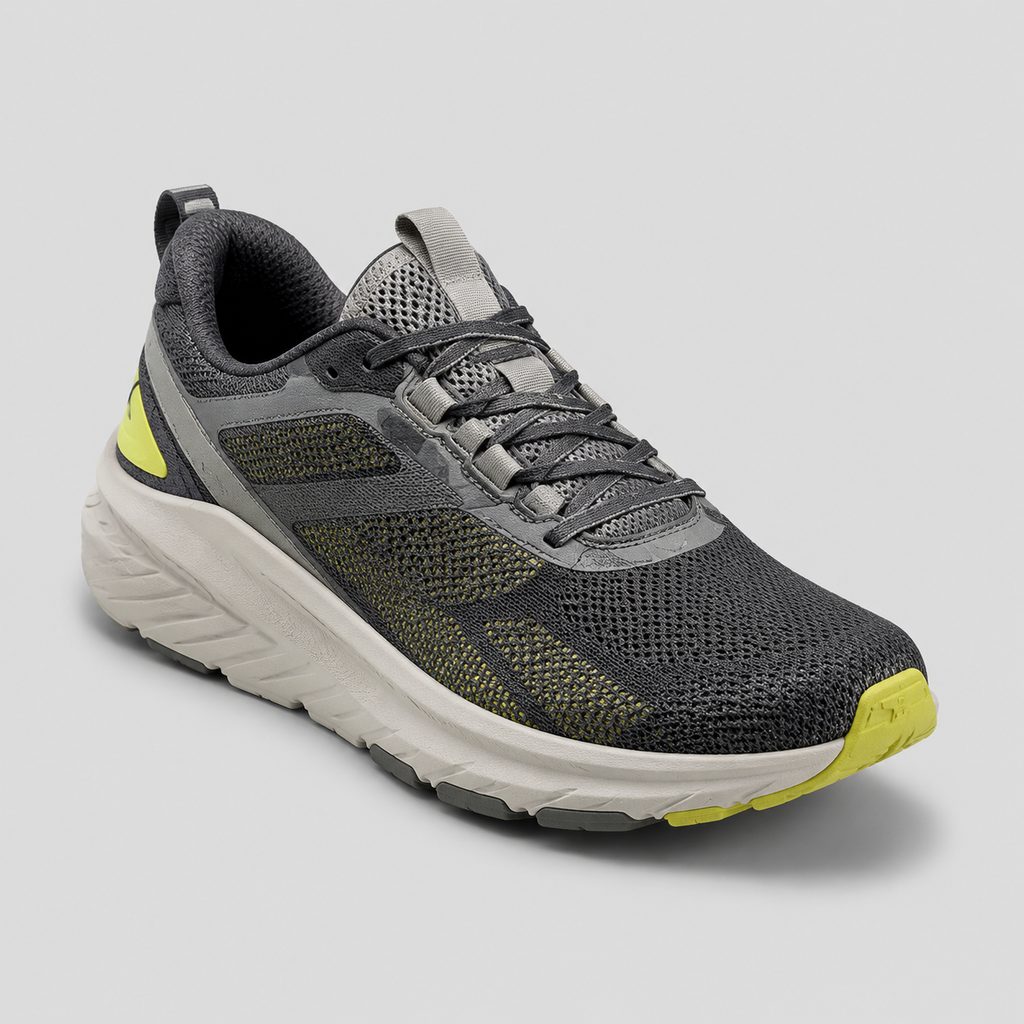
A sample review can fail when one visible detail is treated as confirmation of several different decisions. For example, a hypothetical reference pair may show a denser toe-area knit while the current product definition contains no toe-zone instruction. Calling the upper approved in that situation hides an unresolved decision inside a broad visual judgment.
This athletic shoe sample approval checklist is editorial guidance for the buyer, not a documented factory workflow or approval form. It uses a deviation record to keep three inputs separate: the current product definition, reference material where relevant, and the observed sample. Each review row ends as a match, an approved change, or an open question.
Build the Record Before Comparing the Shoe
For a custom athletic shoe sample review, begin with a short record rather than a single approval comment. The record gives the reviewer a place to show what requirement was used, what the sample actually shows, and what decision still belongs to the buyer. This also makes it easier to hand an annotated review to colleagues without relying on memory or an unmarked reference pair.
| Review field | What the buyer records | Decision |
|---|---|---|
| Source requirement | The applicable wording, drawing, artwork version, or material note from the current product definition. | Shows what governs that row. |
| Observed sample condition | A direct description of the relevant zone, component, construction detail, or brand application on the sample. | Creates a traceable comparison. |
| Disposition | Match, approved change, or open question, with the next owner decision where needed. | Prevents an unclear item from being absorbed into a general approval. |
- Match
- The sample condition aligns with a specific current requirement.
- Approved change
- The buyer accepts a difference and records the revised controlling instruction.
- Open question
- The requirement or decision remains incomplete, so the row stays active.
Give Each Input a Job
The current product definition should be the controlling document in this buyer-side method. A reference pair can be reference-only for one detail and controlling for another when the buyer identifies that distinction in writing. The physical sample supplies the observed condition; it does not fill in requirements that were never defined.
- Identify the version of the brief, drawing, material note, or artwork file used for the review.
- Label each reference item as reference-only or controlling for the particular point being assessed.
- Write the sample identifier beside the record so later comments remain tied to the correct pair.
- Assign decision authority for any row that requires a revised instruction.
That boundary changes the shoe sample approval process from a general appearance discussion into a series of accountable product decisions.
Does the Product Family Match the Brief?
Custom Shoe Factory's public company description names running, training, walking, and casual sneakers as its sport-footwear product family. That public scope is useful context at the start of a review, while the buyer's own definition should name the category for the sample under review.
Write the project family and intended use at the top of the record, then keep the remaining review specific to that definition. A running-shoe sample, for instance, should be compared with the running-shoe instructions selected for that project rather than with all public product-range descriptions.
Upper Review Starts at the Zone
The materials page describes engineered mesh as air mesh or sandwich mesh made from knitted or warp-knit synthetic material. The same entry links zoned density with ventilation, light stretch, and support. It also notes denser knit at the eyestay and toe. Those details give a buyer useful terms for describing an upper; they do not replace the project-specific upper instruction.
For the review record, divide the upper into the zones that matter to the current definition. A single note such as "mesh upper" leaves too much unresolved when the sample includes panel boundaries, changes in density, an eyestay treatment, or a distinct toe-area construction.
For the hypothetical toe-area example, the row could read: current definition, engineered mesh with no density instruction; observed sample, visibly denser knit at the toe; disposition, open question. The row does not turn the source's material description into an accepted project specification. It identifies the decision that still needs a documented answer.
- Name the zone first, such as vamp, quarter, eyestay, tongue, collar, or toe area.
- Use the material wording found in the current definition for that zone.
- Describe visible construction points separately, including panel edges, seams, and overlays.
- Carry forward any missing density, construction, or visual-target instruction as an open question.
Branding Has a Surface Beneath It
The engineered-mesh entry says that engineered mesh takes screen print cleanly. It separately says that engineered mesh takes heat-transfer film cleanly. It also says that engineered mesh takes welded TPU overlays cleanly. These statements concern the cited engineered-mesh material entry, so the buyer should still identify the actual substrate beneath the mark in the project record.
Review branding as a relationship between artwork, placement zone, substrate, and intended application. This approach is more useful than approving artwork in isolation because a mark may cross a seam, meet an overlay, or sit on a different upper zone than the buyer expected.
- Link the row to the relevant artwork version.
- State the upper zone and material underneath the mark.
- Describe the observed placement, edge treatment, and contact with seams or overlays.
- Leave the application choice open when the project definition has not named one.
A Midsole Row Cannot Close an Outsole Row
The running-shoe product-range page uses the phrase "breathable uppers." It separately uses the phrase "cushioned midsoles." Its running-shoe range also mentions mesh uppers, knit uppers, and PU uppers. The outsole wording mentions EVA and rubber. In a buyer's record, each of those descriptions belongs in its own row until the current definition selects the relevant component.
| Component area | Record focus |
|---|---|
| Upper | Connect the sample's upper condition to the selected project material and construction wording. |
| Midsole | Use the midsole wording that appears in the current definition. |
| EVA outsole reference | Keep any EVA-related project instruction in a dedicated outsole row. |
| Rubber outsole reference | Keep any rubber-related project instruction in a separate outsole row. |
This separation matters when one area is ready for a decision and another still lacks a defined component description. Approval comments remain clearer when an accepted upper observation cannot silently close a midsole or outsole question.
What an Approval Decision Closes
Editorially, approval should close only the rows supported by a documented match or an accepted change. An open question remains in the record with the missing instruction, the person who can resolve it, and the decision needed. That is a practical way to preserve changes between review rounds without presenting an unresolved point as a defect or an approval.
- Mark a match when the observed condition connects directly to the current requirement.
- Mark an approved change when the buyer records the difference and the revised instruction together.
- Keep an open question active when the reference material and current definition point in different directions, or when either fails to answer the relevant detail.
The case-studies page describes one first running-shoe order example as running from a reference pair to inspected first production. That excerpt supports retaining reference-pair notes in a running-shoe project record. It does not identify a universal sample-approval sequence or inspection criteria.
Send the Open Decisions With the Inquiry
Once the record is complete, the buyer can send a focused package: the current product definition, the annotated deviation record, and the reference materials that apply to the open rows. Accepted changes should remain visible so they are not returned as unresolved requirements.
- Ask which development options may apply to the defined project.
- Ask which manufacturability options may apply to the identified upper, branding, midsole, or outsole questions.
- Ask which sampling or quotation options may apply to the project.
A request through the project inquiry page can therefore focus on the defined product and its remaining decisions. The inquiry asks about options that may apply; it does not assume a particular process or outcome.
Sources and verification
- Athletic Shoe Manufacturer | Custom Product Range First-party site source
- About Custom Shoe Factory | OEM/ODM Athletic Shoes First-party site source
- Footwear Manufacturing Case Studies | Example Project Formats First-party site source
- Shoe Soles, Uppers & Insole Materials | Footwear Specs First-party site source
Share the current product definition and ask which development, manufacturability, sampling or quotation options may apply to the project.
Send your project brief