Materials and Specs
Athletic Shoe Mesh Supplier Questions Before Sampling
A claim-to-question audit for buyers who need athletic shoe mesh supplier questions before treating a materials page as sampling-ready.
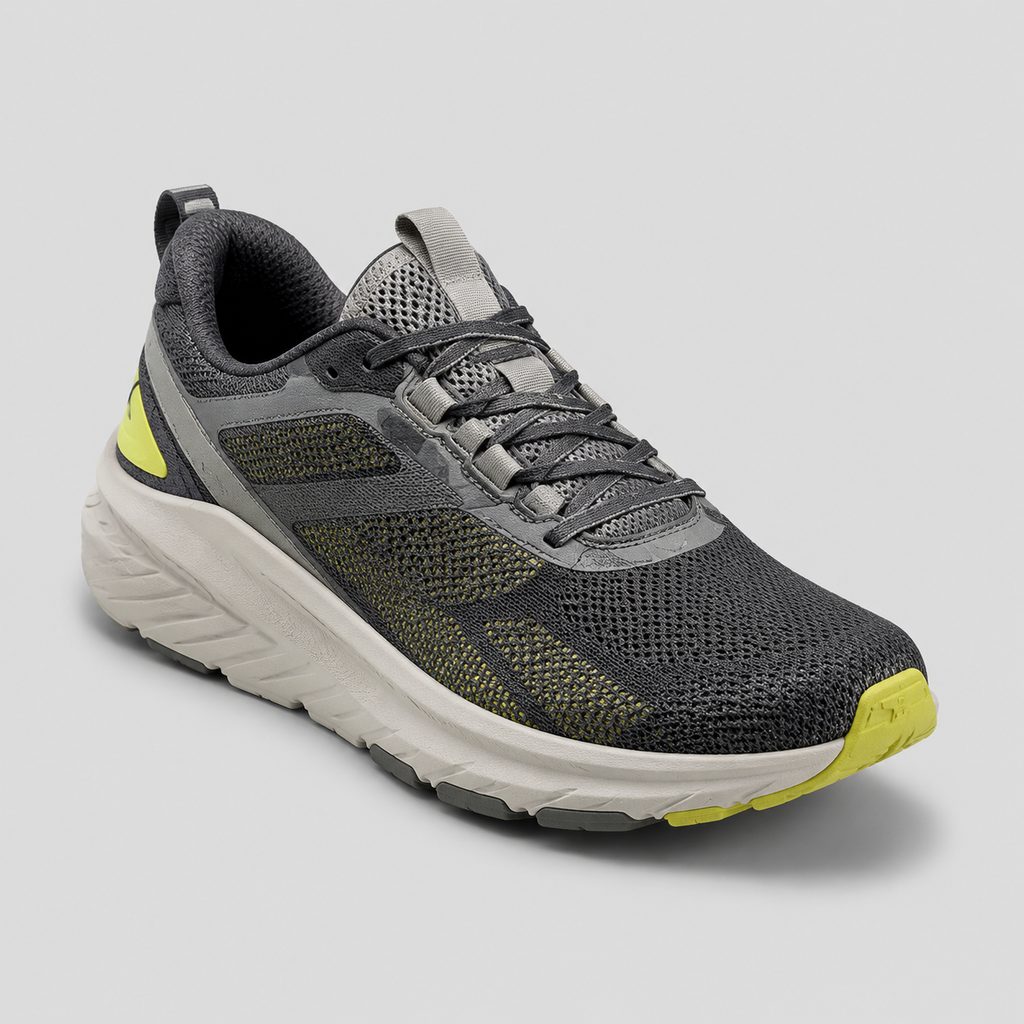
Athletic shoe mesh supplier questions usually appear after a brand team reads an engineered-mesh description and treats the upper as already production-ready. A materials page can support an initial inquiry. It does not confirm, on its own, that a proposed construction, decoration method, or performance expectation is ready for sampling or bulk. Treat the copy as an evidence boundary: record what it states, mark what remains your decision, and turn the gaps into project-specific questions before you request a sample.
A Mesh Description Is Not a Sampling Decision
Procurement risk starts when a material label is read as proof that a full shoe concept is finished. The materials page describes engineered mesh as a workhorse athletic upper. It names construction families, a typical GSM range, example denser-knit zones, decoration compatibility, and category-fit language. Those lines can open a conversation. They do not lock a last, midsole stack, lining package, reinforcement plan, or brand placement for your program.
As an editorial recommendation for the buyer, use the page as intake evidence, not as a finished upper bill of materials. If panels, backing, stitch types, or support inserts are still undefined, the mesh description alone cannot close those choices. Sampling works better when the inquiry keeps documented material language separate from buyer decisions that still need definition.
Record Only the Claims the Material Evidence Makes
Build a short evidence inventory limited to what the materials excerpt states. Do not expand those lines into comparative rankings of air mesh versus sandwich mesh, or into durability, wash, or regulatory results the excerpt does not provide.
| Documented claim | Buyer still decides | Project question to raise |
|---|---|---|
| Engineered mesh described as air mesh and sandwich mesh; knitted or warp-knit synthetic with zoned density for ventilation, light stretch, and support | Which mesh construction, yarn, gauge, and backing apply to each panel | Which mesh build is under consideration for this upper, and how will zones be specified? |
| Typically run at 90–250 GSM depending on the zone, with denser knit at the eyestay and toe | Exact GSM targets by zone, and whether denser knit is needed beyond those two examples | What density map is proposed, and where does it match or exceed the stated examples? |
| Takes screen print, heat-transfer film, and welded TPU overlays cleanly; multi-colour branding described as easy | Method, placement, color count, and whether any method is suitable for the design intent | Which decoration methods are being evaluated, and on which panels? |
| Best for running, training, and summer styles that need maximum airflow at a sensible cost | Whether the current concept belongs in that category language, or needs another material path | Does this program stay inside the named category fit, or should alternatives be reviewed? |
Keep the 90–250 GSM line as a typical range by zone. It is not a universal specification for a whole shoe, a recommended single target, or a guarantee for every panel you later add.
Map Material Evidence to the Proposed Upper
With the inventory fixed, map only the zones the source names. Flag everything else as undefined until the current product definition covers it. For engineered mesh shoe upper questions, that discipline keeps named examples from being stretched into a full pattern map.
- List every upper zone on the proposed design: vamp, quarter, tongue, collar, heel counter cover, eyestay, toe, and any underlays or reinforcements.
- Mark which zones, if any, are intended to use denser knit at the eyestay and toe, because those are the density examples the materials excerpt names.
- Leave all other density, stretch, and support targets as open buyer decisions. Zoned density for ventilation, light stretch, and support is stated as a material behavior, not as a panel-by-panel map for your last or pattern.
- Record construction details the excerpt does not define: stitch type, binding, foam or film backing, toe puff, heel counter, lace hardware, and lining interfaces.
- Attach the current tech pack or sketches to the inquiry so open zones are visible rather than assumed from the material label alone.
This mapping step is editorial buyer discipline. Correspondence between a named example zone and a proposed panel is not a suitability finding for the whole upper.
Decoration Compatibility Versus Process Availability
The materials excerpt states that engineered mesh takes screen print, heat-transfer film, and welded TPU overlays cleanly, and that multi-colour branding is easy. That language is material compatibility. It is not a documented process menu, capacity statement, or durability result for a named artwork package.
| What the evidence supports | What it does not establish |
|---|---|
| Compatibility language for screen print, heat-transfer film, and welded TPU overlays on engineered mesh | Which method will be available, preferred, or cost-effective for a specific project |
| A statement that multi-colour branding is easy in the materials description | Adhesion, wash resistance, colorfastness, flex life, or regulatory outcomes for any artwork |
| A reason to ask about branding placement on mesh panels | A commitment that a given logo stack, foil, or welded overlay will pass brand or retail tests |
For shoe upper branding compatibility, keep method, placement, and performance criteria on the question list. Ask which methods may apply to the current artwork and substrate combination. Do not treat compatibility copy as proof that a process is already selected, priced, or validated.
Category Language Without Stretching the Evidence
The materials excerpt names best fit for running, training, and summer styles that need maximum airflow at a sensible cost. Separately, the company’s product-family language covers running, training, walking, and casual sneakers as one sport-footwear focus. The product range presents running shoes with breathable uppers among mesh, knit, and PU upper options. Keep those scopes distinct.
Category fit language on the materials page does not automatically extend the same engineered-mesh recommendation to every walking or casual sneaker concept. Company product-family scope shows the broader athletic footwear frame a buyer may discuss; it does not rewrite the materials best-for line. A breathable running-shoe product description also does not verify cushioning, support, fit, or test results for a mesh upper you have not yet defined.
When a concept sits outside running, training, or summer airflow-led styles, treat material selection as an open decision. Ask whether engineered mesh remains appropriate, or whether another upper path on the product range or materials set should be reviewed. For context on the factory’s sport-footwear focus, see the about page.
Project-Specific Questions Worth Raising
Convert remaining unknowns into assessment questions. Each item below is a prompt for review of the current project, not a documented supplier commitment.
- Which engineered-mesh construction (air mesh, sandwich mesh, knitted, or warp-knit synthetic) is proposed for each upper zone?
- What GSM targets by zone are intended, and how do they relate to the typical 90–250 range stated on the materials page?
- Where, if anywhere, is denser knit planned beyond the eyestay and toe examples?
- Which panels need extra support, stretch limit, or reinforcement that mesh alone may not provide?
- What branding method and placement are proposed, and which of screen print, heat-transfer film, or welded TPU overlays are under evaluation?
- Does the category definition stay inside running, training, or summer airflow-led styles, or does the program need a different material conversation?
- Which development, manufacturability, sampling, or quotation options may apply once the upper definition is shared?
If compliance, testing, or market labeling matters to the program, list those requirements as buyer inputs. The materials excerpt does not document them.
The Running-Shoe Example Within Its Stated Limits
The site’s case-study section presents a running-shoe launch example for a new brand and describes how a first running-shoe order is structured, from reference pair to inspected first production. Read that line as an example format only. It does not supply timing, quantities, material specifications, test results, or a promise that every project follows the same path.
Use the example, if useful, as a reminder that a structured first order can start from a reference pair and move toward inspected first production. Do not treat it as evidence that your mesh upper, decoration stack, or category concept will follow that sequence. For the published framing, see the case studies page.
How to Send an Evidence-Labeled Material Inquiry
Close the audit with a compact handoff so the supplier can respond to a defined upper rather than a material label alone.
- Share the current product definition: category, upper drawings or photos, zone map, and any branding files.
- Label which statements you took from the engineered-mesh materials evidence (construction families, zoned-density language, typical GSM range, denser knit examples, decoration compatibility, and named category fit).
- List buyer decisions still open: exact construction by zone, density targets, reinforcements, decoration method, and any performance or compliance criteria you require.
- Ask which development, manufacturability, sampling, or quotation options may apply to this project. Frame those as applicability questions, not as assumed services.
That sequence keeps athletic footwear material supplier conversations grounded in documented copy while leaving room for project-specific assessment. When the current upper definition and question list are ready, request a quote with those inputs attached so the review starts from evidence and open decisions rather than from an over-read material claim.
Sources and verification
- Shoe Soles, Uppers & Insole Materials | Footwear Specs First-party site source
- Athletic Shoe Manufacturer | Custom Product Range First-party site source
- About Custom Shoe Factory | OEM/ODM Athletic Shoes First-party site source
- Footwear Manufacturing Case Studies | Example Project Formats First-party site source
Share the current product definition and ask which development, manufacturability, sampling or quotation options may apply to the project.
Send your project brief